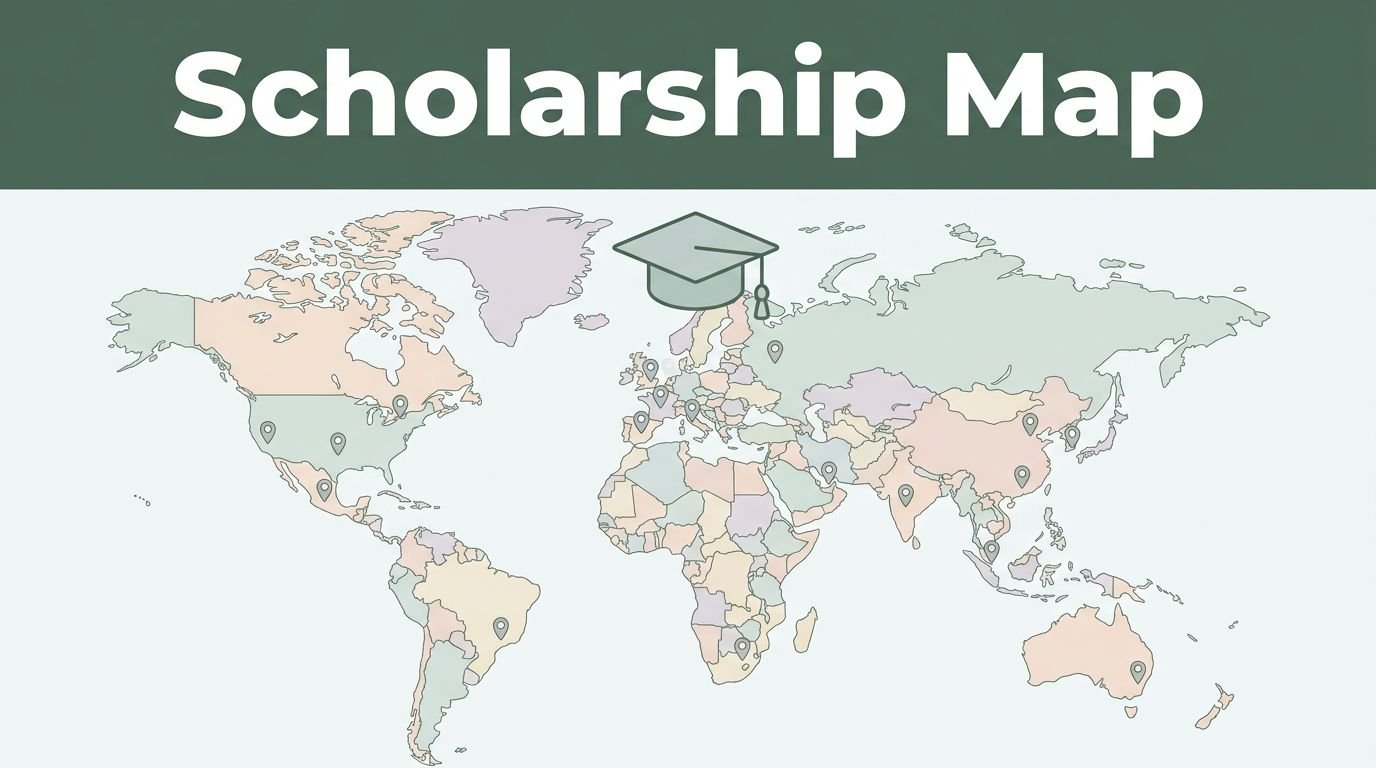
For bachelor scholarships for international students in 2026 and 2027, the market looks larger on paper and tighter in practice. More listings are appearing across universities, government programs, and scholarship databases, but many awards are partial, and the full rides are still the hardest to win.
That matters because undergraduate funding is usually thinner than graduate aid. Recent high school graduates, transfer students, and non-traditional applicants all face the same problem, there’s plenty of noise, but the best options often depend on nationality, grades, field of study, and timing. Students from the US, UK, Canada, Australia, Europe, Africa, Asia, and Latin America all compete in the same crowded pool, yet the strongest awards are often limited by region or school.
The students who win often do not apply to the most scholarships, they apply to the right ones early and with clean, complete files.
This guide is for anyone trying to turn a hard search into a workable plan. We’ll sort the main scholarship types, show how eligibility really works, point to the places where bachelor-level funding is usually posted, and explain how to apply without losing points on avoidable mistakes. We’ll also look at the strategies that help international applicants stand out when competition is high and budgets are tight.
The scholarship landscape is changing, but the competition is still real
The pool of bachelor scholarships for international students has widened, but the money is still uneven. More schools, nonprofits, and scholarship platforms now advertise awards, yet the strongest offers remain limited, selective, and often tied to strict academic or regional rules.
That shift matters because the headlines can look more generous than the reality. A bigger list does not mean easier access, and the best awards still favor applicants who arrive early, meet every requirement, and present a clear record of achievement.
Why most undergraduate awards cover part of the cost, not all of it
Most undergraduate awards are built to reduce pressure, not erase the full bill. We usually see tuition discounts, partial tuition waivers, and fixed grants that help with school charges while leaving room and board, travel, and personal costs untouched.
That structure is common for a simple reason. Undergraduate programs, especially in the United States, admit larger numbers of students and reserve their biggest budgets for institutional priorities. Graduate aid is often tied to research, teaching, or departmental funding, so it can be more substantial.
At the bachelor level, schools often spread funds across more students. As a result, many international students receive help with tuition only, while housing, meals, flights, books, and visa costs remain separate. The award still matters, but it works like a discount on a large purchase, not a full payment.
For a useful comparison of how these awards are framed, BestColleges’ guide to international student scholarships lays out the range well. The pattern is clear, partial aid is common, and full coverage is the exception.
A scholarship can be generous without paying every bill. For many families, that difference shapes the entire plan.
Fully funded scholarships do exist, but the bar is high
A fully funded bachelor scholarship usually means tuition, living costs, health insurance, and sometimes travel are covered. In a few cases, the package also includes book money or a housing stipend, but that varies by program.
These awards are real, yet they are rare. Universities and large sponsors use them to attract top applicants, so the competition is intense and the review process is strict. Strong grades help, but they are rarely enough on their own.
Successful candidates usually combine high academic marks with well-timed applications and a polished record outside the classroom. That can include leadership, community work, athletics, music, or a distinct academic interest. Deadlines also matter more than many students expect, because some of the best programs close months before enrollment decisions are made.
Current listings for international students show the same pattern. Partial awards are easier to find, while larger packages, including those that cover more than tuition, are far more selective. A broad list like Bold.org’s international student scholarships shows how wide the field has become, but it also shows how many awards still come with tight filters and limited spots.
What kinds of students are getting noticed now
The students who rise to the top usually have more than one strong trait. A high GPA still carries weight, but committees also notice consistency, direction, and proof that the applicant has done something beyond classroom work.
In practice, the strongest files often show a mix of the following:
- Strong academic records with solid grades over time, not just one good term.
- Leadership experience in school clubs, student government, or local projects.
- Sports or arts talent that shows discipline, training, and commitment.
- Community service that looks sustained, not added at the last minute.
- Research interest or a clear academic goal tied to future study.
- Personal stories that explain hardship, migration, family responsibility, or a unique path.
The common thread is clarity. Reviewers want to see a student who has done serious work and can explain why it matters. A polished essay helps, but it works best when it matches the record behind it.
Timing matters here too. A strong applicant does not wait until the final deadline rush. They build a file that looks complete, specific, and believable, which is often what separates a serious contender from a crowded stack of names.
The main types of bachelor scholarships are easier to understand than they look
Most bachelor scholarships for international students fall into a few clear buckets, and the labels usually tell us how the award works. Some focus on grades and talent. Others look at family finances, nationality, school affiliation, or outside sponsorship.
That matters because the search gets easier once we sort the awards by how they are judged. A student with high marks is looking at a different pool than a student with documented financial need. A student from a target region may face less competition than the broader applicant pool.
Many universities also group their undergraduate funding this way. Merit awards are often the most common form of school-based support, while need-based aid tends to be more limited and more document-heavy.
Merit-based scholarships reward grades, talent, and leadership
Merit-based scholarships are the clearest example of academic funding with a broad reach. Schools usually review grade averages, standardized test scores, and the strength of the full application, not one number in isolation.
Extracurricular work can matter too. A student who has led a club, organized a service project, or competed at a high level may stand out even if the award is not strictly academic. Special skills, such as music, coding, debate, or athletics, can also tip the balance.
Many schools use merit aid as their main undergraduate scholarship tool, especially for international applicants. That is why these awards often appear across admission pages, honors programs, and departmental listings rather than in one central fund.
For a general overview of how merit awards are described for international students, NAFSA’s guide to undergraduate financial aid is a useful reference. It shows how schools weigh grades, tests, and special abilities when they make decisions.
Need-based scholarships depend on family finances and documented need
Need-based scholarships look at what a family can actually pay, not just how strong the student is on paper. Schools or foundations may ask for proof of income, assets, household size, and other basic financial details before they make an award.
The process is usually simple at the surface, but it depends on paperwork. Applicants may need tax forms, bank statements, employer letters, or school financial forms. Some programs also ask for translated documents when the original records are not in English.
Why does this matter? Because a strong academic record does not replace proof of need in this category. The award is built to fill a financial gap, so the review team needs a clear picture of that gap.
Need-based aid works best when the paperwork tells a clean, consistent story.
Country-specific scholarships can open doors for applicants from selected regions
Some scholarships are restricted to students from specific countries or regions. A program may be open only to applicants from Africa, Latin America, Southeast Asia, or a single nation such as Kenya, Brazil, or India.
These awards can reduce competition because the applicant pool is smaller. A global scholarship may attract thousands of students, while a country-targeted one may draw far fewer. That difference can make a real impact on the odds.
Nationality rules matter early, not late. Students who discover them after building an application file lose time, and sometimes they miss a deadline that never comes twice.
Government, university, and private scholarships each work differently
Scholarships also differ by who funds them. The source changes the rules, the paperwork, and the application strategy.
Source |
How it usually works |
What it means for the application |
|---|---|---|
University scholarships |
Offered directly by the college |
We usually apply through admission or the financial aid office |
Government scholarships |
Funded by a national program |
We often face formal eligibility rules and fixed deadlines |
Private scholarships |
Offered by nonprofits, companies, or foundations |
We may need essays, references, or a public service angle |
University awards are often the easiest to pair with admission, because the school already has the student’s academic file. Government programs tend to be more structured and may ask for citizenship, residency, or field-of-study rules. Private awards can be more flexible, but they often want a stronger personal story or a link to their mission.
The difference changes how we search. For school-based awards, we start with admissions and financial aid pages. For government programs, we check official portals early. For outside scholarships, we look at foundation sites, employer programs, and scholarship databases that match the student’s profile.
A broader list of international options, including school, government, and private sources, appears in TopUniversities’ scholarship guide for the US.
How we find scholarships that actually fit a bachelor applicant
The best scholarship search starts with fit, not volume. A long list of awards can look impressive, but most of it wastes time if the rules do not match the applicant’s country, major, grades, or stage of study. For bachelor applicants, the right scholarship is usually narrow, specific, and tied to a school or field of study.
That is why we treat the search like sorting mail, not chasing every flyer in the pile. We look for awards that match the student’s profile first, then we verify the details before anyone spends time on an application.
Start with university financial aid pages, not random lists
University websites usually give us the most reliable picture of undergraduate funding. Admissions pages, scholarship offices, and international student offices often publish the clearest rules on eligibility, deadlines, and award amounts, and they update those pages when policies change.
That matters because bachelor scholarships for international students often depend on small details. A school may require direct admission, a minimum GPA, or a separate scholarship form. Random lists often leave out those conditions, which creates false hope and wasted effort. A university page does not always have every answer, but it is the first place we trust.
We also check the admissions page because many schools fold scholarship review into the application itself. Then we move to the scholarship office for award terms, renewal rules, and funding limits. When a school has a separate international student office, that office often explains visa-related issues, housing support, and whether outside awards can be combined with campus aid.
For a practical example of how official scholarship pages can be organized, the University of Rochester’s international student scholarships and financial aid page shows how schools present eligibility, application timing, and award structure in one place. That kind of source is far more useful than a generic list that mixes schools, countries, and deadlines without context.
Use trusted scholarship databases, but verify every detail
Scholarship databases help us discover options faster, especially when the search is broad. They collect awards in one place, which saves time during a busy admissions season. Some also update often, which is useful when deadlines move or new awards open during the year.
Still, we never treat a database listing as final. Deadlines change, award amounts shrink, and eligibility rules can shift without warning. The official source always gets the last word, even if the database looks current.
A good database helps us build a shortlist. It does not replace the application page, the university site, or the sponsor’s own rules. We use listings to spot patterns, then we open the source documents and confirm every requirement.
- Search databases for discovery, then check the university or sponsor site for confirmation.
- Watch for outdated deadlines, because scholarship seasons move quickly.
- Compare award terms, since some listings hide renewal rules or partial funding limits.
A broad search tool like IEFA’s international scholarship database can help with discovery, especially when students are still mapping options across countries and majors. The value is speed, but the safety net is verification.
Look for country filters, major filters, and deadline filters
A narrow search saves time and cuts down on false matches. When we filter by country, major, and deadline, the list gets smaller, but the results get better. That matters for bachelor applicants, who often compete for awards that are already limited by nationality, subject area, or admission cycle.
Major filters help separate general scholarships from awards built for specific study paths. Engineering, business, medicine, arts, and social science scholarships often have very different rules, and the best fit usually sits inside the field itself. A student applying for engineering aid should not spend hours on awards meant for performing arts majors.
Country filters matter just as much. Applicants from Africa, South Asia, Latin America, Southeast Asia, Europe, or the Middle East often find region-based paths that are easier to match than global awards. Some scholarships are open only to students from certain countries, while others favor applicants from developing regions or specific partner nations.
Deadline filters keep the search realistic. A strong scholarship that closed last month is useless today, and a deadline six months away may not fit the student’s admissions timeline. We sort by deadline first when time is tight, then we narrow by eligibility.
Search filter |
Why it helps |
What it can reveal |
|---|---|---|
Country |
Cuts out ineligible awards |
Region-based and nationality-specific funding |
Major |
Matches the course of study |
Engineering, business, medicine, arts, social science awards |
Deadline |
Saves time during active cycles |
Open awards that can still be submitted |
A focused search usually finds more usable options than a broad one. It also makes the final application stack feel manageable instead of crowded.
Watch for scam signs and low-quality offers
Scholarship scams are easy to miss when the promise sounds generous. We look for warning signs early, because a fake offer can waste time or expose personal information.
The biggest red flag is any request for money up front. Legitimate scholarships do not ask for application fees, processing fees, or “release” payments before an award is sent. Another warning sign is a guaranteed win, since real scholarships always involve selection.
We also slow down when the message looks vague or careless. Missing contact details, sloppy spelling, weak eligibility rules, and pressure to act fast all deserve a second look. If the program says a student has won without ever applying, that is another bad sign.
A real scholarship has rules, contacts, and a clear selection process. A weak offer often hides all three.
The FTC’s guidance on scholarship scams gives the same message in plain terms, and the warning signs line up with what students see most often.
A low-quality offer does not always look fake at first glance, so we check for a few basics before trusting it:
- Upfront fees for applying, processing, or release of funds.
- Guaranteed awards with no real competition.
- No clear contact details such as an address, phone number, or organization name.
- Vague eligibility rules that do not explain who can apply.
- Urgent pressure that pushes a fast decision.
- Requests for private data like bank details, passwords, or Social Security numbers.
When those signs appear together, we move on. The safest scholarships are usually the ones that ask for the right documents, list the rules plainly, and leave no doubt about who is offering the money.
What strong bachelor scholarship applicants usually have in common
Strong applicants usually look prepared before the first review even starts. Their files are orderly, their academic record is clear, and their story makes sense on the page. In bachelor scholarships for international students, that mix matters because committees often sort applications fast, then spend more time on the students who already meet the core rules.
A strong profile rarely depends on one feature alone. Grades open the door, but test scores, activities, and the essay often decide who moves forward when many applicants look similar on paper.
Academic records still matter most at many schools
For many scholarships, GPA and class rank still sit at the center of the decision. Schools also look at predicted grades for students who have not finished secondary school yet, along with final exam results and national exam scores where those systems exist.
That usually means consistency counts more than one standout term. A student with steady top marks across several years often looks stronger than someone with one excellent report card and uneven results after that. Reviewers want proof that the record holds up under pressure.
Some schools set minimum cutoffs before they review anything else. If an award requires a 3.5 GPA, for example, a file below that mark may never reach the full committee. Others use grade thresholds for admission first, then apply separate scholarship rules after that. In both cases, the cutoff acts like a gate, not a suggestion.
For many bachelor scholarships for international students, especially merit awards, this is where the competition begins. A strong academic record does not guarantee funding, but a weak one often ends the conversation early. NAFSA’s undergraduate aid guidance makes that pattern clear across many US schools.
English test scores and other entry requirements can make or break an application
English scores can affect both admission and scholarship eligibility. IELTS, TOEFL, and similar tests often serve as proof that a student can handle classroom work, complete assignments, and meet school standards without delay.
Some programs treat test scores as a basic entry rule. Others use them as part of scholarship review, especially when they compare applicants from different education systems. A strong score can help a file stand out, while a weak one can close the door before the rest of the application gets attention.
The rules vary by school and by award. Some programs waive test requirements if a student studied in English or attended an approved school. Others do not waive anything, even for strong applicants with high grades. That is why the application page matters more than broad assumptions.
We see the same pattern with SAT or ACT requirements at some institutions. A scholarship may be open to international students, yet still ask for standardized scores as part of the package. For applicants who qualify, that can raise the ceiling. For everyone else, it becomes a hard limit.
Activities, leadership, and community work can help when grades are close
When grades are close, committees often look at what a student has done with time outside the classroom. Leadership, service, clubs, sports, mentoring, and personal initiative all help shape that picture.
Quality matters more than volume here. One serious role in student government or one long-running community project usually says more than a long list of short, thin activities. A student who helped organize a tutoring program, led a team, or trained younger classmates leaves a clearer mark than someone who joined many groups without much responsibility.
We also see stronger files when the activity ties to the student’s academic path. A future engineering student who built and led a robotics team, or a future public health major who ran a local health campaign, gives reviewers a direct line between effort and goal. That line is easy to remember.
A simple way to think about it is this:
- Leadership roles show responsibility.
- Community work shows follow-through.
- Sports or arts show discipline.
- Mentoring shows maturity.
- Personal projects show initiative.
A scholarship file with solid grades and a real record of service usually feels more complete than a file built on marks alone. For many scholarship committees, that balance is exactly what keeps a candidate in the running, especially in broad pools like Bold.org’s international student scholarships.
A clear personal story often beats a generic one
Committees remember applications that sound specific. They forget essays that read like they could belong to anyone.
A strong personal statement usually gives context, not decoration. It explains what shaped the student, what goals matter now, and why the scholarship fits that path. That can include family responsibility, moving across countries, financial pressure, a long-term academic interest, or a problem the student wants to solve through study.
Honesty matters more than polish here. A focused essay with a real voice often works better than broad claims about ambition or success. Reviewers want to see a student who knows why they are applying and can connect that reason to the program in front of them.
The best essays also stay narrow. They do not try to cover every hardship or every achievement. Instead, they choose one clear thread and follow it with detail. That is usually enough to make the application feel human, which is what most strong bachelor scholarship applicants share in common.
The application process works best when broken into simple steps
Scholarship applications get messy when we treat them like one giant task. They move faster when we split them into small, ordered pieces. That approach matters even more for bachelor scholarships for international students, because deadlines, eligibility rules, and document checks often differ from one award to the next.
A clean process saves time and cuts errors. It also makes the work feel manageable, which matters when students are balancing school, test prep, and admission deadlines at the same time.
Build a short list of scholarships before writing anything
We start by narrowing the field. Before anyone writes an essay, it helps to compare deadlines, eligibility, award size, and document requirements side by side. That quick review shows which scholarships are realistic and which ones would drain time without much chance of success.
A simple spreadsheet or checklist works well here. One column for deadlines, one for country rules, one for GPA or test score requirements, and one for materials is usually enough. That basic structure keeps the process honest, because it shows which applications need attention first.
It also keeps us from writing the wrong essay for the wrong award. A scholarship with a strong financial need focus may want one story, while a merit award may want another. If the key requirements do not match, we move on early instead of discovering the mismatch after hours of work.
A short shortlist also helps us stay organized when deadlines cluster. For a practical overview of how students track requirements, Affordable Colleges Online’s guide for international students gives a useful example of keeping deadlines and materials in one place.
Match each scholarship to a different version of the same core story
Once the shortlist is set, we shape the application to fit the sponsor. The core story stays the same, but the wording changes. A university award may want academic drive, a private foundation may want service, and a country-based scholarship may want a clear link to national or regional goals.
That means essays, resumes, and personal statements should not be copied across every application. Small edits often matter more than a full rewrite. A single sentence that names the scholarship’s values, a tighter example, or a different opening paragraph can make the file feel specific instead of recycled.
The goal is alignment, not reinvention. We keep the facts steady, then adjust the emphasis:
- For merit awards, we highlight grades, awards, and academic direction.
- For need-based awards, we explain financial pressure with clear, honest detail.
- For leadership programs, we focus on responsibility, service, and initiative.
- For field-specific awards, we connect experience to the chosen major.
That kind of tailoring is often where strong candidates separate themselves from the pack. A scholarship committee can tell when an application was written for them, not for everyone.
Gather documents early so nothing is rushed
The paperwork stack is where many strong applications lose momentum. Transcripts, passport copies, language scores, recommendation letters, financial documents, and activity records all take time to collect. Some items are ready in a day, while others depend on schools, banks, or recommenders.
Late requests create avoidable problems. A teacher may need a week to write a letter. A school office may take longer to issue an official transcript. A bank statement may need translation or an updated format before it can be used.
We see the same issue with international applicants who wait too long to request materials from home institutions. The application may be strong, but the file still looks incomplete if one document arrives late. For scholarship committees, a late file often looks like an unfinished one.
A simple document list keeps the process on track:
- Academic records such as transcripts, mark sheets, or predicted grades.
- Identity documents such as a passport copy or national ID.
- Language scores such as IELTS or TOEFL, when required.
- Recommendation letters from teachers, counselors, or mentors.
- Financial records for need-based scholarships.
- Activity records such as certificates, awards, or service logs.
The best applications do not start with the essay. They start with the file folder.
For students who need a model, College Essay Guy’s financial aid guide for international students shows how document requests and timing can shape the whole process.
Submit before the deadline, then confirm every file was received
The final step is simple, but it deserves discipline. We check the file format, the document names, the portal status, and the confirmation email before assuming the application is done. A missing upload or the wrong file type can undo a clean submission in seconds.
Clear file names help here. Transcript.pdf is better than IMG_2047.pdf, and ScholarshipName_Essay_2026.pdf is easier to verify later than a generic draft title. The same logic applies to scanned documents, which should be readable, complete, and saved in the format the portal requests.
After submission, we confirm receipt. Many portals send an automatic message, but we still review the status page and keep the confirmation email in a safe folder. If the portal stays silent, a short follow-up email is the right next step, especially when the deadline has just passed or the scholarship office handles many applications at once.
That final check does more than prevent technical errors. It gives the application a clean finish, which is often the difference between a file that looks complete and one that disappears into the noise.
The most common mistakes can quietly ruin a strong application
Strong grades and a good story can still lose to simple mistakes. In bachelor scholarships for international students, reviewers often see the same pattern again and again, a solid applicant gets cut because the file looks late, incomplete, or generic. That hurts most when the scholarship itself is competitive, because small slips carry more weight in a crowded pool.
The problem is rarely one dramatic error. It is usually a series of small ones that make the application feel rushed or careless. We see that in deadlines missed by a day, essays that could fit any scholarship, and forms that leave reviewers guessing.
Applying late or waiting for the final reminder
Many scholarships close earlier than students expect, and some review applications on a rolling basis. That means the strongest files can start disappearing long before the final deadline. Once a scholarship has filled part of its pool, waiting longer can cut the odds fast.
We also see awards that stop accepting files once enough strong applications arrive. In those cases, the deadline is only the outer limit, not the real safe point. A student who waits for the last reminder may still submit on time, but the review pool is already crowded.
A practical rule helps here:
- Track the posted deadline.
- Check whether the award is rolling.
- Submit early enough to fix portal errors or missing files.
The scholarship page from US News on common scholarship mistakes points to the same issue, late starts and late submissions are often the first losses. We see the same thing in school offices, where a file that arrives early gets a cleaner review than one that lands in the final rush.
Ignoring nationality rules, study level rules, or subject limits
A surprising number of students miss out because they skip one line in the fine print. A scholarship may be open only to students from certain countries, only to first-year undergraduates, or only to applicants in a specific major. One missed rule can end the application before it begins.
This is especially common with bachelor scholarships for international students, because many awards are built around region, degree level, or subject area. A program for engineering students in Africa is not the same as a general scholarship for all international students, even if the headlines sound similar. The file may look strong, but if the applicant does not fit the rule, the committee cannot bend it.
We also need to watch for degree-stage limits. Some awards accept only incoming freshmen, while others exclude transfer students or students already enrolled. Subject limits matter just as much, especially in fields with tight funding such as medicine, business, or STEM.
A quick filter saves time and disappointment:
- Nationality or residency rules decide whether the applicant is even eligible.
- Study level rules tell us whether the award is for first-year, transfer, or continuing students.
- Subject limits narrow the field to certain majors or departments.
The safest habit is to read the eligibility section before anything else. That keeps the application list honest and stops wasted effort on awards that were never open to the student in the first place.
Sending the same essay to every program
Generic writing weakens an application because it shows no real fit. Scholarship committees can spot recycled essays fast, especially when the wording feels broad, the examples stay vague, and the answer never really touches the prompt. A polished essay still needs a clear reason for being there.
Committees usually compare the essay to the scholarship’s purpose. If the award is for leadership, they look for leadership. If it is for community service, they want service with detail. A paper that says “I want to succeed” without naming the program’s focus can feel like a letter sent to ten addresses at once.
We also lose points when the essay sounds inflated. Big claims without proof make the file feel less honest. A short, specific story about a challenge, a goal, or a project often carries more weight than a broad speech about ambition.
A simple approach works better:
- Name the scholarship’s focus in plain language.
- Use one or two examples that match that focus.
- Keep the tone direct and specific.
That kind of tailoring takes more time, but it gives the application a face. A committee can tell when the student wrote for that scholarship, not for any scholarship.
Forgetting that small errors can look careless
Tiny mistakes can drag down an otherwise strong file. Typos, missing signatures, wrong attachments, incomplete forms, and inconsistent dates all send the same message, the application was rushed. No reviewer needs to see a dramatic error to lose confidence.
That matters because scholarship review often starts with simple screening. If a form is incomplete or a document does not match the stated requirement, the file may be set aside before it reaches the stronger parts of the application. Even when a committee keeps reading, small errors can make the rest of the file look less trustworthy.
The fix is plain, but it needs discipline. We check names, dates, file types, and upload labels before submission. We also compare the dates across the application, transcript, and recommendation letters, because mismatched details stand out quickly. If a file asks for a signed form, we do not assume a typed name is enough.
A final review should catch the basics:
- Typos and grammar slips that make the writing look unfinished.
- Missing signatures on required forms.
- Incomplete sections left blank without explanation.
- Wrong attachments uploaded in the wrong place.
- Inconsistent dates across forms, transcripts, and essays.
Small mistakes are rarely minor in scholarship review. They often become the first reason a file feels weak.
When a scholarship committee reads hundreds of applications, clean presentation matters. A neat, complete file does not guarantee success, but it removes the distractions that can sink a strong candidate before the real review even begins.
Which countries offer useful scholarship paths for international bachelor students
The strongest scholarship routes for international undergraduates are not spread evenly across the map. Some countries concentrate aid in university merit awards, others use national programs or tuition discounts, and a few combine low tuition with targeted funding that makes the overall cost easier to manage.
In practice, we look for countries where the scholarship structure is clear and where bachelor applicants can still find real support, not just a headline award with thin coverage. The best fit often depends on the student’s grades, field of study, and whether the country favors direct admission-based aid or separate scholarship applications.
The United States leans heavily on university merit aid and selective private funding
In the US, undergraduate international aid is often limited, so the smartest search starts with schools that have stronger aid policies. Some colleges offer substantial merit scholarships, and a smaller group provides need-aware or need-based support that can reach international students, but those awards are highly selective.
That means we usually focus on institutions first, then on outside scholarships. University awards are more common than broad national programs, and the strongest ones tend to sit at private colleges with generous endowments. Students should read the international student aid pages closely, since many schools separate merit aid, admission scholarships, and financial aid for non-citizens.
A useful example is the University of Rochester’s international aid page, which shows how a school may bundle scholarship details with admission requirements. For broader discovery, the International Student Scholarship Search is useful for mapping current options, though every listing still needs verification on the school site.
The US works best for applicants who can combine strong academics with a targeted school list. Broad applications help less than careful school selection.
The United Kingdom often mixes university awards, external funding, and fee reductions
The UK usually offers a mix of tuition discounts, subject-based awards, and university-specific scholarships. For bachelor students, that mix matters because many awards reduce the fee rather than cover all living costs.
We also see more variation by subject than by country. A university may offer a scholarship for engineering, business, or social science, while another award is tied to international tuition rates or entry into a specific college. External funding exists too, but it is often smaller and more specialized than what students find at the university level.
The British system can be easier to compare than it first appears. Once we separate fee reductions from living-cost support, the pattern becomes clearer. Schools often publish their own scholarship pages with direct links to application forms, and that makes the UK a practical search market for students who want defined rules and visible deadlines.
In the UK, the best opportunities often sit inside the university itself, not in a central national pool.
Canada and Australia offer a mix of institutional support and regional awards
Canada and Australia both use entrance scholarships, tuition reductions, and merit awards linked to admission. That structure helps because many students are reviewed automatically when they apply to the university, which removes one layer of admin work.
In Canada, some schools give international students entrance awards based on grades, leadership, or overall file strength. Others add regional scholarships for students from selected countries. Australia follows a similar pattern, although award names and renewal rules differ a lot by university. In both countries, the scholarship search is often tied to the admission timeline, so early application matters.
These systems suit students who want a direct path. A strong academic record can open the door before a separate scholarship competition even begins. Still, the awards are usually partial, so families should treat them as part of the total budget, not the entire answer.
A simple way to compare the two is below:
Country |
Common scholarship format |
Best fit for |
|---|---|---|
Canada |
Entrance scholarships, merit awards, regional aid |
Students with strong grades and a clear university target |
Australia |
Automatic merit scholarships, tuition offsets, regional awards |
Students applying early with a solid academic record |
The takeaway is simple. Canada and Australia both reward good admission files, but the strongest aid usually depends on the specific university, not the country as a whole.
Europe includes many country and university-based options for international undergraduates
Europe gives international undergraduates a wide mix of choices, but the rules differ sharply from one country to the next. Some systems already keep tuition low, while others pair moderate fees with targeted scholarships for international students.
Germany is often a top search point because of its lower overall study costs and its well-known funding ecosystem. A student may still need to combine several resources, but the base cost is often easier to manage than in higher-tuition countries. Elsewhere in Europe, universities in the Netherlands, Sweden, Finland, and parts of Central Europe may offer scholarships for international students, although those awards are often highly selective.
The main advantage in Europe is variety. Some countries use national programs, some rely on university awards, and some give more value through lower tuition rather than large scholarship checks. That means we have to compare the total package, not just the award title.
For students comparing European options, scholars4dev’s international scholarship listings can help identify current programs, especially when country-based funding is the priority. The structure changes often, so we still check each university and ministry page before making a decision.
Asia, Africa, and Latin America have a growing number of destination and outbound awards
Across Asia, Africa, and Latin America, scholarship paths are expanding through regional programs, bilateral agreements, and university partnerships. That growth matters because it creates funding both for students leaving their home country and for students choosing destinations across the region.
We see more cross-border awards tied to government partnerships, exchange agreements, and institutional collaborations. Some programs support students moving from one developing economy to another, while others help students enter partner universities in Europe, North America, or Asia. The most useful awards often come with clear country lists and a direct link to a participating institution.
This is where regional fit matters more than global size. A smaller, country-specific scholarship can be easier to win than a large international award with thousands of applicants. Students from Kenya, Nigeria, Brazil, Mexico, India, Vietnam, and similar markets often find targeted options through national scholarship agencies or university exchange networks.
A broader view of global study paths can also come from GoAbroad’s scholarship guide, which shows how governments and universities build these partnerships into their funding offers. The strongest opportunities here tend to favor applicants who track regional deadlines early and match the exact country pair.
In the end, the best countries are the ones whose funding style fits the student’s profile. The US favors selective merit aid, the UK leans on university discounts and subject awards, Canada and Australia tie aid closely to admission, Europe offers wide but uneven support, and parts of Asia, Africa, and Latin America are opening more cross-border routes through partnership programs.
Timelines and planning make a bigger difference than most students expect
Scholarship decisions often look like a contest about grades, but timing decides more than many applicants realize. The strongest bachelor scholarships for international students rarely sit open long, and the best files usually come from students who started long before the deadline rush. Planning is not extra work here, it is part of the application itself.
When to start searching, usually much earlier than students think
The best time to start is usually months before admission deadlines, not after an offer letter arrives. Competitive awards and fully funded scholarships often close early, and some schools review funding on a rolling basis. Once the pool fills, even a strong application may be too late.
That is why early searching matters as much as early writing. We need time to compare awards, check country rules, confirm entry requirements, and line up transcripts or test scores. A student who begins late often ends up applying only to the scholarships that are easiest to find, not the ones that fit best.
An 18-month planning window may sound long, but it gives room for test prep, document requests, and reference letters. A practical timeline like the one in GoAbroad’s scholarship application timeline shows how early the process really starts when funding is selective.
The earlier we start, the more likely we are to catch awards before they become crowded or closed.
How to pace essays, references, and document requests
Good scholarship files rarely come together in one sitting. Essays need time for drafts, feedback, and revision. References need advance notice. Transcripts and financial documents can take even longer, especially when they come from different offices or countries.
A simple pacing plan keeps the process from turning into a last-minute scramble. We set internal deadlines that sit well ahead of the real deadline, then we treat them as firm.
A workable order looks like this:
- Finish the first essay draft early.
- Request transcripts and official records next.
- Ask recommenders before their calendars fill up.
- Leave time for one full review of every form.
- Submit before the final day, not on it.
That order matters because one missing document can stall the whole file. If a recommender is late or a transcript takes a week to arrive, the scholarship timeline still holds. A small buffer protects the application from delays that are common in international admissions.
Why a tracking system matters when deadlines are spread across the year
Scholarship deadlines rarely sit in one neat season. Some open in the fall, others in winter or spring, and a few appear after admissions decisions. Without a tracking system, applications disappear into email folders, notes apps, and half-finished spreadsheets.
We keep things simple by organizing each scholarship around a few core details:
Scholarship |
Deadline |
Award amount |
Eligibility |
Status |
|---|---|---|---|---|
School-based merit award |
Date due |
Tuition discount or fixed grant |
Country, GPA, major |
Not started, drafting, submitted, decision pending |
Need-based award |
Date due |
Partial or full support |
Financial documents required |
Waiting on records |
Regional scholarship |
Date due |
Varies by sponsor |
Specific country or region |
Ready to submit |
That structure makes patterns easier to see. We can spot which awards are still open, which ones need transcripts, and which ones deserve more effort because the award is larger or the competition is narrower.
A tracking sheet also prevents duplicate work. If two scholarships ask for the same essay theme, we can reuse research but still tailor the final version. If one deadline is only a week away, it moves to the top. For students juggling many applications, that kind of system is the difference between a clean process and a lost opportunity.
A good tracker does more than store dates. It shows which applications are still alive, which ones need action, and which ones have already slipped out of reach.
A short FAQ can clear up the questions students ask most often
A short FAQ helps because the same concerns keep coming up. Families want to know if full aid is real, which countries are easiest, whether living costs are covered, and how to move faster without weakening the file.
The answers are usually simpler than the search results. Most confusion comes from broad listings that blur partial aid, full aid, and admission-based discounts into one bucket.
Can international students get full scholarships for a bachelor’s degree?
Yes, full scholarships do exist for international students at the bachelor level, but they are limited and highly competitive. Most awards cover part of tuition, while full packages are reserved for a small number of applicants who meet strict academic and personal criteria.
We usually see full funding at selective universities, special foundation programs, or schools with unusually strong aid budgets. Even then, the offer may cover tuition, housing, or both, but the exact terms vary by program.
That is why we treat full scholarships as possible, not typical. A student can win one, but the file usually needs strong grades, a clear story, and early submission. The broad pattern is consistent with current scholarship pages and university guidance, including the TopUniversities scholarship FAQ, which shows how selective these awards usually are.
Full undergraduate aid exists, but the supply is thin and the applicant pool is wide.
Which country gives the easiest scholarships for international students?
There is no single country that is easiest for everyone. The better question is which country offers the best fit for the student’s grades, field of study, nationality, and budget.
Some countries have more university merit awards. Others rely on lower tuition, regional programs, or admission-based scholarships. For example, one school may award money automatically with admission, while another requires a separate application and essays. The easier path often comes down to program type, not the passport in hand.
We get the best results by comparing:
- Eligibility rules, because nationality or major limits can narrow the field fast.
- Award structure, because tuition discounts are easier to find than full living-cost support.
- Application style, because some countries use one school form while others require separate scholarship portals.
In practice, the easiest scholarship is the one that matches the student’s file cleanly and asks for documents already in hand. A broad country label never matters as much as a tight fit.
Do scholarships cover living expenses as well as tuition?
Some do, but many do not. Tuition-only awards are common, especially at the bachelor level, and they can still leave a student with housing, food, travel, insurance, and visa costs.
Full scholarships are the exception because they usually include more than one cost category. A strong award may cover tuition and provide a stipend for living expenses, but students should read the terms closely before assuming that the package is complete. Even a generous scholarship can exclude flights, deposits, meal plans, or books.
We always check the award page for:
- Tuition coverage
- Housing or stipend support
- Health insurance rules
- Travel allowances
- Renewal conditions
A scholarship that sounds large on paper may still leave a real gap. That is why the award letter matters more than the headline.
What is the best way to improve scholarship chances fast?
The fastest gains usually come from simple fixes that strengthen the whole file. Better grades help, of course, but the most immediate progress often comes from timing and presentation.
We see the strongest improvement when students do four things well:
- Apply early, because many scholarships review on a rolling basis.
- Tailor the essay, so the writing matches the scholarship’s purpose.
- Submit complete documents, because missing files can kill an otherwise strong application.
- Keep grades up, since academic results still carry heavy weight.
Complete paperwork matters more than most students expect. A clean transcript, a clear personal statement, and a prompt recommendation letter can move an application ahead of a similar file that looks rushed. Strong scholarship files usually look calm, organized, and specific, which is often enough to stand out in a crowded pool.
Conclusion
We see the same pattern running through bachelor scholarships for international students in 2026 and 2027, the pool is larger, but the strongest awards are still selective. Partial funding is common, full coverage is rare, and the best chances often sit with university-based awards and country-specific programs that match a student’s profile more closely than broad global lists.
That is why careful planning matters more than hype. A strong GPA helps, but it is only one part of the file. Timing, clean documents, and a clear fit between the scholarship and the applicant matter just as much, especially when deadlines arrive months before enrollment and renewal rules can decide whether aid continues after the first year. Fit is still the main filter, and the applicants who understand that usually waste less time.
We also keep coming back to the same larger point, undergraduate funding is uneven across countries. Some systems rely on tuition discounts, some on merit awards, and some on tightly controlled government programs. That unevenness makes informed search strategy the real advantage, because the right scholarship is rarely the loudest one. It is the one that matches the student, asks for the right proof, and can be submitted early without guesswork.
This post may contain affiliate links. If you make a purchase through these links, I may earn a small commission at no extra cost to you.