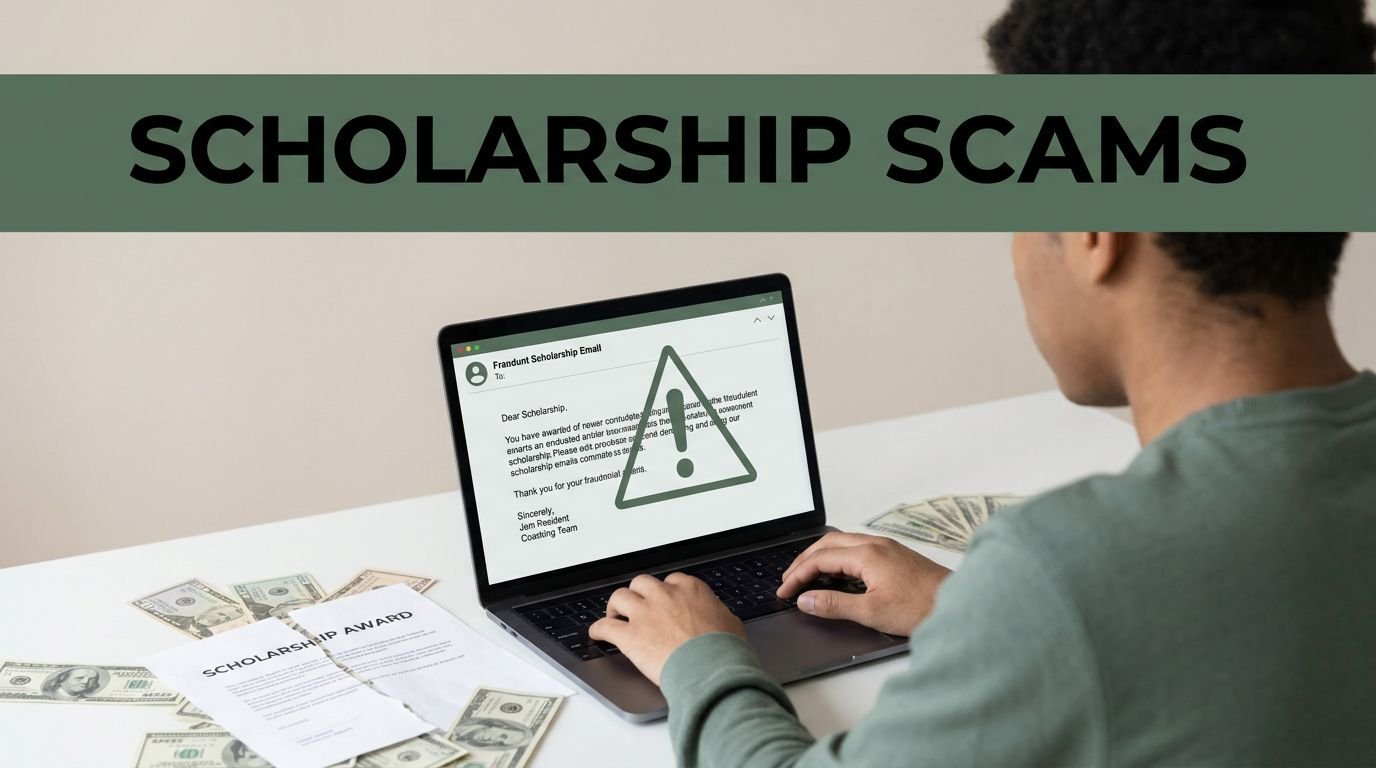
You receive a notification stating that you have received unsolicited scholarship offers for college funding, even though you never applied. That tiny mismatch is where a lot of trouble starts.
Scammers count on your excitement. They want you to rush, pay, or hand over personal details before you slow down and check the basics. In 2026, fake websites, AI-written messages, and bogus FAFSA help are making these traps, which specifically target students seeking college funding, look cleaner than ever before.
If an offer feels off, your job is to test it. The following scholarship scam red flags can save you time, money, and a lot of stress.
Key Takeaways
- Never pay for an application: Legitimate scholarships will never charge an upfront fee, processing cost, or redemption charge to apply or receive an award.
- Beware of high-pressure tactics: If a message creates artificial urgency or claims you have already won a prize you never applied for, it is likely a scam designed to stop you from thinking clearly.
- Protect sensitive data: Only provide necessary information like your name or transcript; never share bank account numbers, credit card details, or social security numbers on an initial application form.
- Verify through trusted sources: Always perform your own independent research and consult your school’s financial aid office before responding to any unsolicited scholarship offer.
The scholarship scam red flags that show up fast
The scholarship scam red flags are usually loud once you know where to look. Real scholarships may be competitive, awkward, and slow. Fake ones often feel pushy, shiny, and strange.
Start with the easiest warning signs. If any of these show up, pause before you do anything else:
- You have to pay first. A processing fee, redemption fee, shipping cost, or any type of scholarship application fees are major warning signs.
- You won without applying. Real awards do not usually appear out of nowhere.
- The award is guaranteed. No honest organization can promise a guaranteed scholarship before the review process is complete.
- You are pushed to act right now. A limited time offer is one of the oldest tricks in the book.
- The site or email looks off. Misspellings, weird sender names, and copied pages matter.
A fake scholarship offer often tries to feel normal at first glance. That is the point. The message may use your name, mention college, and sound polished enough to pass a quick skim. If it still asks for money, banking details, or a rushed decision, it belongs on your suspicious list.
For a fast comparison, Finaid’s guide to common scholarship scams lays out the usual tricks in plain language. That kind of reference is useful when you are not sure if something is odd or just poorly written.

Why pressure is such a big warning sign
Pressure is the primary tool used in financial aid fraud. Scammers know that a calm person asks questions, so they keep you moving to prevent you from thinking clearly.
Think about how a real scholarship process works. You read the requirements, gather documents, submit an application, and wait. It may be slow, but it makes sense. Scam offers break that pattern. They create urgency so you skip the part where you verify the source. Instead of relying on pushy solicitations, you should use a trusted scholarship search database to find a vetted scholarship that follows standard application procedures. High-pressure tactics are frequently found in unsolicited communications or unreliable scholarship matching services that promise guaranteed results.
That pressure can look different in each message. Sometimes it says your award expires in ten minutes. Sometimes it says the office is too busy to answer questions. Sometimes it sounds flattering, like you were personally selected from thousands of students. None of that proves anything. It only proves someone wants your attention before your brain catches up.
This is where AI has made things messier. Fake scholarship emails can sound smoother now. Fake college pages can copy real school layouts, use fake support chats, and hide behind polished language. A slick message is not a trustworthy one; it is just a slick message.
Real scholarships do not need panic. Scams do.
If you want another quick check, Fastweb’s scholarship scam red flags guide is a solid way to compare what you received with what a real offer should look like. The patterns are usually the same, even when the wording changes.
A good habit helps here. If an offer gives you a rush, take that as your signal to slow down. Read it twice and search for the organization online. If you are unsure if you have found a legitimate scholarship, reach out to your school’s financial aid office or a trusted guidance counselor before you click anything else. That pause is boring, and boring is often safer than exciting.
Protect your personal information before you apply
A legitimate scholarship application may ask for your name, contact details, essay, transcript, or references. It should never ask for your bank account information, credit card number, or one-time security codes. Furthermore, remember that a legitimate scholarship will never require an upfront payment or any type of scholarship application fees to be considered.
When people get caught, the damage is often bigger than the fake scholarship itself. A scammer can use your personal information to open accounts, send more phishing messages, or keep pushing you toward another fake form. That is why you should treat your sensitive data like cash. You would not leave cash on a cafeteria table, so do not leave your Social Security number on a random form.

Use a simple rule when you are unsure. If the request feels more private than the scholarship should need, stop and verify your personal information security.
Usually okay |
Pause and verify |
|---|---|
Name, email, phone number |
Social Security number |
Essay, transcript, recommendation letter |
Bank account or debit card details |
Mailing address, school name, GPA |
FAFSA, passwords, one-time codes |
That table is not a perfect line between safe and unsafe, but it helps. The more a form moves into identity, banking, or login territory, the more you need a real reason for it to ask.
Sallie’s guide to avoiding scholarship scams points to the same pattern. If the offer asks for money first or pushes you to share private data without a clear reason, it is time to step back.
Parents and counselors can use the same standard. If a student brings home a scholarship flyer, a text, or a DM that sounds strange, ask one question first: “What does this ask you to give up?” If the answer is money, account access, or private data, the offer needs a second look.
What to do when a scholarship offer feels wrong
When something looks suspicious, do not argue with it. Check it.
- Stop responding right away. Do not click more links, send more details, or pay anything while you are unsure.
- Save the evidence. Keep the email, screenshot the message, and note the sender name or website address.
- Search the scholarship and the organization. Add words like “scam,” “review,” or “complaint” to the search. Look closely at the eligibility requirements to determine if you have found a vetted scholarship that is recognized by reputable institutions.
- Confirm with the official source. Go to the school, foundation, or company website through a fresh search, not the link in the message.
- Tell someone who can help. A financial aid office, guidance counselor, parent, or trusted adult can spot things you miss when you are excited.
- Report the message if needed. If it came through email or a social app, use the report tools. If you shared banking details, contact your bank or card issuer fast. You can also report scholarship scams to the Federal Trade Commission or your state attorney general to help protect others.
The cleanest scholarship offers usually do not panic you. They tell you what the award is, what it covers, how to apply, and when you will hear back. There may be deadlines, but there should not be threats. There may be competition, but there should not be secrecy.
If you are a student, this is your filter. If you are a parent or counselor, it is yours too. A legitimate scholarship never requires sensitive bank account information during the initial application phase. Be wary of any offer that hints at an advance-fee loan or stems from a high-pressure financial aid seminar, as these are common hallmarks of predatory behavior. The fastest way to beat a scam is to make it explain itself. Real opportunities can handle questions. Fake ones hate them.
Frequently Asked Questions
What should I do if I accidentally shared my personal information with a potential scammer?
If you provided sensitive data like bank details, contact your financial institution immediately to freeze your accounts and report the fraud. Additionally, consider placing a fraud alert on your credit reports and monitor your accounts closely for any unauthorized activity.
Are there any situations where a legitimate scholarship asks for money?
No, there is no circumstance where a real scholarship requires an application fee or payment to receive funding. If an organization asks for money to “release” your funds or process your application, it is a clear sign of a scam.
How can I tell if a website claiming to offer scholarships is fake?
Check for poor grammar, misspelled words, and generic contact information that does not link to a reputable institution. A legitimate organization will have a professional, secure website that clearly explains their selection process and provides verifiable contact information.
Conclusion
The easiest way to avoid a bad scholarship offer is to slow the moment down. Requests for money, high-pressure tactics, or demands for private data are all warning signs rather than perks.
When you learn to identify scholarship scam red flags early, you protect more than just your bank account. You safeguard your time, your identity, and your chances of landing a real award. Be wary of any program that promises a guaranteed scholarship or offers a fake money-back guarantee, as these are common tactics used to deceive students. A legitimate scholarship will never require payment or use high-pressure sales pitches to secure your application.
If an offer feels rushed, vague, or too generous, step back and verify the details before you share any information. Our guide on how to tell if a scholarship is legitimate walks through the specific checks that separate real offers from fakes. Real opportunities for financial aid can wait for you to do your research. Scams cannot.
This post may contain affiliate links. If you make a purchase through these links, I may earn a small commission at no extra cost to you.