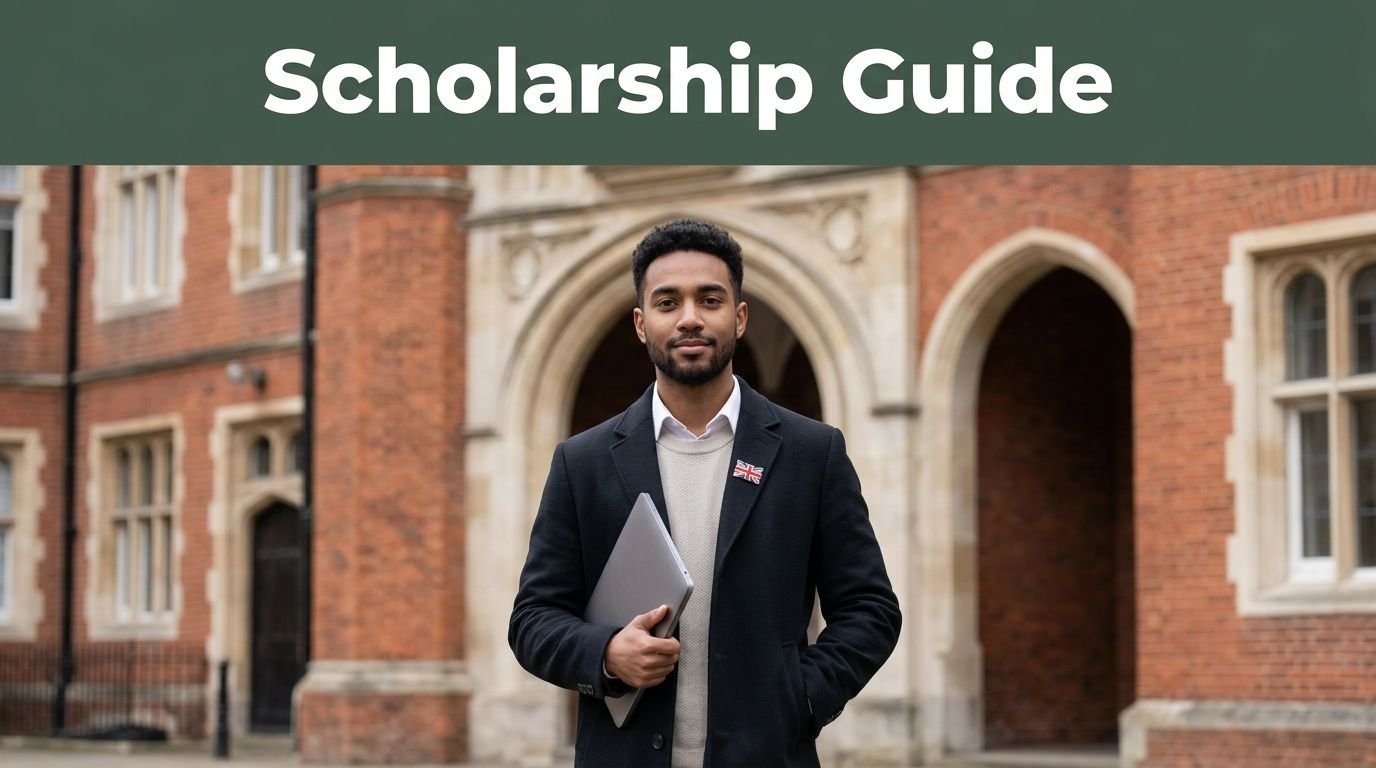
The commonwealth shared scholarship is a fully funded UK master’s scholarship for students from eligible Commonwealth countries who need real financial support to study abroad. If you’re aiming for a one-year taught master’s in the UK, this is one of the best-known options, but the 2026/27 cycle is already closed, so now’s the time to get ready for the next round.
That means you can use this guide to check your eligibility, understand the funding, and avoid the mistakes that knock strong applicants out early. You’ll also see how the application works, what documents matter most, and where people usually slip up.
If you’re planning ahead, start here, because a careful application is often the difference between missing the deadline and landing a fully funded place.
What the Commonwealth Shared Scholarship is and how it works
If you are looking for a way to fund your graduate studies in the UK, the commonwealth shared scholarship is likely on your radar. It is a prestigious, fully funded award meant to bring talented students to the UK to gain skills they can take home to drive development. Because this is a high-demand opportunity, understanding how it operates is the first step toward building a winning application.
Who runs the scholarship and why it exists
The Commonwealth Scholarship Commission (CSC) manages the program as part of the wider Commonwealth Scholarship and Fellowship Plan. It operates with funding from the UK Foreign, Commonwealth and Development Office. Think of it as a bridge between the UK government and emerging talent across the Commonwealth.
The core goal here is development. This isn’t just about giving you a degree; it is about finding individuals who will use their new knowledge to solve real-world problems in their home countries. Whether your field is healthcare, technology, or governance, the commission wants students who have the potential to influence change. By sponsoring your education, they invest in your ability to return home and make a lasting impact in your own community.
What kind of study it covers
It is important to get your expectations right: the commonwealth shared scholarship covers taught master’s degrees only. You won’t find funding here for undergraduate programs, postgraduate certificates, or PhD research.
The programs are full-time and typically last for one academic year. You will generally start your studies in September or October, depending on the specific university’s calendar. While most master’s courses follow this standard 12-month timeline, always check the details for your specific program. Some universities may have slight variations in how they structure their courses, so verify the length of the program before you get too far into the application.
How the university partnership part works
This scholarship works differently than many others because it relies on a partnership between the CSC and specific UK universities. Participating institutions bid for places to offer these awards, which means the scholarships are attached to specific, pre-approved courses.
You cannot simply get the scholarship and take it to any program you like. You must apply for a course that is already on the approved list for the year you are targeting. Because of this, your success depends on careful planning:
- Check the list: Find the approved courses at participating universities for the upcoming cycle.
- Match your goals: Ensure your chosen course aligns with the CSC development themes, such as health systems, global prosperity, or technology.
- Apply early: You must submit an application for admission to the university, usually alongside or shortly after your application through the central CSC portal.
Since the universities often perform the initial selection of candidates, building a strong relationship with your chosen department and meeting their specific admission deadlines is non-negotiable. If you don’t secure a spot in an approved program, you won’t be eligible for the funding, even if your background is impressive.
Are you eligible for a Commonwealth Shared Scholarship?
Before you start drafting your essays or gathering documents, you need to verify that you actually fit the criteria. The commonwealth shared scholarship is designed for a specific group of applicants, and the committee is strict about these requirements. If you do not meet the baseline criteria, your application will be filtered out before it even reaches a human reader.
The countries and applicants this scholarship is meant for
This program is exclusively for citizens or permanent residents of eligible Commonwealth countries. If your home country is not part of the Commonwealth, such as France or Germany, you are not eligible for this funding. The list focuses on countries that are officially classified as developing nations or those in unique development positions.
For example, applicants from countries like Nigeria, Kenya, Ghana, Bangladesh, or Zambia are typically eligible. You must hold either citizenship or refugee status in one of these countries. It is not enough to simply live or study there, as you must prove your status as a permanent resident or a citizen. If you are currently living in a country like the United Kingdom or the United States, you might still be eligible, but you must maintain your primary residency in a qualifying Commonwealth nation.
Your academic background and grades
The academic bar for this scholarship is quite high. You are generally expected to hold a strong first degree, which means a 2:1 (upper second-class) honors degree or its equivalent. This is a competitive program, and the committee looks for candidates who have performed well during their undergraduate studies.
Do not be discouraged immediately if your grade is a 2:2. You may still be eligible if you hold a relevant postgraduate qualification. Having a master’s degree can show that you have the academic maturity and ability to succeed in a demanding UK environment. Whatever your specific results, be prepared to provide official transcripts for every qualification you list. If your documents are not in English, you will need to provide certified translations along with your original records.
Why financial need and development impact matter
This is not a merit-based award in the traditional sense; it is a development-based award. You must clearly demonstrate that you cannot afford to study in the UK without this financial support. If you have the personal or family resources to fund a master’s degree abroad, this program is not for you.
Beyond your bank balance, you need to prove your commitment to your home country. Your application must show exactly how your chosen degree will help you contribute to development when you return. The committee wants to see that you have a plan to use your skills to address local challenges. Think about how your education will benefit your community, your industry, or your country at large. You are not just going to the UK to get a degree; you are going to acquire the tools to drive change at home.
What funding the Commonwealth Shared Scholarship actually includes
When you secure a Commonwealth Shared Scholarship, you gain access to a comprehensive financial package designed to remove the economic barriers to your UK master’s degree. The program is built to ensure your focus stays on your studies rather than on finding ways to pay for them. While specific amounts can change based on the annual agreement between the Commission and your host university, the core components remain consistent.
Tuition, living costs, and travel support
The funding package is structured to cover the essentials of student life, from the moment you leave home until you finish your degree. You do not need to worry about the primary costs associated with your education, as the scholarship manages these directly.
- Full tuition fees: The scholarship pays your course fees in full, which means you are not personally responsible for any part of the tuition bill.
- Monthly maintenance allowance: You receive a stipend meant to cover your rent, food, and daily essentials. The amount varies depending on whether your university is located in London or elsewhere in the UK, as the cost of living differs significantly between regions.
- Economy airfare: You are provided with a round-trip ticket from your home country to the UK. This covers your initial arrival and your departure once you complete your master’s program.
- Study and travel grants: Many scholars receive additional small allowances for travel related to their studies, which helps if you need to attend academic conferences or conduct field research.
Some universities might offer supplementary support, such as a one-time grant for warm clothing if you are moving from a tropical climate. Always review the specific details provided by your host institution, as they often handle the administration of these funds once you arrive.
What you may still need to budget for
Even with a fully funded scholarship, it is practical to keep a small buffer of personal savings for costs that fall outside the standard package. The scholarship is comprehensive, but it doesn’t cover every single expense you might face while settling into a new country.
Common items you should plan to cover yourself include:
- Visa application fees: These costs are usually your responsibility, so make sure you research the current rates for your home country well in advance.
- Medical surcharges: You will likely need to pay the Immigration Health Surcharge as part of your visa application to access the UK National Health Service.
- Personal travel and baggage: If you plan to carry extra luggage beyond the standard airline allowance, the cost of additional baggage will come out of your own pocket.
- General social spending: While your maintenance stipend covers your basic living needs, any extra travel or social outings you plan throughout the year are your responsibility.
Be realistic about your personal spending habits. Having a modest emergency fund will give you peace of mind so you aren’t scrambling for cash if an unexpected expense arises.
Why the funding package is valuable for international students
The real power of this funding is how it levels the playing field for talented individuals. Studying abroad is often restricted to those with private wealth, but this program removes that gatekeeper entirely. By covering your tuition and providing a steady monthly income, the scholarship eliminates the biggest sources of anxiety for international students.
When you aren’t worried about how to pay for your next meal or whether you can afford your textbook fees, you can actually engage with your course material at a deeper level. You are free to network, join student organizations, and invest your energy into the development goals that brought you to the UK in the first place. This financial stability is what makes the Commonwealth Shared Scholarship a launchpad for your career; it allows you to finish your degree with a clear mind and a sharp focus on the impact you want to make when you return home.
How to apply for the Commonwealth Shared Scholarship the right way
Applying for a commonwealth shared scholarship is a big project, not a weekend task. Since you have to manage two separate application streams—one for the scholarship itself and one for your university admission—you need a clear plan. If you wait until the last minute, you will almost certainly run into issues with document formatting or university-specific requirements that knock you out of the running before you even begin.
The documents you should prepare early
You cannot upload documents whenever you feel like it. The CSC Central system is strict, and if a document is missing or formatted incorrectly, your application is disqualified. Start gathering your files months before the application cycle opens.
You will need to have the following documents ready to upload in PDF format:
- Academic transcripts: You need a full transcript for every higher education qualification you have finished. If you are currently studying, include your transcripts to date. If they are not in English, you must provide certified translations.
- Degree certificates: Scan your original certificates. If you haven’t received your final certificate yet, a formal statement of results is acceptable.
- Proof of citizenship: A valid passport is your best bet here. If you do not have one yet, use a national ID card that clearly shows your photo, date of birth, and home country.
- References: You need two signed references. These should be on official institutional letterhead or sent from a verified professional email address. You must merge these into one single PDF file to upload them correctly.
Do not try to wing the formatting. The commission expects clean, readable files. If you have to merge multiple documents into one, use a reliable tool to keep the file size manageable and the resolution sharp.
How the selection process usually works
It is important to understand that the CSC does not just pick names out of a hat. The selection process is a multi-stage review that relies heavily on the partnership between the commission and the universities.
First, your application goes through an initial check to ensure you meet all the basic eligibility criteria. If you pass that, the university you applied to reviews your academic background and your potential to succeed in their specific master’s program. They are looking for more than just high grades. They want to see that you understand their course and that you have a clear plan for your future.
If the university recommends you, the application moves to the CSC. They perform a final, comprehensive assessment of your personal statement and your development plan. They are specifically looking for candidates who can articulate how they will address real-world problems in their home country. If your essays are generic or lack a concrete vision for development, you will struggle to move past this stage. Strong grades get your foot in the door, but your development plan keeps you in the room.
The deadlines and timing you must watch
If you are currently looking at the calendar, remember that the 2026/27 cycle has closed. While this might feel like a setback, it is actually a gift of time. You have the luxury of preparing your profile, researching the right universities, and refining your development goals long before the next window opens.
Keep in mind that you face two different timelines:
- The CSC deadline: This is the final date to submit your central application. Missing this means your application is void.
- The university deadline: Many universities have earlier, internal deadlines for admission applications. If you do not meet the university’s requirement for admission, you are ineligible for the scholarship, regardless of your academic merit.
Never assume the university deadline is the same as the CSC deadline. Check the website for every program on your list. Some institutions, like UCL or LSE, may require you to have your admission application fully submitted, including references, well before the scholarship cycle ends. Use this downtime to mark these dates on your calendar and set reminders for yourself to start your applications at least a month early.
How to improve your chances of winning a place
Winning a commonwealth shared scholarship is about proving you are the missing piece in a puzzle your home country is trying to solve. The selection committee isn’t just looking for top-tier grades; they are scouting for leaders who have a clear, realistic plan to make a difference. If your application sounds like it could belong to anyone else, you are losing ground. You need to be specific, personal, and focused on the future.
Choose a course that matches your home country’s needs
The most successful applicants do not just pick a course because it sounds interesting. They pick a program because it directly addresses a critical gap in their home country. Think about the biggest challenges facing your community right now. Is it a lack of clean water technology, a gap in public health policy, or perhaps a need for more resilient urban planning? Your master’s degree should function as a tool to help you solve one of these specific problems.
When you write about your course choice, be explicit about the connection. Don’t just say you want to study public policy. Explain how that specific UK curriculum will provide the exact framework, research methods, or case studies needed to improve policy implementation in your home government or local organization.
- Focus on application: If you are studying technology, describe how you will deploy those skills to bridge the digital divide in your region.
- Identify the gap: Name the specific policy, economic, or social issue you intend to tackle when you return home.
- Show intent: Make it clear that this knowledge isn’t for personal growth alone, but for a tangible, professional return on investment for your country.
The committee wants to see that you have done your homework. If your chosen course perfectly aligns with national development priorities, you aren’t just another student applying for funding. You become a candidate who offers a clear pathway to progress.
Write a strong personal statement with a clear goal
Your personal statement is the heart of your application. This is your chance to show the committee who you are beyond your transcript. A strong statement is sincere, specific, and grounded in reality. Avoid using jargon or recycled phrases you found online. If you are copying a template, the reviewers will notice. They want your voice, your experiences, and your unique perspective on how you will lead change.
Start by mapping out your journey. Show them what you have done, what you have learned, and why you are the right person to take the next step. Talk about your leadership experience, whether it was running a student group, managing a small team at work, or organizing a local community project.
Crucially, include a realistic return plan. The commission requires you to return home shortly after your studies, so tell them exactly how you plan to use your degree in the first few months and years back. Will you be consulting for a specific ministry? Launching an initiative in your field? Working with an NGO? The more concrete your plan, the more convincing your application becomes.
Avoid the small mistakes that can hurt a good application
It sounds simple, but many great candidates disqualify themselves over technical errors that are entirely preventable. The application process is rigorous, and the instructions are there for a reason. If you ignore the formatting rules or skip a section, your file might not even reach the selection panel.
Watch out for these common pitfalls:
- Incomplete documents: Check that every file you upload is the full, high-quality version. A partial transcript or a blurry scan of a degree certificate can signal a lack of attention to detail.
- Weak references: Choose people who know your professional or academic work well. A generic reference letter that doesn’t speak to your specific skills or leadership potential won’t do you any favors.
- Ignoring formatting: If the system asks for a specific file type or size, follow those instructions to the letter. Trying to bypass these technical limits often leads to corrupted files.
- Late submissions: Never leave your submission for the last hour. Technical glitches happen, and the system won’t care if you have a great excuse. Aim to finish at least two days before the deadline.
Take your time to double-check every detail. When you treat the application process with the same level of seriousness you would a professional project, you show the committee that you are capable, organized, and ready for the demands of a master’s program in the UK.
Which UK universities and courses are usually involved
The Commonwealth Shared Scholarship works through a collaborative model. The Commonwealth Scholarship Commission selects specific UK universities to participate in each cycle, and those institutions determine which of their master’s programs are eligible for funding. Because these partnerships change annually, you must look at the specific list for the cycle you are targeting rather than relying on past information.
Examples of participating universities and subject areas
While the list of eligible programs shifts every year, certain universities frequently partner with the commission to offer degrees that align with major development themes. These institutions generally prioritize master’s programs in areas like healthcare, public policy, engineering, and climate change.
In recent cycles, institutions have offered awards across diverse fields:
- University of Edinburgh: Often features programs in Africa and International Development, Global Crime, and Future Governance.
- University of Exeter: Frequently hosts students for degrees in Applied Security Strategy, Diplomacy, and Politics of Energy and Infrastructure.
- SOAS, University of London: Regularly participates with courses in International Studies, Diplomacy, and Humanitarianism.
- University of Reading: Typically includes options for those focusing on Public Policy, Food Science, or Conflict and International Security.
- University of Birmingham: Often supports students in fields like Conflict, Security, and Development or Africa and Development.
These examples represent the types of courses that receive funding, but they do not guarantee availability for future rounds. Always check the current list to see if your specific field of interest has an active partnership.
How to choose a course that fits the scholarship rules
You cannot simply use a Commonwealth Shared Scholarship for any degree program that catches your eye. Your chosen course must be explicitly listed as an eligible program by both the university and the commission for that specific academic year. If you select a course that isn’t on the official list, you will not be considered for funding.
When evaluating your options, ensure the program fits these three requirements:
- Development alignment: The course must directly support the development goals of your home country. You should be able to explain how the skills you gain will help you solve a specific problem in your region once you finish your studies.
- Full-time status: The scholarship only covers full-time, taught master’s degrees. Part-time or distance learning programs, as well as research-focused PhDs, do not qualify.
- Institutional eligibility: The course must be hosted by a partner university that has secured places for the current cycle.
Check these details early. If you are unsure whether a program qualifies, look for the scholarship information page on that university’s own website. They will often state clearly if their specific master’s degree is participating in the scheme for the upcoming year.
Where to check the latest official course list
To get the most accurate and up-to-date information, head directly to the Commonwealth Scholarship Commission website. They maintain the official register of participating universities and the specific courses they are offering for each cycle. Do not rely on third-party scholarship databases or old blog posts, as they often contain outdated links or expired program lists.
Once you identify a potential course on the official site, visit the university’s own scholarship page. These university pages often provide essential local guidance, such as whether you need to meet an earlier internal deadline for your admission application. Because award numbers and course participation change from one year to the next, treat the official CSC portal as your primary source of truth. If a program was eligible last year but isn’t listed for the next round, it cannot be used for your application.
Conclusion
Securing a commonwealth shared scholarship is a serious commitment, but it is one of the most effective ways to fund a high-quality master’s degree in the UK while keeping your eyes fixed on development back home. Because the competition is stiff and the administrative requirements are strict, your success relies on how early and how thoroughly you prepare.
Take the time to verify your eligibility, track the opening of the next cycle, and start gathering your documents months in advance. Choose a course that aligns with your specific career goals and your home country’s development needs, as this connection is exactly what the selection committee wants to see.
You have the potential to gain the skills needed to make a real difference, so treat your application like the professional project it is. Start your research now, stay organized, and build a plan that gets you from where you are today to your seat in a UK classroom.
This post may contain affiliate links. If you make a purchase through these links, I may earn a small commission at no extra cost to you.