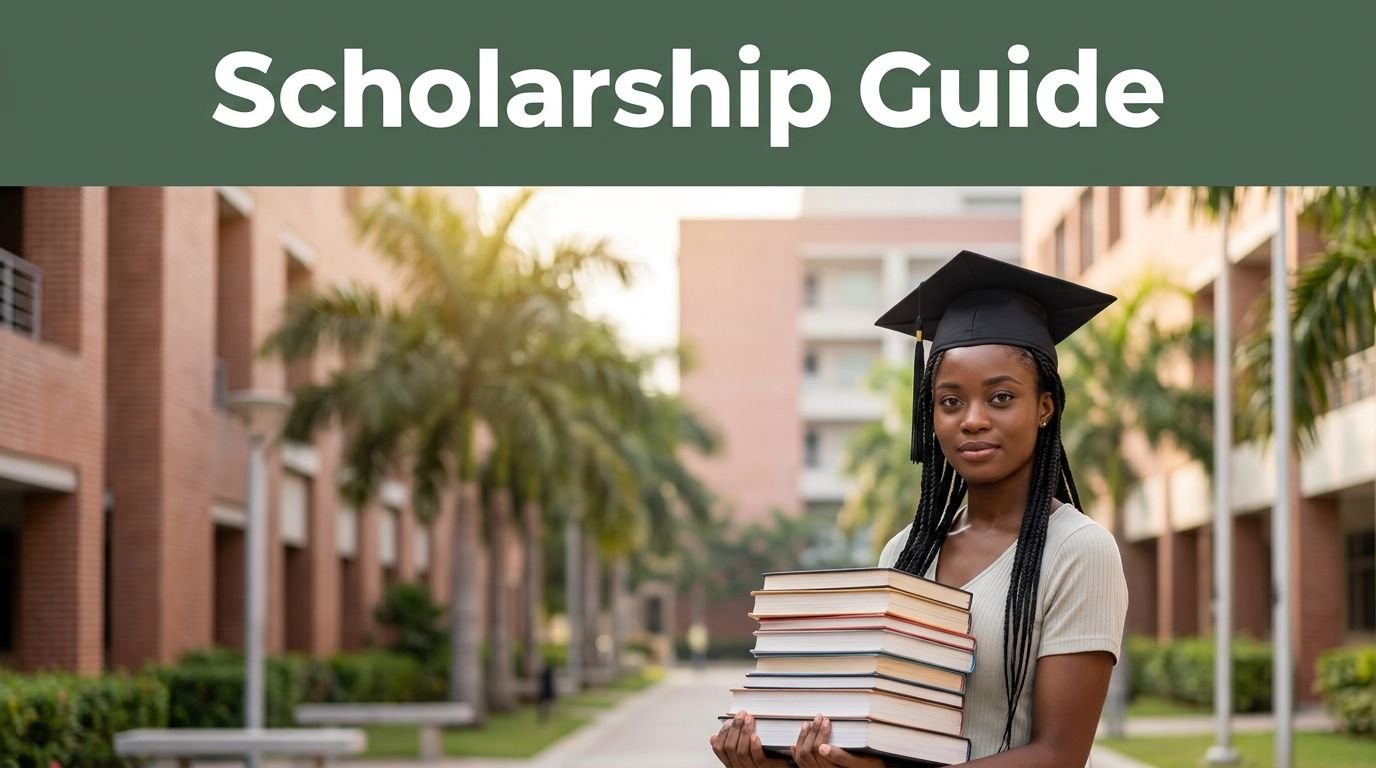
Undergraduate scholarships in Nigeria matter because the cost of getting a degree now stretches well beyond tuition. Many students also have to cover rent, food, transport, books, and data, and those bills can make school feel out of reach even after admission has been secured.
For many families, that gap is the difference between staying enrolled and dropping out. The problem is sharper for students from low-income homes, where partial awards often leave the biggest expenses untouched, and scams can blur the line between real aid and empty promises.
This guide looks at the real options available, the rules that shape them, and the warning signs that help separate genuine opportunities from wasted time.
How undergraduate scholarships in Nigeria work in 2026
Undergraduate scholarships in Nigeria are rarely one-size-fits-all. Most awards are built around a clear target, a school type, a field of study, or a student group with specific needs. That is why one scholarship may favor a high scorer in a public university, while another is aimed at a student from a low-income home or a blind student in science.
The structure matters. In 2026, many awards still follow a simple pattern: they screen for eligibility, rank applicants by set rules, and then fund the students who match the sponsor’s goal best. Some cover tuition only. Others add stipends, books, or hostels. A few are tied to renewal conditions, so the support continues only if the student keeps a set CGPA or remains in good standing.
The main scholarship categories students will see
Scholarship notices in Nigeria usually fall into a few clear groups. Merit-based scholarships reward academic strength. These awards look at UTME scores, WAEC or NECO results, CGPA, or class rank. They usually target students who have strong records and can keep performing well after selection.
Need-based scholarships focus on financial pressure. These are less common than merit awards, but they matter because they help students whose families cannot meet school costs. Sponsors often ask for proof of hardship, and they may compare household income, parent status, or other support documents.
Course-specific scholarships are tied to a field of study. Engineering, medicine, education, agriculture, and computer science often appear on the list. These awards exist because sponsors want to support sectors that need talent, especially where Nigeria faces skill shortages.
Group-specific scholarships serve a defined category of students. That group may be women in STEM, students with disabilities, or students from a particular state or community. Some awards also favor public tertiary institutions because sponsors want broader reach and lower costs. Public schools often have larger student pools, so a sponsor can support more people with the same budget.
Many awards are built around the sponsor’s goals first, not the student’s preferences. That is why reading the eligibility rules carefully matters.
STEM fields get special attention for the same reason. Companies and foundations often see science, technology, engineering, and medicine as areas with direct national value. A scholarship for electrical engineering or computer science is usually trying to fill a skills gap, not just reward good grades.
What most 2026 applications ask for
Most scholarship forms in 2026 ask for the same basic papers, even when the sponsor changes. The details may look small, but missing one item can slow an application or knock it out completely.
Before applying, students usually need to keep these ready:
- Admission letter from the school
- WAEC or NECO result for entry proof
- Transcript or result slip if the scholarship wants current academic standing
- Passport photograph
- Valid ID, such as NIN slip, school ID, voter card, or other accepted identification
- CGPA or grade record, especially for awards that track academic merit
- School name and course of study
- Recommendation letter if the sponsor asks for one
- Birth certificate or age proof in some cases
- State of origin or local government details for state-based awards
- Bank details for students who are selected
Some forms also ask for a short personal statement, a phone number, an email address, and proof of enrollment. For blind students, disability-based awards may require extra documentation from the school or a recognized medical source.
A clean file helps. Many applicants lose time because names do not match across documents, or because they upload blurry scans. The safest approach is to keep every document in the same spelling order and confirm that the course title matches the school record exactly.
The strongest applications are usually the most complete ones. A student with solid grades can still miss out if the documents are weak, inconsistent, or late. In practice, scholarship selection in Nigeria often rewards preparation as much as performance.
Where serious students in Nigeria find real scholarship opportunities
Real scholarship leads rarely sit in noisy reposts or forwarded messages. They usually come from the source itself, where the rules, dates, and sponsor details are visible in full. That matters because scholarship fraud often thrives on confusion, and confusion is easier when the only version a student sees is a copied summary stripped of context.
Official portals and foundation websites
The most reliable scholarship notices come from the organization funding the award. Ministries, oil and gas firms, banks, and private foundations post the cleanest version of their offers on their own websites or official social pages. Those pages usually carry the full eligibility rules, the deadline, the documents required, and the name of the sponsor responsible for the award.
That matters because reposted summaries often leave out the hard parts. A copied notice may mention the prize money but skip the CGPA threshold, the state restriction, or the school list. In practice, that kind of omission wastes time and creates false hope.
Students in Nigeria should watch the official channels of:
- Federal and state ministries, especially education and youth agencies
- Oil and gas companies, which often fund major undergraduate awards
- Banks and financial institutions, which run merit-based and need-based schemes
- Telecom firms and consumer brands, which sometimes support education trusts
- Private foundations and family trusts, which publish their own application pages
A strong example is a scholarship page that names the sponsor, gives a deadline, and links directly to the application form. A weak one is a social post that says “apply now” without saying who is paying, who qualifies, or where the form lives.
How to judge whether a scholarship listing is worth trusting
A real scholarship listing has a paper trail. It tells the student who is behind it, what the award covers, and when the process ends. Anything less deserves caution.
A quick legitimacy check usually starts with these signs:
- No application fee for applying or “processing”
- Clear eligibility rules that name the level, course, school type, or grade band
- A named sponsor instead of a vague “donor” or “partner”
- A visible deadline and, ideally, a timeline for results
- A real contact method, such as an email, phone number, office address, or application helpdesk
Any offer that asks for money upfront should be treated as suspect.
The same caution applies when a listing asks for strange personal details too early. Bank passwords, card numbers, or sensitive account information have no place in a normal scholarship process. So do promises of guaranteed selection, instant approval, or “reserved slots” for a fee.
Poor spelling, rushed language, and random WhatsApp broadcasts are also warning signs, especially when the message claims a student has “won” without ever applying. Serious undergraduate scholarships in Nigeria do not work like lottery tickets. They follow rules, collect documents, and name the institution behind the award. That structure is what gives them weight, and it is also what separates them from the noise.
What makes an applicant stand out for undergraduate awards
Selection panels rarely choose on grades alone. For undergraduate scholarships in Nigeria, the strongest applications usually combine academic strength, proof of need, and a clear fit with the sponsor’s aim. A student can have decent results and still look forgettable if the rest of the file feels thin or generic.
Sponsors read for signals. They want to see discipline, stability, and a reason their money should back one applicant over another. That is why the best applications feel specific, not polished for its own sake.
Why grades still matter, but are not the whole story
Academic records often open the door. Many awards begin with screening based on WAEC, NECO, CGPA, or UTME results, because sponsors need a fast way to sort large pools of applicants. Strong grades still matter, especially for merit-based awards and competitive national schemes.
Still, grades are only the first filter in many cases. Sponsors also look for consistency, discipline, and a clear match with the scholarship’s purpose. A student who has kept a steady record across semesters often looks stronger than one with a single sharp peak and a weak paper trail.
Some awards also target very specific groups. Public institution students often have an advantage in schemes that want broad access or wider reach. Others only accept applicants in 200 level and above, since sponsors want students who have settled into their course and can show real academic direction. In those cases, the applicant stands out by meeting the exact profile, not by scoring the highest mark in the room.
A strong record helps, but context helps too. A sponsor funding medical students, for example, may value a student whose grades sit alongside clear commitment to the course. That combination tells a better story than numbers alone.
Scholarships often reward the student who fits the brief, not just the student with the highest score.
The small details that often decide the outcome
Many strong candidates lose out on simple errors. These mistakes rarely look dramatic, but they can sink an application fast, especially when reviewers are working through hundreds of forms.
The most common problems include:
- Mismatched names across documents, which creates doubt about identity.
- Weak phone numbers or inactive email addresses, which block follow-up.
- Missing documents, such as transcripts, admission letters, or ID.
- Rushed answers, which sound vague and make the applicant seem unprepared.
- Missed deadlines, which usually end the process before review begins.
The safest applications are neat and complete. Dates should line up, names should match exactly, and every required file should be readable. A blurry scan or a half-filled form can undo months of effort in minutes.
Tone matters too. Short, honest answers usually beat long, inflated ones. When an application sounds copied, exaggerated, or careless, it leaves a weak impression. In scholarship selection, precision is often the quiet advantage that separates serious applicants from the rest.
A simple application checklist for 2026
Scholarship forms look simple until the final page. That is where small errors turn into lost chances, especially in undergraduate scholarships in Nigeria where screening is often fast and document-heavy. A careful checklist keeps the process steady, because most rejections come from avoidable mistakes rather than weak potential.
The cleanest applications follow the same pattern every time. The documents are ready before the form opens, the details match across records, and the final submission is checked line by line. That habit matters more than many students realize.
Documents to gather before opening any form
A good application begins with a complete file, not a rushed search for missing papers. Keeping these items in one place makes the process faster and cuts down on last-minute panic.
- Admission letter
- WAEC or NECO result
- Current transcript or result slip
- Passport photograph
- Valid ID such as NIN slip, school ID, or voter card
- CGPA record or grade summary
- School name and course of study
- Recommendation letter, if required
- Birth certificate or age proof
- State of origin details
- Bank account details
- Active email address and phone number
- Personal statement or short essay, if the form asks for one
Names should match exactly across the file. A single spelling difference can slow review or raise questions about identity. Clear scans matter too, because blurred uploads often fail the first check.
Many forms ask for the same set of papers, but they do not forgive missing files.
It also helps to keep digital copies in more than one folder. A phone can fail, a file can get deleted, and a deadline does not wait for recovery. For students tracking real undergraduate scholarship awards, this kind of preparation often saves more time than any late correction can recover.
Submission mistakes to avoid on the final page
The last page is where many strong applications break down. Most of the mistakes are simple, but they are costly. Many forms cannot be edited after submission, so one wrong entry can stay locked in.
The most common errors are easy to spot once they are named:
- Incorrect CGPA entered from memory instead of the current record
- Old phone numbers or email addresses that no longer work
- Blurry uploads that hide names, grades, or signatures
- Incomplete fields left blank because the applicant rushed
- Wrong file formats or file sizes that the portal will not accept
- Names that do not match school records, ID cards, or certificates
- Copied statements that sound vague or do not fit the scholarship
Each of these mistakes can look small on its own. Together, they can make the whole application look careless. A reviewer does not need much time to set a weak file aside.
The safest final check is plain and methodical. Read every field again, compare each upload with the requirement, and confirm that contact details still work. If the form asks for a current CGPA, use the latest approved result, not an estimate from memory. If it asks for a phone number, make sure the line is active before pressing submit.
A last scan of the form often catches what the eye skipped the first time. That final review is less about perfection and more about control, because scholarship portals reward accuracy long before they reward enthusiasm.
The scholarship deadlines and year-by-year timing students keep missing
Scholarship timing in Nigeria is less random than many students think. The missed chances usually follow a pattern, and that pattern repeats every year. Some awards open early, some close in the middle of the year, and others disappear before students finish checking their results.
The problem is not only late application. It is also late preparation. By the time a form appears, the best applicants already have their documents, grades, and reference details in place.
Early-year openings and what they usually mean
Many of the strongest undergraduate scholarships in Nigeria open between January and April. That window often includes national awards, merit-based schemes, and some private foundation programs that want to start fresh with the academic calendar. These are usually the applications students hear about first, but many still miss them because they wait for a public reminder before getting ready.
Early-year openings usually mean the sponsor wants fresh academic records. In practice, that can mean WAEC, NECO, UTME, or a recent CGPA update. It can also mean the award is tied to a new budget cycle, so the sponsor begins screening as soon as the year starts.
That is why the paperwork should already be ready before the form goes live. A student who waits for the announcement often loses time on simple things, like finding an admission letter, confirming a name match, or scanning a result slip properly. Those delays sound small, but scholarship windows close fast.
A solid early-year file usually includes:
- Admission and identification documents
- Current result records
- A clean passport photo
- An active email address and phone line
- Any needed letters or proof of enrollment
Early openings reward preparation more than speed. Once the form appears, the real race has already begun.
Mid-year and late-year deadlines
Not every award rushes out in the first quarter. Some foundation scholarships, corporate awards, and state-backed programs close in the middle of the year or toward the end, especially when sponsors tie them to internal planning or company calendars. These openings matter because they often attract students who missed the early rounds and think they still have plenty of time.
That assumption causes trouble. Late-year deadlines can look generous on paper, yet the review process may begin long before the posted date. Some sponsors also stop receiving files once the portal closes, and a late submission is usually treated as no submission at all. No polite follow-up changes that.
This is where applicants lose ground:
- They assume the deadline includes a grace period.
- They wait for “one more week” to polish documents.
- They miss that some portals close automatically at midnight.
- They forget that weekends and public holidays can slow support emails.
The safest rule is simple, late applications are usually not accepted. Even when a sponsor says it may review “late cases,” that rarely helps the average applicant. Most serious scholarship programs treat deadlines as hard stops, not suggestions. For students tracking undergraduate scholarships in Nigeria, the calendar matters as much as the grades. A strong profile can still miss the year if the timing is wrong, and that is where many promising applications vanish.
Conclusion
Undergraduate scholarships in Nigeria are still real, and the strongest awards are not hidden. They usually sit in plain sight, tied to clear rules, fixed deadlines, and documents that must line up exactly.
That is why the students who do best are often the ones who prepare early, check details twice, and stay patient when the process moves slowly. Preparation matters more than noise, and organization often matters more than charm.
The pattern is simple enough, even if the competition is not. The loudest applicant is rarely the one who gets selected, the most organized one usually is.
This post may contain affiliate links. If you make a purchase through these links, I may earn a small commission at no extra cost to you.