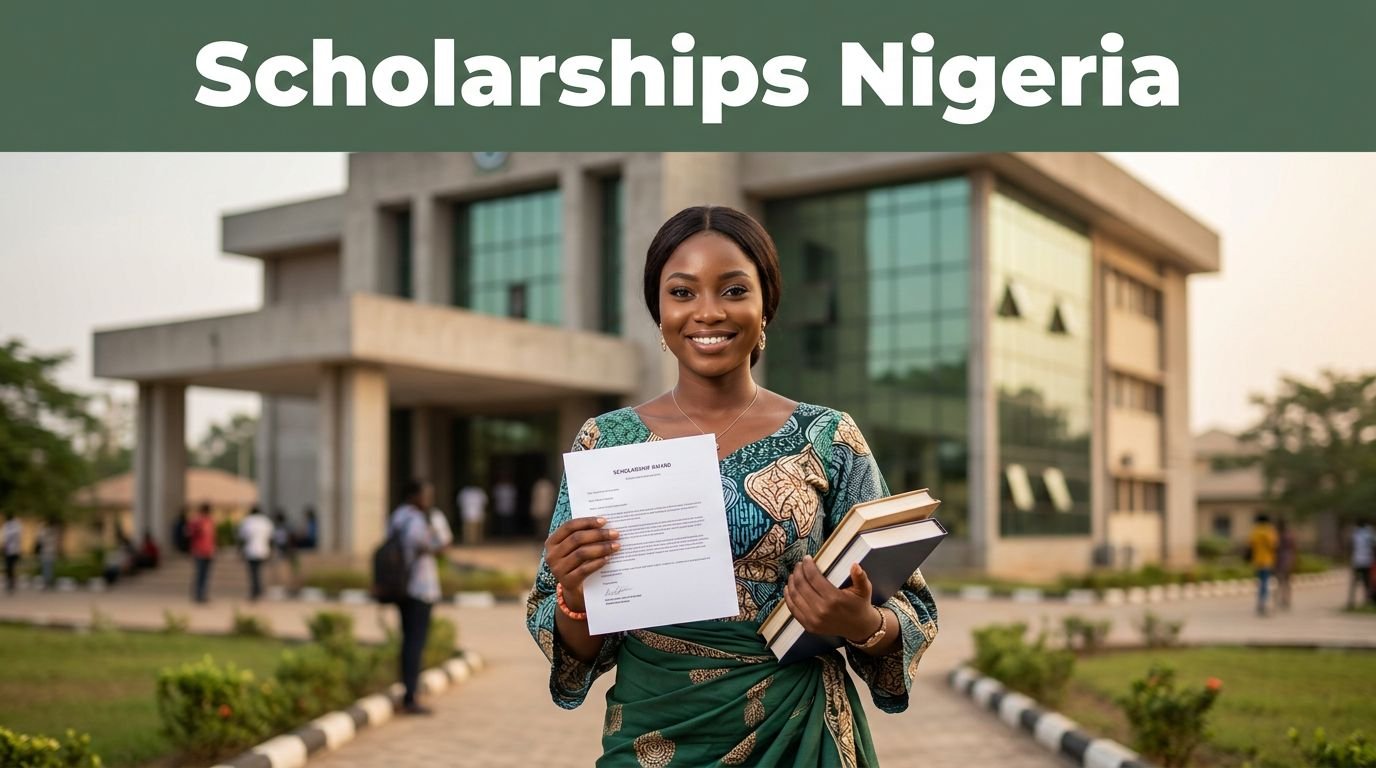
Paying for university in Nigeria can feel like a moving target, and the bill doesn’t get lighter while you wait. If you’re looking for scholarships for undergraduate students in Nigeria, you’re probably trying to keep your degree on track without putting all the pressure on your family.
The good news is that real opportunities do exist, but they’re easier to miss when you don’t know where to look or what schools and sponsors want. Some awards are based on strong grades, some are meant for students with financial need, and others focus on specific fields, states, or institutions. You don’t need guesswork, you need a clear plan.
That means knowing where to find genuine scholarships, who can apply, which documents matter most, and the mistakes that can knock you out early. It also helps to spot fake offers before they waste your time. Keep reading, because the next section breaks it down in a way you can use right away.
Where to Find Scholarships for Undergraduate Students in Nigeria
Finding scholarships is easier when you know where the real opportunities live. The best awards are usually posted in places you can verify, track, and trust, not in random messages that ask for payment or personal details too early.
A smart search starts with official sources, then moves to company programs, university notices, and trusted scholarship platforms. If you check only one source, you miss a lot. If you check all the right ones, you give yourself a much better shot.
Official scholarship portals and government programs
Official portals are the safest place to start because the details come straight from the source. That means you’re less likely to fall for fake deadlines, copied forms, or scam pages pretending to offer free funding.
For federal awards, keep an eye on the Federal Ministry of Education scholarship portal, the ministry’s main website, and other public scholarship pages that announce undergraduate opportunities. These sites usually publish eligibility rules, application dates, required documents, and instructions in one place.
If a scholarship asks you to pay before you apply, treat that as a warning sign.
Government programs can open and close quickly, so check back often. A scholarship that is not available today may appear next week, and a deadline can change without much notice. If you’re serious about scholarships for undergraduate students in Nigeria, make it part of your routine to scan official updates every few days.
Company-funded awards and foundation scholarships
Many of the strongest awards come from corporate sponsors and private foundations. These programs often support tuition, stipends, books, or other school costs, and some go beyond money by offering mentoring or career exposure.
You’ve probably heard of opportunities from MTN, NNPC, SEPLAT, NLNG, Jim Ovia, and David Oyedepo Foundation. They are popular for a reason, they often target hardworking students with solid grades, clear goals, or financial need.
The key is to track them early. These programs often ask for transcripts, identification, admission details, and proof of academic performance. If you wait until the deadline is near, you may not have time to gather everything properly.
A simple way to stay ahead is to keep a running list of the sponsors you want to watch:
- Telecom and oil company awards for students in different fields
- Foundation scholarships that support tuition and living costs
- Merit-based awards that reward strong academic records
- Need-based awards that focus on financial hardship
School notices, alumni groups, and trusted scholarship platforms
Your university can be a gold mine if you pay attention. Scholarship notices often appear on notice boards, departmental WhatsApp groups, faculty boards, and student affairs channels before they spread anywhere else.
Alumni groups can help too. Graduates often share award links, deadline reminders, and tips from the application process. That kind of inside information can save you from missing an opportunity just because it never made it to a public page.
Trusted scholarship listing sites are useful when you want a wider search. They can help you compare options fast, but you still need to verify the details on the sponsor’s official page before you apply. Too many students miss out because they only search one place and stop there.
To stay organized, keep it simple:
- Save scholarship links in one folder.
- Check updates at least twice a week.
- Apply as soon as the application opens.
- Re-check the requirements before you submit anything.
Quick checklist before you apply
Before you chase any award, make sure you have the basics ready. A clean application saves time and keeps you from rushing at the last minute.
Use this simple checklist:
- Admission letter or school ID
- Recent passport photograph
- Local government or state of origin details
- Academic records or transcript
- Personal statement or essay, if required
- Active email address and phone number
- Bank details, if the sponsor requests them
Deadlines can disappear fast
Deadlines for undergraduate scholarships in Nigeria are not always generous. Some programs close within days, and some stop the moment they get enough applicants. That’s why waiting can cost you more than a missed form, it can cost you the entire award.
Set reminders on your phone, and don’t rely on memory alone. If a scholarship looks right, apply early and double-check the final date on the official source before you send anything.
FAQs
Where should you start first?
Start with official government portals, then move to company scholarships, your school notices, and trusted scholarship sites.
Are corporate scholarships only for top students?
Not always. Some are merit-based, but others also consider financial need, course of study, or state of origin.
How often should you check for new awards?
Check often, ideally a few times each week. Scholarship windows can open and close fast.
What should you avoid?
Avoid any scholarship that asks for payment, uses a suspicious link, or gives vague instructions with no official contact information.
If you keep your search broad, stay alert, and apply early, you’ll spot more scholarships and waste less time on dead ends.
How to Tell If You Are Eligible Before You Apply
Before you spend time on any scholarship form, check the rules first. A lot of students lose good chances not because they are unqualified, but because they apply for awards that were never meant for them.
The fastest way to save yourself stress is to read the eligibility section like a checklist, not a suggestion. If the scholarship is not built for your level, school type, course, or background, move on and look for one that fits better.
Your level of study and school status
Some scholarships are only for freshers, while others are open to students in 200 level, 300 level, or even higher. If you are still in first year, a scholarship for final-year students will waste your time. If you are already in 300 level, a fresher-only award will do the same.
School type matters just as much. Some scholarships are for public universities only. Others accept students from private universities, polytechnics, or colleges of education. A few are even limited to certain approved institutions, so do not assume your school is covered unless the sponsor says so clearly.
A quick scan of the eligibility section can save you a full application process. If the scholarship says “public university only” and you are in a private school, skip it. If it says “200 level and above” and you are in 100 level, wait for a better match.
If the school type or level does not fit, the rest of your application doesn’t matter.
Grades, course choices, and other academic rules
Your CGPA usually matters a lot, especially for merit-based awards. Some sponsors want a solid academic record, while others set a minimum cutoff and stop there. You may see requirements like 3.0, 3.5, or higher, depending on the sponsor and the size of the award.
Course choice can matter too. Many scholarships are open to students in related fields only, especially when the sponsor wants to support a particular industry. STEM awards often have stricter rules than arts or social science awards, and some may ask for specific subjects in your O’Level results, JAMB score, or both.
That does not mean every scholarship is out of reach if your grades are not perfect. Some awards balance academic strength with other factors, like financial need, location, or community background. Still, if your results are strong, you should treat that as an advantage and apply where it counts.
A few common academic checks include:
- CGPA cutoff for current students
- Relevant course of study for sponsor-specific awards
- WAEC or NECO subject requirements
- JAMB performance for some private university scholarships
- Proof of enrollment in the right year or level
Special groups, state quotas, and financial need
Some scholarships are built for students who fall into a specific group. That could mean low-income students, students from a certain state, persons with disabilities, or students from a particular community. These rules are not barriers, they are filters, and they can work in your favor.
If you fit one of those categories, you should look for scholarships that match it. That way, you are not competing in the wrong pool. A state quota award, for example, may be easier to match than a national scholarship with broader competition.
Financial need is another big one. Some sponsors want students who can show real hardship, while others only want applicants who are not already on another scholarship. If a form asks about income, family support, or existing funding, answer carefully and honestly.
Use these filters to narrow your search:
Filter type |
What it means for you |
|---|---|
State quota |
You may need to prove your state of origin |
Financial need |
You may need to explain your school expenses |
Disability status |
You may need a medical or support document |
Community-based award |
You may need proof of local or ethnic ties |
When you apply to the right category, your odds improve fast. You stop chasing random awards and start focusing on scholarships for undergraduate students in Nigeria that actually fit your profile.
Application steps that help you confirm eligibility
If the scholarship looks promising, do a quick self-check before you start the form. This takes minutes, and it can save you from an automatic rejection.
- Read the eligibility section slowly, not in a rush.
- Match your level of study, school type, and course with the rules.
- Check your CGPA, O’Level subjects, and any extra academic requirements.
- Look for special conditions, like state of origin or financial need.
- Confirm that you have the documents the sponsor asks for.
- Only then should you begin the application.
This simple habit helps you spot problems early. If one requirement doesn’t fit, you know it before you invest time in essays, uploads, or referee requests.
Deadlines to watch before you submit anything
Eligibility is only half the story. Some scholarships close quickly, and a few stop accepting applications once they hit a limit. That means even a perfect profile won’t help if you miss the date.
Before you submit, check three things:
- Opening date, so you don’t start too early or miss the launch
- Closing date, so you know how much time you have
- Document deadline, because some sponsors want uploads completed before the final form is sent
Save the deadline in your phone and apply early. Last-minute applications usually create avoidable mistakes, like wrong file uploads, missing details, or failed submissions because the portal is busy.
FAQs
How do you know if a scholarship is for your level?
Read the eligibility section and look for terms like 100 level, 200 level, 300 level, or final year. If it doesn’t match your current year, move on.
Can you apply if your school is private?
Only if the scholarship accepts private university students. Some are open to all schools, but many are not.
Do you need a perfect CGPA to apply?
No. Some scholarships need very high grades, but others accept a lower cutoff or look at need, state, or course of study too.
What if you qualify in one area but not another?
Do not force it. A scholarship has to fit the full rule set, not just one part of it.
Downloadable checklist
Use this quick checklist before you apply:
- Your current level of study matches the award
- Your school type is accepted
- Your course of study fits the scholarship
- Your CGPA meets the cutoff
- Your O’Level or JAMB results meet the rule
- You belong to any special group the sponsor wants
- You have the required documents ready
- You checked the deadline on the official source
Keep this list close, and you will spend less time guessing and more time applying to scholarships that actually fit you.
A Simple Application Plan That Can Save You Time and Stress
A scholarship application gets easier when you stop treating it like a rush job. If you already know what to gather, what to write, and when to submit, you cut out most of the panic that usually comes with scholarships for undergraduate students in Nigeria.
The goal is simple, stay ready before the form opens. That way, you can focus on the scholarship itself instead of scrambling for files, chasing referees, or fixing small mistakes at the last minute.
Overview
Start with the basic idea: one scholarship can ask for many things, but the pattern is usually the same. You need proof of who you are, proof of where you study, proof of your results, and a short explanation of why you want the award.
Keep one folder on your phone or laptop for every scholarship document. If you use the same file names every time, you waste less time searching and fewer things go missing. That small habit can save you more stress than people think.
A simple system works better than a messy one:
- keep your documents in one place
- save both PDF and image copies where needed
- check scholarship pages before you upload anything
- update your files whenever you get a new result or ID
Eligibility
Before you write anything, confirm that the scholarship fits your level and school. Some awards are for fresh undergraduates, while others accept students in 200 level and above. A few also have rules for course of study, state of origin, CGPA, or school type.
This is where many students waste time. If you are in a private university and the award is for public schools only, move on. If your CGPA is below the cutoff, it may be better to wait for another scholarship that looks at need or background too.
Your quick self-check should cover:
- your current level of study
- your school type
- your course
- your CGPA or academic result
- any state, community, or financial need rule
- the exact deadline
If you don’t fit the rules, don’t force the application. A neat rejection is still a rejection.
Application Steps
Once you know you qualify, gather the documents you will usually need. Most scholarships ask for an admission letter, school ID, result slip, CGPA record, birth certificate, local government identification, passport photo, and bank details when needed. Some also ask for essays, recommendation letters, or proof of income.
Then write your personal statement. Keep it honest and direct. You don’t need big words to sound serious. Tell your story clearly, mention the challenge you face, show what you’ve achieved, and explain why the scholarship matters to your education.
A clean application usually follows this order:
- Read the scholarship instructions carefully.
- Gather every required document.
- Fill out the form with the same name used on your documents.
- Write and edit your personal statement.
- Upload clear files in the right format.
- Review everything before submission.
Short sentences work well here. A scholarship officer should be able to understand your story without guessing what you meant.
Deadlines
Deadlines are where a lot of good applications fall apart. You can have the right grades, the right documents, and a strong essay, then miss out because you submitted late or entered the wrong date.
Apply early, not when the portal is almost closing. That gives you time to fix upload errors, scan documents again, or correct spelling mistakes in your form. It also helps if the website slows down near the deadline, which happens often.
Before you hit submit, double-check:
- your email address is active and spelled correctly
- your name matches across all documents
- your file names are clear
- your phone number works
- your confirmation email arrives after submission
Save copies of every file you upload, plus the confirmation message. If anything goes wrong later, you’ll be glad you kept them.
FAQs
What if you don’t have every document yet?
Start gathering them now and wait for the right scholarship. Rushing often causes mistakes that are harder to fix later.
Should you use the same personal statement for every application?
You can reuse the main idea, but adjust it to fit each scholarship. A generic essay feels lazy.
What file format is best?
PDF is usually the safest choice for documents. For passport photos or scans, use clear image files if the portal asks for them.
How many scholarships should you apply for?
Apply for as many as you truly qualify for. Quality matters more than sending random forms everywhere.
Downloadable Checklist
Use this before every application:
- admission letter or school ID
- result slip or transcript
- CGPA record
- birth certificate
- local government identification
- passport photo
- bank details, if required
- personal statement
- recommendation letter, if required
- proof of income, if required
- correct email and phone number
- saved copies of all files
- confirmation email after submission
If you keep this checklist close, the whole process becomes less noisy. You still have to do the work, but you won’t be doing it in a panic.
Deadlines, updates, and ways to stay ahead of other applicants
Scholarship timing can feel messy, but there’s a pattern behind the chaos. If you want to stay ahead, you need to track updates like they matter, because they do. One old post online can send you in the wrong direction fast, especially when sponsors change dates, edit forms, or close applications earlier than expected.
Overview
Scholarship deadlines in Nigeria shift for a few plain reasons. Some sponsors work around budget release dates, some follow academic calendars, and others update their portals when a new cycle opens. That means a deadline you saw last month may already be outdated.
You should treat every scholarship page like a live notice board, not a permanent record. If the official page, sponsor portal, or university notice says something different from an old blog post, trust the current update. Old information can still help you understand the award, but it should never be your final source.
The rule is simple, if the date is old, check again before you act.
Why deadlines change so often in Nigeria
Some awards depend on sponsor budgets, and those budgets do not always arrive on the same timetable. A company may announce a scholarship, then push the deadline back because approvals are still moving. A university-based award may also shift if the school calendar changes or exams run longer than planned.
Portal updates can change things too. A form may reopen, close early, or switch requirements after an internal review. That is why old posts online may look useful but still miss the real deadline by days or even weeks.
You save yourself stress when you stop assuming the first date you saw is still correct. Check the sponsor’s official page, the university notice board, or the original announcement before you submit anything.
How to build a scholarship tracker that keeps you organized
A simple tracker keeps you from missing good opportunities. You do not need fancy software. A notebook, a spreadsheet, or even a clean notes app can do the job if you use it consistently.
Set up a table with these columns, then update it every time you find a new award:
Scholarship name |
Eligibility |
Deadline |
Documents needed |
Status |
Result |
|---|---|---|---|---|---|
Example scholarship |
200 level, public university |
15 June |
ID, transcript, passport photo |
In progress |
Pending |
If you want to keep it even simpler, use one page per scholarship and write the basics at the top. The goal is to see everything at a glance, not to build a system you never use.
A good tracker should answer these questions instantly:
- Can you apply?
- What do you still need?
- When is it due?
- Have you submitted already?
- Did you hear back?
Eligibility
Staying ahead is not just about speed. It’s also about applying only to awards that fit you. If you chase every scholarship that appears, you waste time and miss better matches.
Before you start a form, confirm the level of study, school type, course, CGPA, and any special rule the sponsor set. Some awards are for freshmen, others for 200 level and above, and some are limited to certain states or institutions. When you know your fit, you can sort opportunities faster and focus on the ones with a real chance.
Application Steps
Once a scholarship looks right, move fast, but stay neat. Gather your documents first, then fill the form without jumping between tabs or guessing at details. Small mistakes cost more than most students expect.
A simple order helps:
- Save the official announcement.
- Check the deadline on the source page.
- Gather every required document.
- Fill out the form with the same name used on your documents.
- Upload clear files in the correct format.
- Review everything before you submit.
Do not wait until the last day if you can help it. Early submission gives you room to fix bad scans, missing dates, or form errors before the portal gets crowded.
Deadlines
Deadlines are where many good applications fall apart. Some scholarships close once they reach a set number of entries, while others shut down the moment the clock hits midnight. A few also change dates after an update, so the date you saved last week may no longer apply.
Use reminders for every deadline, not just the final one. Set one alert for the opening date, one for the middle of the application window, and one for the closing date. That gives you time to gather documents, re-check the instructions, and submit without panic.
The safest habit is to verify the date in three places:
- the official scholarship page
- the sponsor’s social media or press notice
- your own tracker
If two sources disagree, go back to the sponsor’s current page before you do anything else.
FAQs
How often should you check scholarship updates?
Check at least a few times each week. If an award is popular, check more often.
Can old scholarship posts still be useful?
Yes, but only for background. Always confirm the deadline and requirements on the official source.
What if the portal changes after you start applying?
Save your work, take screenshots if needed, and read the new instructions carefully before you continue.
Should you apply on the last day?
No, unless you have no other choice. Last-day submissions leave too little time for errors or upload problems.
Downloadable checklist
Keep this checklist close every time you apply:
- Official scholarship link saved
- Deadline checked on the sponsor page
- Eligibility rules matched to your profile
- Documents gathered and named clearly
- Tracker updated with status and result
- Phone reminders set for follow-up dates
- Application submitted early
- Confirmation email or message saved
If you work from this list, you stop guessing and start moving with a plan. That is usually the difference between a rushed application and one that actually lands in the right pile.
Common mistakes that make students lose good scholarship chances
A lot of strong scholarship applications get knocked out for simple reasons. Not because the student had bad grades, but because the form was rushed, incomplete, or sent to the wrong place.
If you want to win scholarships for undergraduate students in Nigeria, you need to treat every application like a test with rules. Miss one step, and the sponsor may never look at the rest.
Overview
The biggest mistake is treating every scholarship the same. Some are strict about documents, some care more about essays, and some will reject you the moment you miss a small instruction. That means your job is not just to apply, it’s to apply smart.
Mass applications can look busy, but they often waste your time. If you send out weak, copied, or mismatched forms, you lower your chances across the board. A few careful applications usually beat ten sloppy ones.
A scholarship form is not the place to guess. If the instructions say one thing, follow that thing.
Eligibility
One common error is applying for awards that do not fit you. You may see a scholarship and jump in, even when your level, school type, course, or CGPA does not match. That move burns time and can also make you miss a better-fit opportunity.
Read the eligibility rules like your result depends on them, because it does. Check your level of study, your institution, your course, and any special category like state of origin or financial need. If the scholarship is for public universities and you are in a private one, skip it.
You also want to avoid forcing your way into scholarships that ask for grades you do not have yet. It is better to wait for an award you can actually win than to keep collecting polite rejections.
Application Steps
Another costly mistake is submitting incomplete forms. Missing documents, blurry scans, wrong file names, and half-filled fields can all sink a good application. A sponsor does not have time to chase every applicant for corrections.
Before you send anything, use a simple process:
- Read the instructions slowly.
- Gather every required document.
- Check that your name matches across all files.
- Write your essay or personal statement clearly.
- Proofread for spelling, grammar, and date errors.
- Upload the right files in the right format.
- Review the full form before you hit submit.
Do not copy a generic essay and hope it passes. Scholarship panels notice when your answers sound recycled. Your story should fit the award, not sound like it was written for ten other forms.
Deadlines
Missing the deadline is one of the easiest ways to lose a good scholarship chance. Some students wait until the last day, then run into slow internet, portal errors, or missing documents. By then, it’s too late.
You should also watch for email follow-ups and portal updates after you apply. Some scholarships ask for tests, interviews, extra documents, or corrected uploads after the first submission. If you stop checking, you can miss the next step without realizing it.
Make it a habit to check:
- your email inbox
- your spam or junk folder
- the scholarship portal or dashboard
- any school or sponsor notice board connected to the award
Set reminders for follow-up dates, not just the closing date. A good application can still be lost if you do not respond on time.
FAQs
Can one small mistake ruin an application?
Yes. A missing document, wrong email address, or late submission can cost you the award.
Should you apply to every scholarship you see?
No. Focus on the ones that match your profile. Better fit usually gives you a better shot.
What if you miss an email from the sponsor?
Check spam folders and portal updates often so you catch test dates, interview invites, or extra document requests.
Do smaller scholarships matter?
Yes. Smaller awards can be less crowded, and they still help with tuition, books, and daily costs.
Downloadable checklist
Use this quick checklist before you submit any application:
- You meet the eligibility rules
- Your school type and level match the scholarship
- All required documents are ready
- Your files are clear and correctly named
- Your essay is original and tailored
- Your contact details are correct
- You checked the deadline on the official source
- You looked for follow-up emails and portal updates
- You saved proof of submission
If you keep this list close, you cut out the mistakes that quietly drain good chances. That is how you stop losing scholarships you were already close to winning.
A Quick Scholarship Checklist You Can Use Before You Apply
Before you fill out another form, pause and run through the basics. A lot of scholarships for undergraduate students in Nigeria look open until you check the fine print, and that is where the real answer sits.
This checklist keeps you focused on what matters most, your fit, your documents, and your timing. If any one of those is off, the application can fall flat before anyone reads your essay.
Overview
Start with the simple question, “Is this scholarship really for me?” That one question saves time, especially when awards are limited by level of study, school type, course, state of origin, or financial need.
You also want to check whether the sponsor is asking for anything unusual. Some awards are straightforward, but others come with extra rules like a minimum CGPA, a specific year in school, or proof that you study at an approved institution. If you miss those details, you are applying blind.
A fast pre-check should cover these basics:
- The scholarship matches your current level
- Your school type is accepted
- Your course fits the award
- Your grades meet the cutoff
- You understand the sponsor’s special rules
If the fit is weak, skip it. Your time is better spent on a scholarship you can actually win.
Eligibility
Eligibility is where most students should slow down. Read the rules carefully, then compare them with your own profile line by line. Do not assume you qualify just because the scholarship sounds good.
Check your level of study first. Some awards are for 100 level students, while others only accept 200 level and above. Then confirm your institution type, because a scholarship for public universities will not help if you are in a private school.
After that, look at the academic side. Some sponsors want a strong CGPA, while others care more about location, need, or field of study. You should also check for extra requirements like:
- NUC-accredited or approved school status
- Specific state or local government origin
- Minimum CGPA or exam score
- Age limit or enrollment status
- Proof of financial need
If one condition does not fit, move on. You are not being picky, you are being smart.
Application Steps
Once you know you qualify, gather your documents before you start the form. That way, you are not hunting for files halfway through the process or rushing to scan something blurry at the last minute.
Most applications ask for a few common items. Keep these ready in one folder:
- Admission letter or school ID
- Passport photograph
- Result slip or transcript
- Birth certificate or age proof
- Local government or state of origin details
- Active email address and phone number
- Bank details, if required
Then fill the form with the exact same name used on your documents. Small differences, like initials in one place and full names in another, can create avoidable problems. If the scholarship asks for a personal statement, keep it clear and honest. You do not need dramatic language, you need a clean story.
Before you submit, review everything once more. Check spelling, file names, upload quality, and whether every required field is complete. A neat application gives you a better shot than a rushed one.
Deadlines
Deadlines are not gentle. Some scholarships close fast, and some stop accepting applications as soon as the portal gets full. If you wait too long, the award can disappear while you are still gathering documents.
Set your own reminders as soon as you spot a scholarship. Put the opening date, closing date, and any follow-up date in your phone so you do not depend on memory. Also, apply early enough to fix upload errors or missing details.
A quick deadline check should include:
- Official closing date on the sponsor page
- Time zone or time of day, if it is listed
- Extra deadlines for documents or referee forms
- Confirmation email after submission
Keep checking your inbox after you apply. Some sponsors send test notices, interview updates, or extra requests after the first form goes in.
FAQs
What should you check first before applying?
Check eligibility first. If the scholarship does not fit your level, school, or course, stop there.
Do you need every document before starting the form?
Yes, as much as possible. It keeps you from rushing and making avoidable mistakes.
Should you apply if your grades are average?
Only if the scholarship allows it. Some awards focus on need, location, or other factors, not just grades.
What if the deadline is close?
Apply only if you can still submit a complete, accurate form. A rushed application usually creates problems.
Downloadable Checklist
Use this quick checklist before you hit submit:
- Your level of study matches the scholarship
- Your school type is accepted
- Your course fits the award
- Your CGPA or exam score meets the requirement
- You meet any state, age, or special-category rule
- Your documents are complete and readable
- Your name matches across all files
- Your email address and phone number are active
- You checked the deadline on the official source
- You saved proof of submission
Keep this list close, and you will spend less time guessing. That leaves you with a cleaner application and a much better chance of getting noticed.
Conclusion
Finding scholarships for undergraduate students in Nigeria takes patience, but it is far from impossible when you work with a clear system. You already know the main thing that matters, the right scholarship is the one that fits your level, your documents, and your deadline.
You do not need to be perfect. You need to be organized, selective, and early. That means checking real sources, reading the rules before you apply, and keeping your files ready so you can move fast when a good award opens.
If you keep doing that, you give yourself a real chance instead of leaving everything to luck. Start checking real opportunities today, then keep applying with consistency. The students who win are not always the ones with the flashiest profiles, they are often the ones who stay ready and keep showing up.
This post may contain affiliate links. If you make a purchase through these links, I may earn a small commission at no extra cost to you.