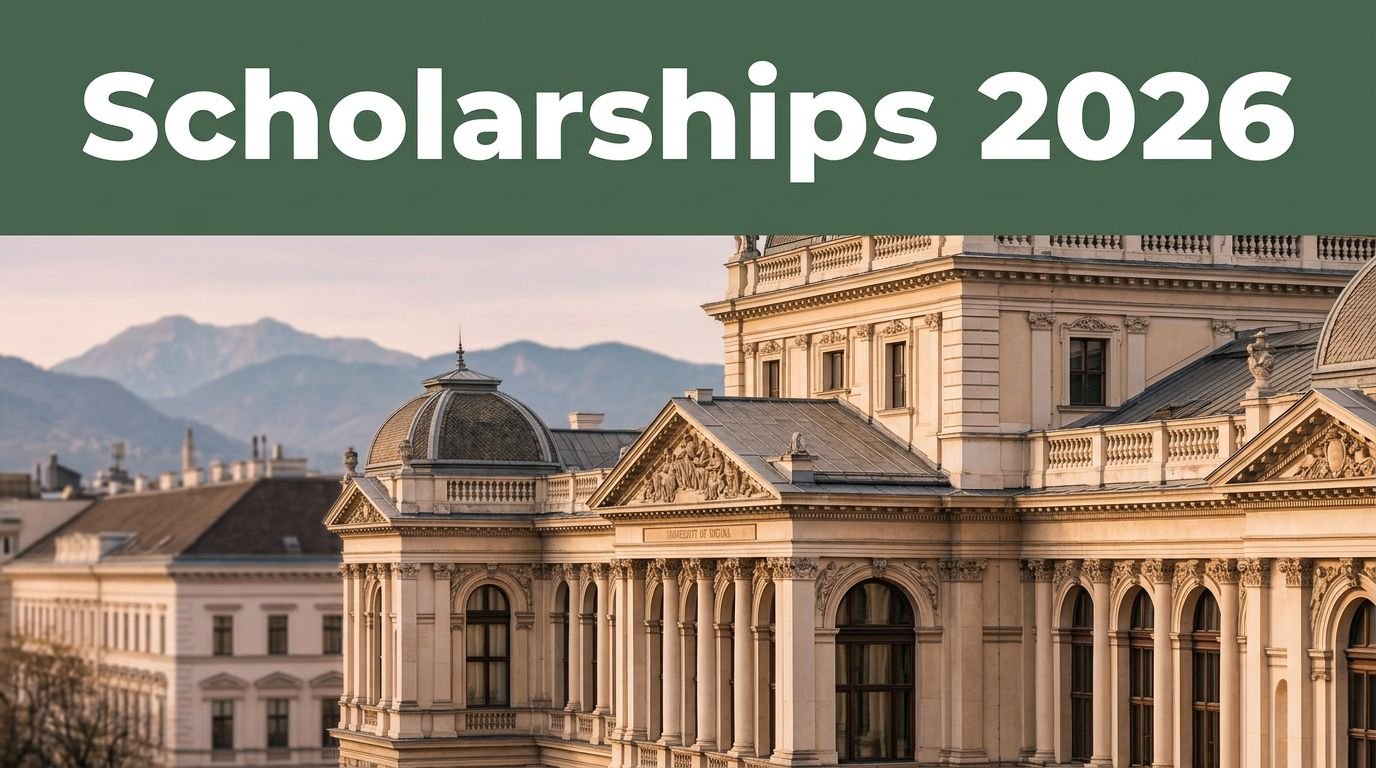
Austria does not hand out funding the way international students often expect. While the strongest awards are certainly real, many of them are partial, research-based, or tied to a specific university rather than coming directly from the Republic of Austria.
If you are searching for Austria scholarships in 2026, the smart move is to stop looking for one perfect prize and start matching the right program to your level, field, and timing. That shift in perspective matters more than most people think.
The good news is simple enough. Austria has a solid mix of national grants, university awards, doctoral funding, and subject-specific support. You just need to know where the doors are.
Key Takeaways
- Diverse Funding Landscape: Austria does not typically offer universal full-ride scholarships; instead, funding consists of a mix of research grants, merit-based awards, and partial support tailored to specific fields and academic levels.
- Strategic Search: Success depends on utilizing official databases like grants.at and university-specific portals rather than relying on third-party lists, focusing on awards that align strictly with your degree level and nationality.
- Early Preparation: Because application deadlines and admission processes are often separate and occur months in advance, starting your search 6 to 9 months before your target semester is essential.
- Quality of Application: A strong application treats the scholarship as funding for a specific, logical plan, backed by polished transcripts, a targeted motivation letter, and well-chosen references.
What Austria scholarships look like in 2026
The scholarship picture in Austria is diverse, but it is not crowded with opportunities that cover every expense. That surprises many international applicants. While the country offers robust funding, many programs prioritize research stays or merit-based awards rather than providing fully funded scholarships for every year of study.
Your prospects depend heavily on your academic level. Undergraduates often face a more competitive search, while those pursuing a master’s degree typically encounter a wider range of possibilities. Doctoral students often have the best chance of securing aid, particularly if their research aligns with the priorities of local higher education institutions or national research agendas.
Most international students in Austria win a mix of support, rather than a single award that covers every cost.
Here is a quick view of the primary funding paths you should monitor as you navigate the system.
Scholarship path |
Best fit |
Typical coverage |
Where to check |
|---|---|---|---|
OeAD scholarship, including the Ernst Mach Grant |
Postgraduate and research students |
Study or research support for specific durations |
OeAD scholarship pages |
Bertha von Suttner Scholarship |
PhD students |
Doctoral funding support |
OeAD scholarship pages |
Erasmus Mundus Joint Master’s Degrees |
Master’s students |
Tuition, travel, and living support |
Consortium and university pages |
Leistungsstipendium |
Strong students already enrolled in Austria |
About €750 to €1,500 per year |
University student services |
Uni:docs Fellowship |
Doctoral candidates at participating universities |
About €30,000 per year for up to 3 years |
University fellowship pages |
TU Graz High Potentials |
Selected bachelor’s and master’s students |
Up to €17,600 for master’s students over two years |
TU Graz scholarship page |
WU Scholarship for International Students |
Selected non-EU master’s students |
Tuition waiver plus €500 per month |
WU Vienna scholarship page |
Austrian Development Scholarships |
Students from priority or developing countries |
Varies by program and field |
Official program pages |
The pattern is clear. Austria scholarships are often highly targeted rather than broad. If you fit the specific profile, they can be generous; however, if your background does not align with the criteria, the application may not succeed.
For a broader official overview, the Study in Austria scholarships and funding guide is a reliable starting point. If you want a comprehensive search tool, the grants.at database is where many serious applicants begin their journey. Following these resources closely is the most effective way to plan your goal to study in Austria.
Who gets selected, and why some applications win
Scholarship committees in Austria tend to look for three things first. They want proof that you can handle the course, proof that you fit the program, and proof that your plans make sense.
Grades matter. So does your academic record. But strong marks alone do not carry a weak application very far. If your motivation letter reads like it was copied from another country, another course, or another dream, it usually falls flat.
Your level of study changes the rules too. For bachelor’s funding, universities usually want top grades, language readiness, and a clear admission path. For master’s and PhD postgraduates, they often care about subject fit, prior coursework, and the way your goals line up with the Austrian program. For these higher levels, research quality, supervisor fit, and proposal strength matter a lot more than buzz.
A useful way to think about it is this: the scholarship does not just fund you. It funds a plan. If your plan looks vague, the application feels weak. If your plan looks grounded, specific, and believable, you give the committee something real to work with.
Most applications ask for some version of the same core proof.
- Academic transcripts show that you can keep up.
- A motivation letter shows why Austria fits your next step.
- A letter of recommendation backs up your claims with outside proof.
- Language test results show that you can study in the program’s language.
- A curriculum vitae or study plan shows that you know what you are doing and provides a clear history of your experience.
The exact documents vary by program, but those five appear again and again. If you already have them ready, you are ahead of many applicants before the race even starts.
Where to search first, so you don’t waste time
A bad search burns days fast. A good search narrows the field in minutes.
Start with official scholarship directories and the university pages for the exact degree you want. That is where the real deadlines live. Blog posts can point you in the right direction, but they do not control the call for applications.
If you want the broadest official search, use the database first, then narrow it down by level, nationality, and field. That order saves time. It also stops you from chasing awards that do not fit your course or your passport.
A good search path looks like this. First, check the national and university databases. Then review the degree page. After that, go to the department or faculty page. That is usually where smaller awards, doctoral fellowships, and merit grants hide.
Keep an eye on these places in particular:
- The OeAD scholarship database, as it remains the primary portal for government-backed funding opportunities.
- National grant pages, which are often structured around scientific cooperation and bilateral cooperation agreements between Austria and your home country.
- University funding pages, because many awards are only listed locally and are not syndicated elsewhere.
- Faculty pages, because some departments publish their own specialized calls for research or academic assistance.
- Program pages, because Erasmus Mundus and similar awards follow the course curriculum rather than a separate scholarship office.
The cleanest approach is boring, but it works. Search official sources first, then compare the details against the university course page. If the two pages disagree, trust the latest official call, not a third-party summary.
How to put together a stronger application
Most students lose scholarships before the closing date. Not because they are weak candidates, but because the application package looks rushed.
Start early. That sounds obvious, but it is not how most people work. A serious application needs time for transcripts, translations, referee requests, and motivation writing that does not sound copy-pasted.
Use the same base documents everywhere, then tailor the parts that need tailoring. Don’t rewrite your whole life for every scholarship. Tighten your story, adjust your goals, and keep the details accurate.
- Read the call twice.
The first read tells you what the scholarship wants. The second read tells you what it does not want. Pay attention to nationality rules, degree level, field limits, and whether you need to confirm your application deadline well in advance to ensure you have admission first. - Match your story to the scholarship.
If the funding is for research, your proposal should sound like research. If it is for merit, your grades and class ranking should stand out. If it is for a master’s program, your academic path should feel logical. - Write a focused motivation letter.
Keep it direct. Say why Austria, why this university, why this program, and why now. If your letter could be sent to ten other countries without changing much, it is too broad. - Polish your references and documents.
Clear scans, correct translations, and well-chosen referees matter more than people admit. A messy file gives the wrong signal before anyone reaches your personal statement. - Submit before the crowd does.
Deadlines can be strict, and portals can slow down near the end. If you wait until the final day, you are gambling with your own application.
One more thing matters a lot. If the scholarship expects enrollment first, do not send only the funding form and hope for the best. Some Austrian higher education institutions separate admission and scholarship review, while others tie them together. Read the sequence carefully.
Deadlines in 2026 are not one-size-fits-all
This is where plenty of applicants get caught. There is no single Austria scholarship application deadline for 2026. Each program runs on its own schedule.
Some university awards open once a year. Some research grants have fixed windows. Some doctoral fellowships are announced by faculty calls. A few programs open early, months before the intake you actually want. If you wait until you have your visa, your admission letter, and your final English test, you may already be late.
The safest timeline is simple. Start 6 to 9 months before your target semester. If you want to begin in autumn, begin your scholarship search in winter or early spring. If you are planning a research stay or are among the many doctoral students seeking funding, start even earlier because supervisor contact and institutional coordination can take significant time.
The other trap is confusion between application stages. You may need to apply for admission, the scholarship, and the housing or residence paperwork separately. They do not always move together, and one slow document can throw off the rest.
That is why the calendar matters as much as the scholarship itself. A strong candidate with a late file can still lose.
What to do if you do not land a full award
A lot of students need a mixed funding plan. That is normal.
Austria has funding options that help with tuition, research support, or a monthly scholarship to cover living costs, but full-degree coverage is less common than many applicants hope. If you do not get a full award, a partial scholarship can still change the final numbers enough to make your studies possible.
Some students combine a merit-based award with family support or personal savings. Others look for a university fee reduction, a stipend, or a doctoral position attached to a research project. The right mix depends on your academic level and the city you choose to live in.
You should also think about the total cost of living, not only the scholarship amount. Beyond tuition fees, you must account for rent, transport, health insurance, books, and food within the same budget. A smaller award in a more affordable city can work better than a larger award that leaves you short every month.
If you are targeting master’s or doctoral study, look for programs with assistantships, research groups, or faculty funding. Those paths are not always called scholarships in the narrow sense, but they often function like one to stabilize your budget.
The real goal is not a perfect label. The real goal is enough stable support to study without constant money stress.
The smartest search strategy for international students
If you want a clean path through the noise, keep your search narrow and practical. Start with your degree level, then your field, then your nationality, then your target university. That order makes the list manageable. You should prioritize well-known programs as your primary starting point. For instance, Erasmus+ is a fantastic entry point for many degree seekers, while those looking for regional exchange opportunities should investigate CEEPUS. Furthermore, researchers or students from Southeast Asia should prioritize looking into the specific funding opportunities offered by ASEA-UNINET.
After that, compare three things before you apply. Check whether the award is open to international students, whether it fits your program level, and whether the deadline sits before your admission deadline. If any of those three criteria are not met, move on quickly.
You do not need fifty applications. You need a short list of scholarships that fit your profile well enough to compete. That is where most of the real progress happens.
The strongest applicants are rarely the ones who chase every funding page they see. They are the ones who read instructions carefully, apply early, and keep their paperwork tight.
Frequently Asked Questions
Can I find fully funded scholarships that cover all my expenses in Austria?
While fully funded scholarships exist, they are highly competitive and often limited to specific research programs or doctoral positions. Most international students secure a combination of partial awards, merit-based grants, and personal or family funding to cover the total cost of their stay.
Do I need to be admitted to a university before applying for a scholarship?
This varies by program, but many Austrian scholarships require proof of admission or at least a firm enrollment status before they release funding. Always check the specific requirements of the award, as some applications require you to manage the university admission and the scholarship search concurrently.
What is the best way to start my scholarship search to avoid wasting time?
Start by using official, verified databases like grants.at or the Study in Austria portal to filter opportunities by your nationality, academic level, and field of study. Once you identify potential leads, check the specific university and faculty websites to confirm the most current and accurate application details.
Does my motivation letter need to be different for every scholarship application?
Yes, a generic motivation letter is often easily identified by selection committees and tends to be ineffective. You should tailor your letter to explicitly state why your goals align with the specific institution, program, and scholarship criteria, demonstrating that your plan is both grounded and purposeful.
Conclusion
Austria does not make scholarship hunting easy, but it does make it possible. The country offers a diverse mix of national grants, university awards, and research grants, and the best results usually come from a focused search rather than a random one.
If you are serious about Austria scholarships in 2026, start with the official databases, then match the award to your degree level and your field. Whether you are seeking undergraduate support or a competitive postdoctoral fellowship, this habit will save you time and prevent you from applying to programs that were never intended for your profile.
The students who win funding usually do one thing differently. They start early, read the rules properly, and send a file that feels complete on the first try. With the right preparation, you can secure the support you need to succeed throughout your academic journey.
This post may contain affiliate links. If you make a purchase through these links, I may earn a small commission at no extra cost to you.