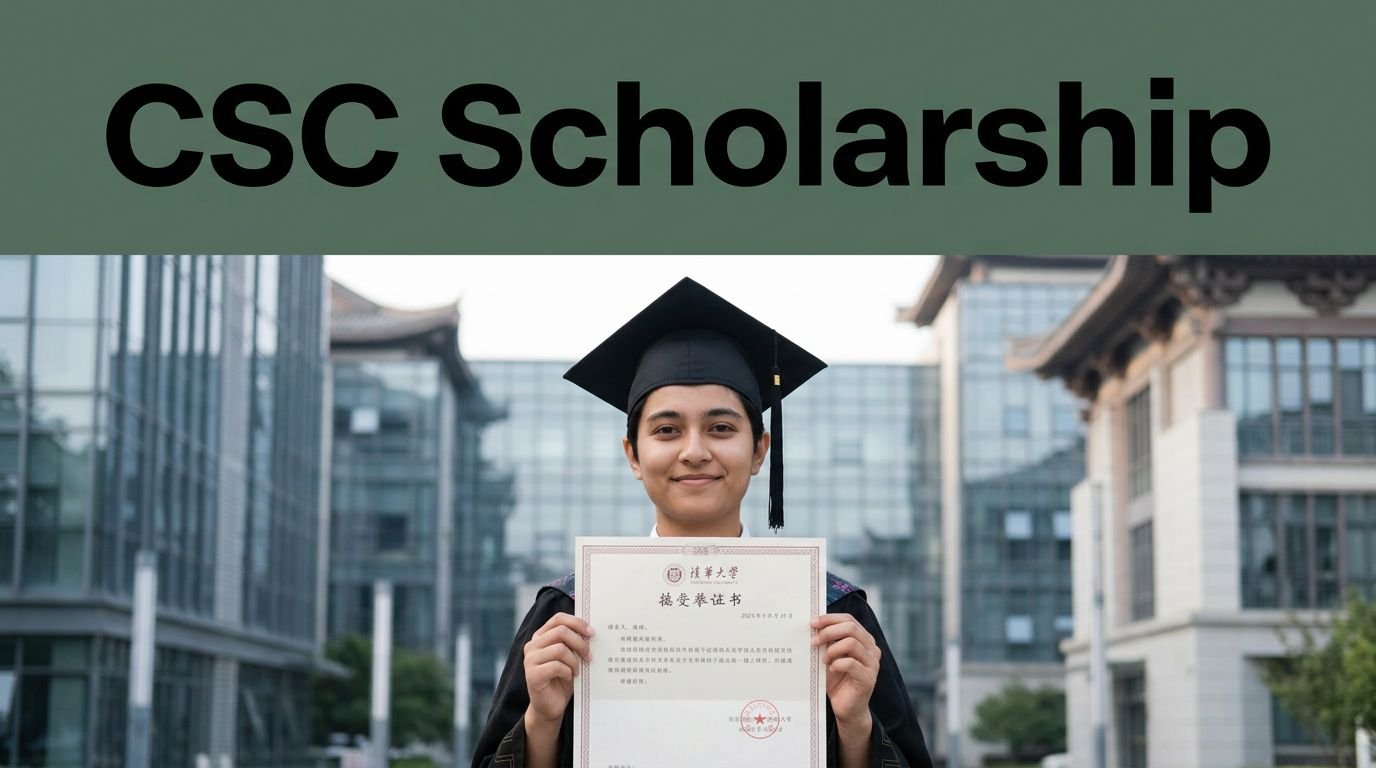
The csc scholarship is arguably one of the most prestigious academic awards you can find if you want to study in China. Thousands of ambitious students from across the globe compete for these spots every year because they offer a rare chance to earn a degree without the typical financial burden of international tuition.
Winning this award does more than just pay your bills. It grants you access to top-tier universities, a vibrant community of international peers, and a firsthand look at China’s academic and cultural life. Because it is a full-ride opportunity, the application process is rigorous, but it is entirely manageable when you have the right roadmap to follow.
If you are ready to stop dreaming about your degree and start planning for your move, let’s walk through how you can put together a competitive application.
What Exactly Is the CSC Scholarship and Why Does It Matter?
The CSC Scholarship is a government-funded program managed by the China Scholarship Council. It exists to draw talented international students to Chinese universities and build academic bridges between countries. When you receive this award, the Chinese government covers your major expenses, which removes the financial barrier that often prevents students from studying abroad.
What is covered by the award?
The funding is generous because it aims to support you throughout your entire degree program. Most recipients receive a package that handles the essentials, allowing you to focus entirely on your coursework rather than worrying about tuition payments or housing fees.
You can expect the following benefits:
- Full or partial tuition waivers for your selected program.
- On-campus accommodation or a monthly stipend to help you pay for off-campus housing.
- A living allowance provided monthly to cover food, books, and daily supplies.
- Comprehensive medical insurance coverage to keep you safe during your stay.
Why this scholarship changes your options
Many students think studying in China is out of reach because of the complexity or the cost. This program changes that narrative by making high-quality education accessible. It is not just about the money, either. You gain entry to some of the top-ranked schools in Asia, giving your resume a distinct advantage when you eventually start your career.
Beyond your degree, you get to live in a global hub of innovation and history. The connections you make with professors and classmates from every corner of the world are often just as valuable as the diploma itself. If you want a global perspective and a path to an affordable degree, this is one of the most reliable ways to make that happen.
Applying for the csc scholarship means you are choosing to invest in your future without putting yourself in debt. It is a competitive process for a reason, but the return on your time and effort is significant. You are not just a student in a classroom; you are part of a program meant to foster international cooperation and professional growth.
How to Determine Your Eligibility Before You Apply
Before you spend hours gathering documents or writing personal statements, you need to know if you actually qualify for the csc scholarship. It is not just about having good grades. Eligibility often comes down to specific citizenship requirements, age limits for your degree level, and whether you meet the academic benchmarks set by your target university.
Checking these details early saves you from disappointment later. Start by reading the official announcement from the university you want to attend in China. Each school often has its own internal application process that runs alongside the national scholarship requirements.
Sorting Out Your Academic Requirements
Your academic history acts as the foundation for your entire application. The scholarship committee expects a clear, verified trail of your educational background. You cannot simply upload a scan of your original diploma and hope for the best.
Most programs require the following documents:
- Official transcripts that list every course you took and the grades you earned.
- A notarized copy of your highest diploma or degree certificate.
- A graduation certificate if you are currently in your final year of studies.
Documents must be in either Chinese or English. If your original paperwork is in another language, you must provide a certified translation. This translation needs to be notarized by a legal authority or an official translation agency. Do not just use a standard translation service; check that they provide an official stamp or seal.
If you already have your degree, make sure your notarized copies are clear and easy to read. Blur or dark scans often lead to immediate rejection during the document verification stage. When you send these files to the university, they compare them against the physical copies you will eventually need to bring with you to China. Keep your original documents safe, as you will need to present them in person upon arrival.
Meeting Language Proficiency Standards
Your ability to communicate in your chosen language of study is a top priority for the committee. You have two main paths here, and your eligibility depends on which program you choose.
If you apply for a Chinese-taught program, you must prove your fluency through the HSK exam. This is the standard test for non-native Chinese speakers. Most universities require at least an HSK 4 or HSK 5 certificate, depending on your field of study. If you do not have an HSK score yet, some schools offer a one-year foundation course in Chinese language, but you should verify this with the admissions office first.
English-taught programs are popular among international applicants, but they have their own set of requirements. You do not necessarily need an HSK certificate for these, but you will need to prove your English proficiency.
- If English is your native language or your previous degree was taught entirely in English, you might be exempt from testing.
- Most students need to submit a valid IELTS or TOEFL score.
- Check the minimum score requirement for your specific university, as top-tier schools often set higher bars than others.
If you cannot provide an official IELTS or TOEFL score, some universities accept a letter from your previous institution confirming that your medium of instruction was English. However, this is not a universal rule. If you have any doubts, get an official score report. It removes any ambiguity and makes your application much stronger than those who rely on letters of proof.
Step-by-Step Guide to Crafting a Winning Application
Getting your documents in order is only half the battle. To actually stand out among thousands of applicants, you need to show the selection committee who you are beyond your transcripts and test scores. Your application package tells a story, and the following pieces are where you breathe life into your candidacy. By focusing on your specific objectives and picking the right people to vouch for your character, you turn a standard file into a compelling argument for why you belong in a Chinese classroom.
Perfecting Your Study Plan and Personal Statement
Your study plan is your chance to connect your past achievements with your future goals in China. Don’t write a generic essay that could apply to anyone. Instead, tailor every paragraph to the specific program and university you are targeting. Start by identifying the research or professional gap you want to fill. Why do you need to study in China to get there? If you have a specific professor in mind, mention their recent work and explain how your interests overlap.
Use a structured approach to keep your ideas clear and persuasive. You should aim for a narrative that flows logically from where you have been to where you are headed.
- Introduce your academic or professional background and why you chose your field of study.
- Explain why you specifically want to study in China and how the culture or industry environment there adds value to your growth.
- Detail your research interests or project goals, connecting them to the expertise available at your target school.
- Mention your long-term career plans and how completing your degree through the csc scholarship fits into that vision.
Keep the tone professional yet enthusiastic. Avoid big, vague claims about how you want to change the world. Instead, talk about the specific skills you want to gain and the problems you hope to solve. When the committee reads your statement, they should feel like they are meeting a focused, prepared student who has done their homework on their department.
Securing Strong Recommendation Letters
Your recommendation letters provide an outsider’s perspective on your potential. You need people who know your work ethic and academic performance to speak on your behalf. Generally, this means reaching out to professors who have taught you in relevant courses or supervisors who have managed you in a professional setting. Avoid asking family friends or colleagues who cannot speak to your ability to handle a rigorous degree program.
Once you have identified your potential recommenders, give them plenty of time to write. Asking for a letter two weeks before the deadline is a recipe for a generic, rushed note that won’t help your case. Provide them with a summary of your achievements, your resume, and a clear explanation of why you are pursuing this scholarship. This helps them include specific details that make their praise sound genuine and earned.
Always insist that the letters be written on official university or company letterhead. This is a non-negotiable detail for the csc scholarship application. A letter on plain paper looks unofficial and may be disregarded by the reviewers. Ensure your recommenders sign the document by hand and provide their contact information, as the committee sometimes verifies these letters to make sure they are legitimate. A formal, well-written letter from someone who truly knows your work carries far more weight than a vague, glowing review from a stranger.
Common Mistakes That Can Cost You the Scholarship
You have put in the hard work to collect your documents and write your essays, but even a small slip can knock your application out of the running. Competition for the csc scholarship is intense, and reviewers often look for reasons to narrow down the pool quickly. Avoiding these common traps helps your application stay in the pile and reach the final round of consideration.
Neglecting Specific University Requirements
Many applicants treat the China Scholarship Council requirements as the only rules that matter. While the council sets national standards, the university you apply to often has its own set of internal benchmarks. If you miss a university-specific form or fail to follow their portal instructions, your application may never reach the council for review.
Check the admissions website for every school on your list. Some universities require you to pay an application fee, while others might ask for extra essays or specific contact details for professors. Ignoring these details shows you aren’t paying attention, and it is a quick way to get your file rejected before it even gets looked at properly.
Submitting Incomplete or Poorly Scanned Documents
Your digital files are the only evidence of your qualifications that the committee sees. If your documents are blurry, cut off at the edges, or missing official seals, the reviewers cannot verify your history. They do not have time to email you and ask for a clearer version, so they will simply move on to the next applicant.
Always scan your documents in high resolution, preferably using a flatbed scanner rather than a phone camera. Ensure that every page is upright and that all stamps, signatures, and university letterheads are visible. If you are required to submit notarized translations, make sure the original document and the translated version are both included in your file.
Document Type |
Common Error to Avoid |
|---|---|
Transcripts |
Missing the legend or grading scale page |
Diplomas |
Uploading a copy without the official seal |
Letters of Recommendation |
Using a signature that looks digitally pasted |
Physical Exam Form |
Leaving out dates or blood test results |
Checking these small items keeps your application professional and avoids unnecessary scrutiny. Your goal is to make the verification process as smooth as possible for the admissions office.
Sending Generic or Unfocused Personal Statements
The committee reads thousands of essays each year, and they can tell when you have copied and pasted the same text for different schools. A vague statement that talks about your love for China without mentioning your specific research goals or the department you are applying to is usually ignored. Your essay should sound like you wrote it for that specific program, for that specific professor, and for that specific opportunity.
Connect your background to the curriculum of your chosen major. Mention specific labs, ongoing research projects, or faculty members whose work aligns with your own interests. When you prove you have done your research, you show the committee that you are serious about your future in their classroom. A well-tailored essay makes you stand out because it shows you aren’t just looking for any scholarship, you are looking for the right fit for your academic journey.
Conclusion
Securing the csc scholarship requires more than just meeting the basic criteria; it demands a clear strategy and a high level of organization. You need to focus on presenting a complete, error-free file while ensuring your personal statement highlights your genuine intent and research goals.
Patience and persistence are your greatest assets during the selection cycle. The process can feel long and at times uncertain, but staying consistent with your follow-ups and keeping your documents ready keeps you ahead of the curve.
This award is a life-changing milestone that removes financial barriers and opens doors to top-ranked universities in China. Treat your application as the first step of your academic adventure, and keep your focus on the opportunities that await once you arrive.
This post may contain affiliate links. If you make a purchase through these links, I may earn a small commission at no extra cost to you.