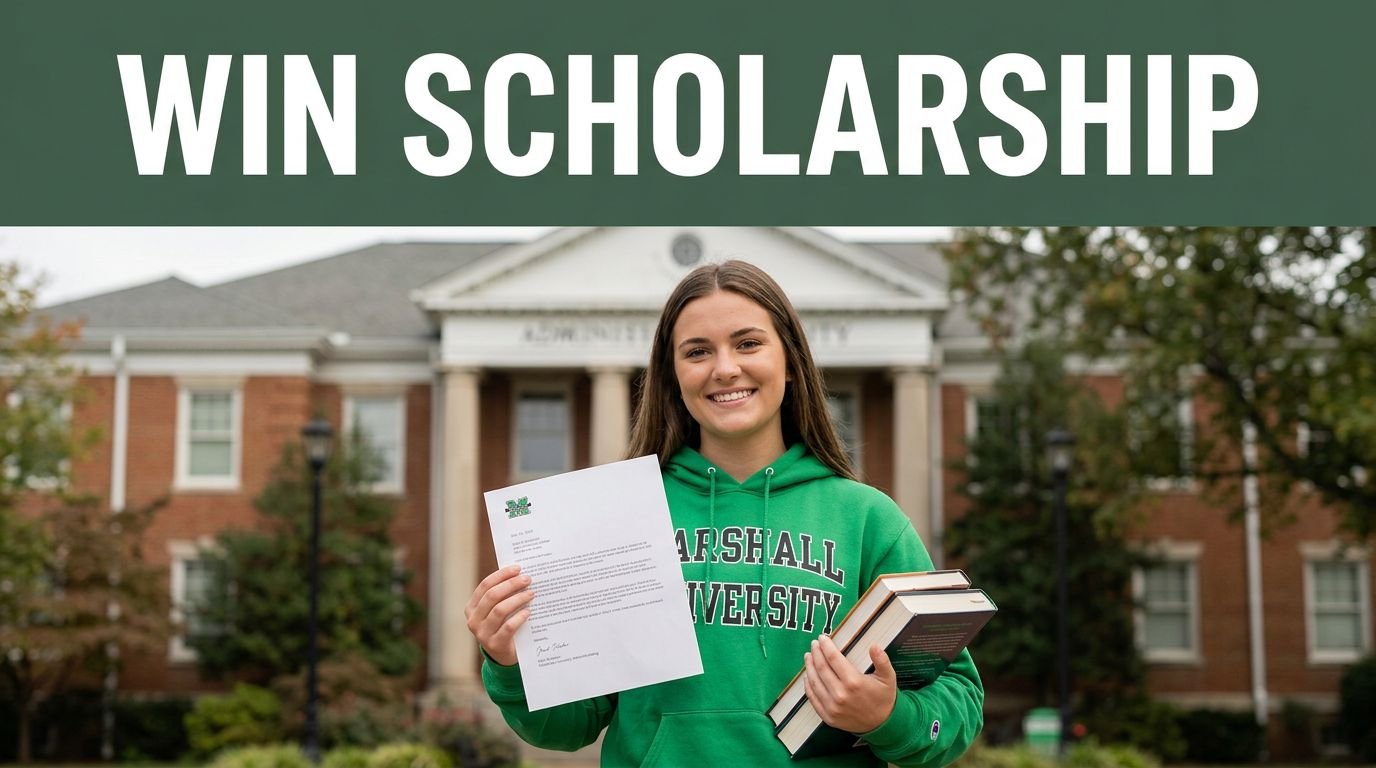
Starting college is a massive milestone to achieve, but the price tag attached to your degree can feel like a heavy weight on your shoulders. You have big plans for your future, and financial stress shouldn’t be the thing that keeps you from reaching them.
Securing a Marshall University scholarship is one of the smartest ways to clear that path. Whether you are from right here in West Virginia or moving across the country, landing extra funding makes a world of difference in your day-to-day life as a student.
We are going to walk through the best ways to find these opportunities and put together an application that actually stands out. Stick with me, and let’s get you set up to win that money.
The Marshall University Scholarship Landscape
Getting your hands on funding for your education is rarely a one-size-fits-all process. Marshall University manages a variety of financial aid buckets, and knowing where they come from is the first step toward building your plan. When you look at the big picture, you are essentially juggling three different types of money. If you can identify how each one works, you stop guessing and start applying with a real strategy.
Types of Awards Available to Students
- Institutional Scholarships:
These are the most common path for many students. These are funds provided directly by the university. You might earn these based on your high school GPA, your standardized test scores, or your specific talent in an area like music or athletics. Since the university controls these, they often have their own internal application deadlines and requirements. Always check the official financial aid portal to see which institutional awards you qualify for based on your merit or personal background.
- State-funded Programs:
State-funded programs bring a different set of rules to the table. These are provided by the West Virginia government to help residents attend in-state institutions like Marshall. Because these funds come from the state, you usually have to meet residency requirements and sometimes maintain a specific grade point average to keep the money year after year. The PROMISE Scholarship is the most well-known example here. You need to pay close attention to state-level deadlines, as they often operate on a different cycle than the university’s own awards.
- Departmental Grants:
These are the hidden gems of the financial aid world. These are specific to your major. If you are studying engineering, biology, or art, individual departments often have their own pool of scholarship money to distribute to top students. These awards are often less competitive because fewer students know to look for them. Reach out to the faculty or the department head in your chosen field to ask about specialized grants. It shows you are serious about your studies, and it often leads to information you won’t find on the general financial aid website.
You might also want to read our guide on How to Secure a CU Denver Scholarship in 2026 that are ready to welcome you.
How to Qualify for a Marshall University Scholarship
Winning a scholarship is a big win for your bank account, but keeping that money is where the real work happens. You cannot just coast once the funds hit your account. Each award comes with specific strings attached, and forgetting those requirements is the fastest way to lose your funding mid-degree. Stay on top of your responsibilities so you can focus on your classes instead of worrying about a surprise bill from the bursar.
Maintaining Eligibility Throughout Your Studies
Most merit-based awards require you to keep a certain grade point average to stay eligible. This minimum is usually set at a 3.0 or higher, though it varies depending on the specific program. If your grades dip even slightly below that mark, the university may put your scholarship on hold or cancel it entirely. Do not assume you get a grace period. Check your award letter the moment you receive it to see the exact renewal criteria.
Enrollment status also matters. You are often required to maintain full-time status, which means taking at least 12 credit hours per semester. If you drop a class and fall into part-time status, you might forfeit your eligibility for that term. Before you hit the drop button in your student portal, talk to the financial aid office. Ask them how a schedule change will affect your money. It is better to have an awkward conversation now than to lose thousands of dollars later.
Finally, keep an eye on your progress toward graduation. Some scholarships have a limit on how many semesters they will cover. If you take too long to finish your degree, the funding will run out before you cross the stage. Map out your four-year plan early and stick to it. If you need to change your major or add a minor, make sure you stay on track to finish within the timeframe set by your scholarship provider.
Standard Application Deadlines You Must Know
Missing a deadline is the most avoidable mistake you can make, yet it happens to hundreds of students every year. The financial aid calendar is rigid. If you miss the window, there is no hitting undo or asking for a favor. Your first priority should always be the FAFSA, or the Free Application for Federal Student Aid. This form is the gatekeeper for almost all federal and state money. Even if you think you make too much or have too little to qualify, file it anyway. Many institutional scholarships require a completed FAFSA on file before they even look at your application.
Institutional awards at Marshall University usually follow a strict timeline that aligns with the start of the academic year. You should treat the following dates as non-negotiable anchors in your calendar:
Deadline Type |
Typical Window |
Purpose |
|---|---|---|
FAFSA Submission |
Opens in December |
Required for all federal and state aid |
Priority Scholarship Date |
February 15 |
Prime deadline for most merit-based awards |
Departmental Applications |
Varies by major |
Specific grants for your field of study |
Mark these dates in your phone or planner the second they are announced. If a department requires a separate application, they might set a deadline that is earlier than the general university cutoff. Don’t wait until the night before to gather your transcripts or write your essays. Give yourself at least two weeks to polish your materials. When you submit your application early, you move to the front of the line, which significantly increases your odds of getting noticed.
How to Apply for Marshall University Scholarship
The application process is where your hard work during the research phase pays off. You have identified the opportunities, and now you need to prove why you deserve the funding. Think of this as a sales pitch where you are the product. You want the committee to read your materials and immediately see you as a student who is worth the investment. It requires focus, organization, and a clear sense of your own story.
Crafting a Standout Personal Statement
Your personal statement is the only part of your application that gives the committee a look at your personality. Don’t waste this space repeating the facts on your resume. They already know your GPA and your extracurriculars. Use this space to connect those dots. Tell them why you care about your chosen major and how you plan to use it once you finish. If you can show them you have a real plan, they are much more likely to trust you with their money.
- Focus on growth: Don’t just list your accomplishments. Explain how a specific challenge changed your perspective. Maybe you struggled in a tough class and learned how to study better. Maybe you led a project that failed and taught you how to manage a team better next time. Committees want to see that you can learn from your experiences.
- Define your goals: Be specific about where you are headed. Instead of saying you want to help people, explain that you want to study nursing to address the shortage of healthcare workers in rural West Virginia. A clear, actionable goal makes it easier for the committee to visualize your success.
- Show your passion: Passion is contagious, but only if it feels genuine. Write about something that actually excites you, not what you think they want to hear. If you love local environmental issues, focus your essay on how your education will help you protect West Virginia waterways.
Keep your writing tight. Use active verbs and keep your sentences straightforward. Avoid the temptation to use big, flowery words to sound smarter. Most committees read hundreds of these essays, and they prefer a clear, honest voice over someone trying to impress them with a thesaurus. If you can, have a mentor or a teacher read your draft. They will spot the parts where you sound like you are rambling or where you lose focus on your main point.
Once your draft is done, check it against the specific prompts for the Marshall University scholarship you are targeting. It is easy to write a great essay that misses the mark because you didn’t answer the question they asked. Tailor every single word to fit the specific requirements of that scholarship. You are not writing one generic essay to send everywhere. You are writing a precise argument for why this specific donor should choose you.
Increase Your Chance for a Financial Aid Package
Securing a Marshall University scholarship is a fantastic start, but you shouldn’t stop there. Think of your financial aid as a puzzle, where each piece—whether it is a university grant, a federal loan, or an outside award—helps lower your overall bill. Relying on one source is risky, and building a diverse portfolio of funding is the smartest way to ensure you can finish your degree without drowning in debt.
Leveraging External Opportunities Alongside University Aid
You aren’t limited to the money Marshall offers. Thousands of organizations, ranging from local civic clubs to national foundations, have cash waiting for students just like you. The best part is that this money stacks on top of whatever institutional aid you already secured. If you can combine a Marshall University scholarship with two or three outside awards, you might actually cover your living expenses along with your tuition.
Start your hunt by looking close to home. Local organizations often have much smaller applicant pools than national contests, meaning your chances of winning are significantly higher. Reach out to these groups to see if they offer support:
- High school guidance counselors or community libraries often keep lists of local memorial funds or regional civic group scholarships.
- Chambers of commerce or local businesses sometimes sponsor awards for students who plan to enter specific industries like manufacturing or small business management.
- Religious organizations, fraternal lodges, and community service groups frequently offer small, recurring grants to members or local youth.
National searches are the next step. Websites like Fastweb or the College Board allow you to filter opportunities based on your major, your heritage, or your specific talents. When you apply for these, treat them with the same seriousness as your university applications. Use your personal statement from your Marshall University scholarship as a base, but make sure you tweak it to address the specific values of the new organization.
Keep a master log of every external award you find. Note the deadline, the required documents, and whether they need a transcript or a letter of recommendation. Even if an award is only for five hundred dollars, it adds up. That is five hundred dollars you don’t have to borrow or pay out of pocket. Every single dollar you source externally is a victory that protects your long-term financial health.
Remember that private scholarships are often more flexible than institutional aid. While university money might be tied to your tuition, private grants can sometimes be used for books, housing, or technology. Read the fine print carefully, as some providers send the check directly to the school while others might provide the funds to you. When you juggle these different sources, you create a safety net that makes your time at Marshall much more manageable.
Common Mistakes to Avoid During Scholarship Search
Even the most prepared students hit bumps in the road when they start looking for money. You want to avoid the traps that keep your application from ever making it to the review pile. Some errors are simple, like a typo, while others are more significant and stem from not reading the directions. These mistakes cost you time and potential cash.
Treating Applications Like Generic Emails
Copying and pasting the same essay for every scholarship is a recipe for rejection. Committees can tell within seconds if you are using a mass-produced letter. They want to know why you picked their specific award and how you fit their mission. If your essay lacks a connection to the donor, you lose their interest immediately.
Write a unique personal statement for every single application. Take ten minutes to look at the organization or the donor behind the money. Mention their values or why their specific Marshall University scholarship matters to your career path. Personal touches show you actually care about the award, not just the check.
Ignoring the Fine Print in Guidelines
Every scholarship provider has a list of rules that looks like a legal document. Students often skip this section because it looks boring, but that is where the deal-breakers hide. A scholarship might require a specific GPA, a certain number of volunteer hours, or a specific major. If you send in an application without meeting those requirements, you wasted your time.
Before you hit submit, do a quick audit of your materials. Compare your resume and transcript against the checklist the provider gave you. If they ask for two letters of recommendation, do not send just one. If they demand a PDF format, do not upload a Word document. Small administrative errors often result in an automatic disqualification before anyone even reads your work.
Missing Small Details That Break Trust
Your application represents your personal brand. If it is full of spelling errors or messy formatting, the committee assumes your schoolwork will look the same. They do not want to invest in a student who cuts corners. You need to present a professional, polished document that shows you pay attention to the details.
- Proofread your work out loud to catch awkward phrasing.
- Use a standard font like Times New Roman or Arial to keep it clean.
- Check your file names so they look professional, like “YourName_ScholarshipApp.pdf” instead of “final_essay_v3.pdf”.
- Confirm all your contact information is correct so they can reach you if you win.
When you take the time to clean up these small things, you build instant trust with the reviewers. They see that you are a serious student who follows instructions. This reputation gives you a leg up, especially when the selection committee has to choose between two otherwise qualified candidates.
Conclusion
Winning a Marshall University scholarship is rarely about luck or having a perfect record. It is about showing up early, doing your research, and staying organized while others wait for the last minute. Every application you submit is a piece of a larger puzzle that helps you fund your future without taking on extra debt.
Keep your eyes on those deadlines and stay consistent with your academic requirements. If you hit a wall, remember that persistence is the real secret to landing these awards. Start your search today, stay proactive with your documentation, and trust that the work you put in now will pay off when you head to campus.
This post may contain affiliate links. If you make a purchase through these links, I may earn a small commission at no extra cost to you.