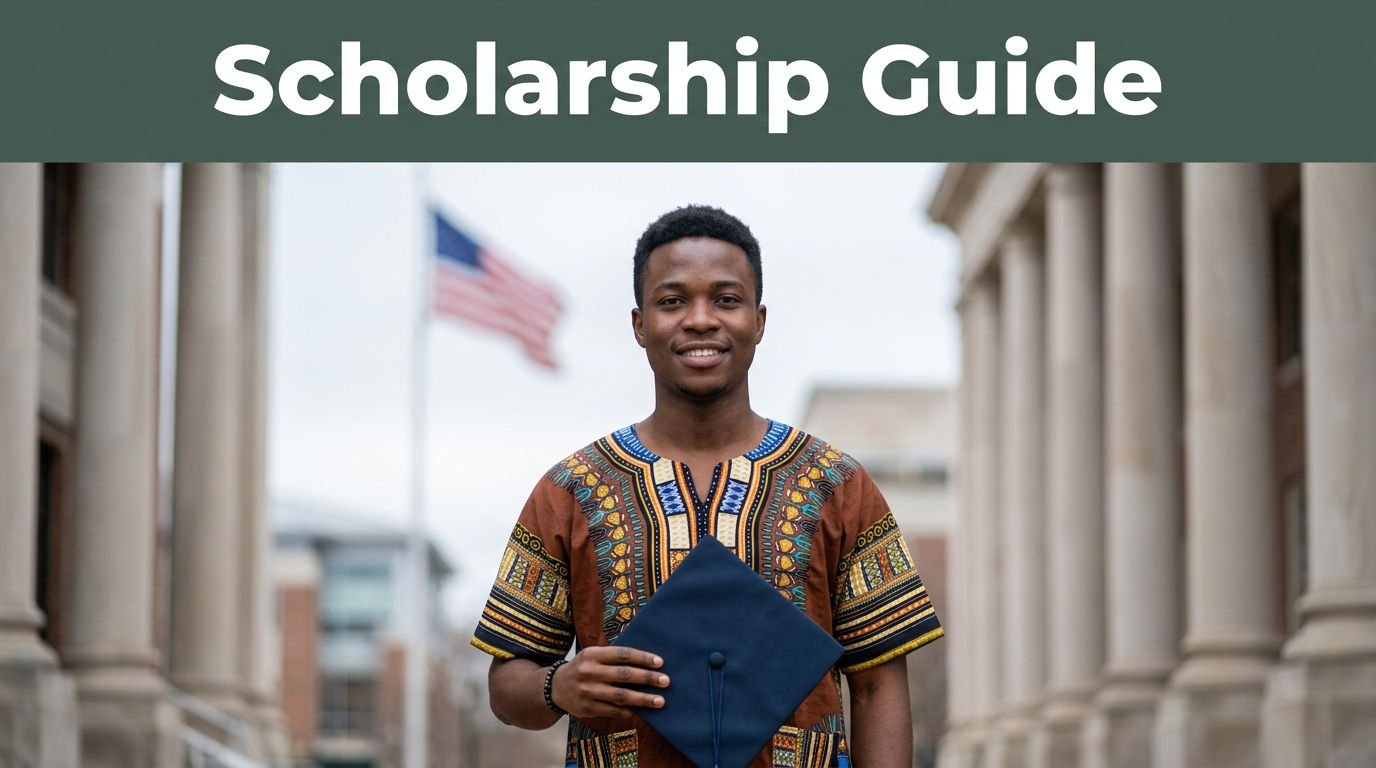
You have big plans for your future, and aiming for a top-tier education in the United States is a bold move. You know the quality of schools abroad is high, but the price tag is often even higher, and finding a way to pay for it can feel like a full-time job on its own.
Securing an american scholarship for nigerian students takes more than just good grades; it requires a strategy that bridges the gap between your academic potential and the specific requirements of US universities. This guide breaks down the complex application process into actionable steps, giving you the clarity you need to compete for funding.
We are going to cover everything from identifying the right programs to crafting essays that actually get read. Keep scrolling to start building your roadmap to a US degree.
Understanding the Landscape of Financial Aid for International Applicants
Finding money for school is often the hardest part of the journey to the United States. You have to understand that not every university has the same approach to funding international students. Some schools offer massive pots of cash, while others barely have enough to support their domestic students. When you look for an american scholarship for nigerian students, you need to know exactly which doors are worth knocking on.
Navigating Merit-Based Awards Versus Need-Based Grants
Most scholarships you see are merit-based. This means the school gives you money because they want your talent, your high test scores, or your impressive academic record. They are essentially investing in your potential to contribute to their campus community. To land these, you usually don’t need to prove you are poor. You just need to prove you are better than the other candidates.
You should gather these items early to build a strong profile for merit awards:
- Official secondary school transcripts showing top-tier grades.
- Standardized test scores like the SAT or ACT, even if some schools call them optional.
- A list of academic honors, research projects, or subject-specific competitions.
Need-based grants are a different game. These are reserved for students who truly cannot afford the cost of attendance. If a school meets full demonstrated need, they will look at your family’s income, assets, and overall financial health to decide what you can actually pay. The process is often intrusive and requires detailed documentation. You will likely need to provide bank statements, tax documents, or salary verification from your parents to prove your situation. Keep these records organized and translated into English so the admissions office can review them without confusion.
Key Qualities That Make Your Application Stand Out
Admissions officers see thousands of applications every year. If you only focus on your grades, you blend into the crowd. They want students who show initiative outside of the classroom because those individuals usually become active and engaged alumni. Think about how you spend your time when you are not studying.
Try to highlight these high-impact areas in your application:
- Leadership roles in student government, clubs, or religious organizations where you managed teams or projects.
- Consistent community service that demonstrates you care about the people around you.
- Independent initiatives, like starting a small business, launching a neighborhood recycling program, or teaching others a new skill.
You don’t need a laundry list of activities to impress anyone. Quality always beats quantity. Pick two or three things you have done for a long time and explain the impact you had. If you organized a charity event in Lagos, tell them how many people showed up and what changed because of your work. Admissions officers look for students who make things happen. When you show them that you are a doer, you become a much more attractive candidate for an american scholarship for nigerian students.
Proven Strategies to Secure an American Scholarship for Nigerian Students
Getting an American scholarship for Nigerian students feels like trying to solve a puzzle where the pieces keep moving. You are competing against applicants from all over the world, many of whom have resources you might not have. However, US universities value what you bring from your specific background. They want to see how your life in Nigeria shaped your perspective and what you will add to their campus. Your application is not just a collection of grades and test scores, it is a narrative that tells them who you are.
Mastering the Art of the Personal Statement
Your personal statement is the one place where you can show your humanity. Many students make the mistake of listing every award they ever won, but admissions officers already have your CV for that. They want to see your character, your values, and your ability to think through challenges. When you write about being a Nigerian student, avoid repeating stereotypes or focusing only on the hardships you face. Instead, share specific stories that highlight your agency and your personality.
Think of a time when you solved a local problem or influenced someone around you. Maybe you organized a study group in your secondary school, or perhaps you volunteered to help your community after a heavy rainy season. These stories show that you are an active participant in your world. Your goal is to connect these personal experiences to the values of the university you are applying to. If a school focuses on social impact, write about how your project in your hometown reflects that same commitment.
When you write, use your own voice. Avoid overusing complex words that you would never say in a real conversation. If an admissions officer feels like they are reading a generic template, they will move on to the next file. You want them to feel like they are having a conversation with you. Keep your focus on showing, not just telling, and remember that your unique perspective is your greatest asset.
Preparing for Standardized Tests and English Proficiency Exams
Standardized tests are the gatekeepers of your application. Even if a school claims to be test-optional, sending in a strong score helps you stand out from the pack. For an American scholarship for Nigerian students, your test scores are often the first thing that proves your academic readiness. It is not about being a genius, it is about learning how the test works and practicing until you are fast and accurate.
You should start your preparation months before the test date. Do not wait until the last minute to cram. Use official study guides from the test providers and take multiple full-length practice exams under timed conditions. This mimics the actual testing environment and helps you manage your time effectively.
If you live in a city with reliable internet, use free online resources to find practice questions and video tutorials. If your access is limited, find a physical study group or borrow prep books from others who have taken the tests. Consistency is the secret. Studying for one hour every single day is better than studying for ten hours once a week. Your goal is to get a score that makes the admissions committee take your application seriously, as it gives them a reliable metric to compare your performance with other global applicants.
Building a Network for Letters of Recommendation
Letters of recommendation are where your character gets validated by someone else. You need people who know you well enough to speak about your growth and your potential. Do not just ask a teacher because they gave you an A. Ask someone who has seen you handle a difficult project, lead a team, or show persistent curiosity in a subject.
When you approach a mentor or a teacher, give them enough time to write something thoughtful. Do not drop an urgent request on their desk a week before the deadline. Send them your CV and a summary of the extracurricular activities you want to highlight. Remind them of specific moments where you stood out in their class or club. This helps them write a letter that is specific and credible.
A strong letter of recommendation should paint a picture of you as a student who is eager to learn and ready to engage. It adds a layer of depth to your application that your grades cannot show. When a teacher can write about your specific contributions, it provides the admissions office with the evidence they need to trust your application. Treat these individuals with respect, keep them updated on your progress, and always thank them for their support, regardless of the final outcome.
Where to Find Reliable Sources for Global Educational Funding
Tracking down legitimate financial support is often the most stressful part of your study-abroad plan. You cannot afford to waste time on dead ends or outdated links when you need to be focusing on your applications. Finding an American scholarship for Nigerian students requires you to be picky about your sources, so prioritize official channels and well-vetted academic databases rather than random social media posts.
Leveraging University Portals and External Databases
Your first stop should always be the specific university website where you plan to apply. Most US institutions house their funding information directly under the financial aid or international admissions tab. These pages are the most accurate source for merit-based awards because the university updates them every cycle. You should bookmark the international admissions page for every school on your list and check it at least once a month.
When you look beyond single university sites, turn to established platforms that aggregate global opportunities. These databases are reliable because they verify their listings before publishing them. Some of the most helpful resources include:
- EducationUSA: This is the official US Department of State network. They have offices in Lagos and Abuja, and their website is the gold standard for finding verified information about studying in the US.
- IIE (Institute of International Education): They track global scholarships and partnerships that support international mobility.
- Fastweb and BigFuture: While these are large databases, they allow you to filter by international status and specific demographics to find relevant awards.
- Scholarship portals specifically for international students: Sites like InternationalStudent.com or IEFA provide curated lists that are often more targeted than generic search engines.
Always verify an award by checking the original institutional website mentioned in the database entry. If you see a listing on a third-party site but cannot find the same information on the actual university or organization’s website, treat it with caution. The best way to secure an American scholarship for Nigerian students is to go directly to the source of the funds whenever possible.
Spotting and Avoiding Scholarship Scams
The demand for funding makes this area a magnet for scammers. They prey on the anxiety of students who are desperate to leave the country for a better education. You need to develop a sharp eye for traps that promise easy money in exchange for your personal details or cash. If an offer sounds too good to be true, it is almost certainly a scam.
Watch out for these common warning signs when researching funding:
- Requests for upfront payment: Legitimate scholarship providers never ask you to pay a fee to apply, join a registry, or process an award. If they ask for money, walk away immediately.
- Guaranteed success: No one can guarantee that you will win a scholarship. Real competitions depend on your merits, essays, and the overall pool of applicants.
- Suspicious email addresses: Check the sender address carefully. A university or reputable foundation will use an official domain (e.g., .edu or .org) rather than a free email account like Gmail or Yahoo.
- Vague application details: Scammers often use generic language that does not specify the criteria or the selection process. Real scholarships have clear rules, deadlines, and contact people.
- High-pressure tactics: Scammers want you to act fast before you can think. If an email tells you that you must pay a fee or sign up within a few hours to claim your prize, it is a classic pressure trick.
Protecting your information is just as important as finding the money. Never share your bank details, government ID numbers, or passwords with anyone claiming to offer a scholarship unless you have fully verified their identity. You want your journey to the United States to be built on a solid foundation, not a trap designed to steal your hard-earned savings.
Managing the Financial Transition After You Get Accepted
You finally got the letter. You have the admission, and the funding package is secured. Now, the reality of moving across the ocean hits you. Transitioning from your life in Nigeria to campus life in the United States requires more than just a plane ticket. You need a rock-solid plan for your money before you land at the airport. This is the moment you shift from chasing an american scholarship for nigerian students to managing your life as a student in a foreign currency.
Essential Financial Planning for Life in the United States
Living in the United States often costs more than you expect. Prices for rent, food, and transport in a college town are usually much higher than what you are used to in Lagos or Abuja. Your scholarship might cover tuition, but you still need a daily budget to handle the basics. Don’t assume your award covers every single expense. Check your financial offer letter again. Does it include a monthly stipend? If not, you must have a clear savings plan to cover your living costs.
Start by creating a simple monthly budget tracker. List every expense you anticipate, including these:
- Groceries and dining hall plans
- Phone bills and data usage
- Winter clothing or seasonal supplies
- Local transit or rideshare costs
- Books and classroom supplies
Look up the cost of living in the specific town where your university sits. A big city like New York or Los Angeles will drain your savings much faster than a town in the Midwest. Connect with current Nigerian students at your new school. They are the best source for accurate, up-to-date info on how much money you realistically need to survive each month. They can tell you about hidden costs, like local taxes or deposits for apartment rentals, that aren’t mentioned in your official offer packet.
Understanding Visa Regulations Related to Employment
Once your F-1 visa is stamped, you have a specific set of rules to follow regarding work. As an international student, you aren’t allowed to work off-campus without special authorization. This means you can’t just pick up a job at a local restaurant or store as a casual gig. If you are caught working illegally, you risk your entire visa status. The good news is that you do have options for earning money legally, provided you follow the F-1 visa guidelines.
On-campus employment is your primary route. You can work directly for your university in roles like library assistant, cafeteria worker, or office help. These jobs are often flexible and designed to fit around your class schedule. You don’t need extra work authorization from the government for these positions, but you do need to secure a job offer first. Once you have that, your school will provide the necessary paperwork to get your Social Security Number, which you need for payroll.
Work-study programs are another common term you will see, but keep in mind that many of these are reserved for US citizens who have federal financial aid. As an international student, you usually don’t qualify for these specific federal work-study spots. Instead, look for department-funded roles or general hourly jobs on campus that are open to all students. Ask your international student advisor about where to find these postings as soon as you arrive. They are your best resource for keeping your employment search within the bounds of your visa.
Conclusion
Securing an american scholarship for nigerian students is a process built on preparation rather than luck. You have the tools now to build a competitive profile, find legitimate funding sources, and manage your finances once you arrive on campus. Stay focused on your long-term goals and remember that your unique perspective is exactly what these universities want.
Consistency remains your best asset throughout this hunt. Keep your documents organized, meet every deadline with room to spare, and don’t let the occasional rejection stop you from applying to the next school on your list.
You are capable of navigating this system if you stay patient and persistent. Take it one step at a time, and keep your focus on the education that is waiting for you at the end of this journey.
This post may contain affiliate links. If you make a purchase through these links, I may earn a small commission at no extra cost to you.