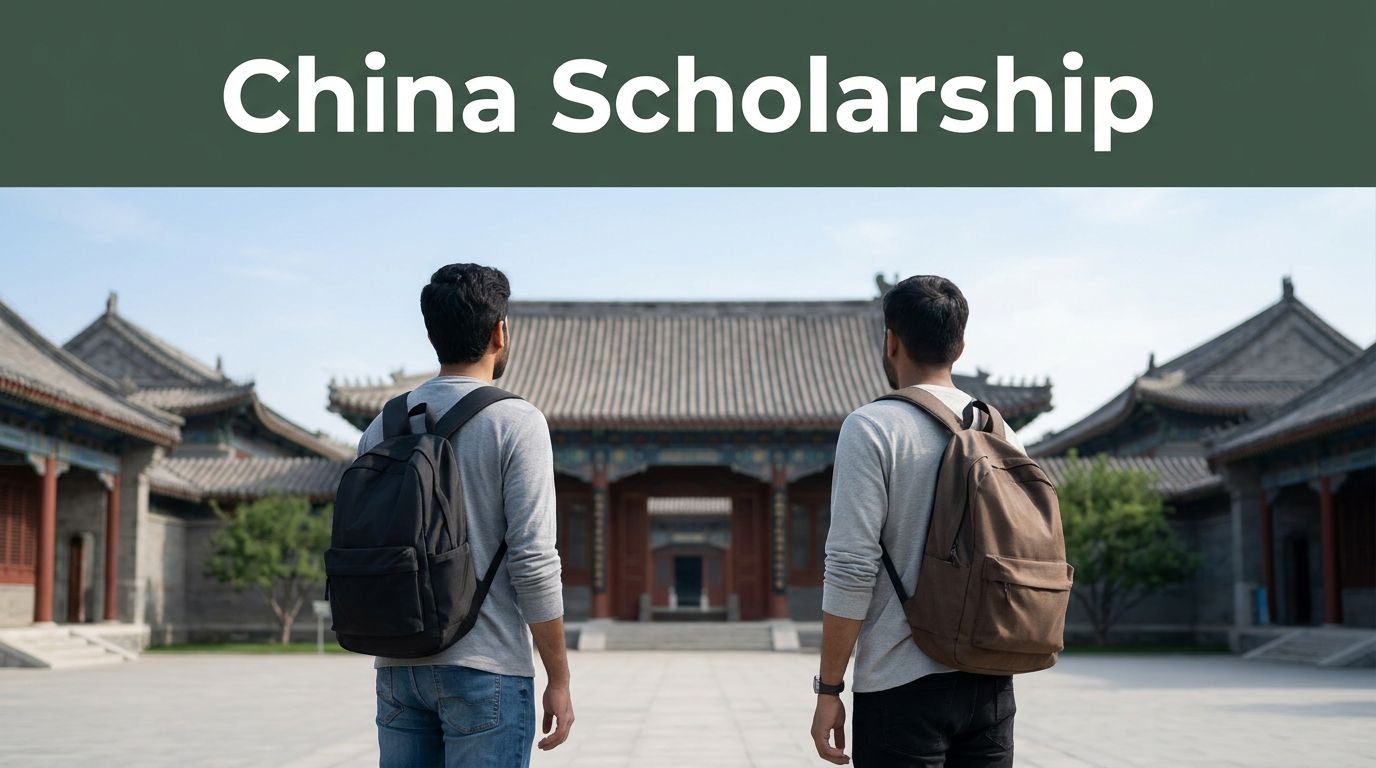
Stepping onto a campus in China might feel like a distant dream, but for thousands of students, it is quickly becoming a reality. You have the chance to access a world-class education that balances high-tech research with deep cultural history.
Getting a China scholarship for Pakistani students is a practical way to fund your degree while setting yourself up for long-term career growth. It is an investment in your future that pays off by opening doors to international networks and new perspectives.
If you are ready to stop wondering how to make it happen, let’s walk through the exact steps you need to take to secure your spot.
Why You Should Choose China for Your Higher Education
Choosing a destination for your studies is a massive decision. You aren’t just picking a university, you are picking a location that will define your personal and professional growth for the next few years. When you look at a China scholarship for Pakistani students, you are looking at more than just tuition coverage. You are looking at a system that pours billions into academic infrastructure while pushing students to participate in global discourse. China offers a unique mix of high-speed progress and traditional academic rigor that few other countries can match. It is an environment where your work receives the support it needs to actually matter.
Access to World Class Research Facilities
If your field involves engineering, biotechnology, or artificial intelligence, China is the place to be. Universities there house labs that look more like science fiction sets than standard classrooms. You will find high-end equipment that many schools elsewhere simply cannot afford to maintain. When you work with these tools, you move past the theoretical side of your degree and start building actual skills. You aren’t just reading about a process in a textbook, you are running the tests yourself.
These facilities mean that your projects have actual weight. Chinese labs frequently collaborate with massive tech firms and industrial giants, which gives you a chance to work on real-world problems. Whether you are coding in a dedicated robotics hub or analyzing samples in a high-tech lab, you get hands-on time with hardware that is currently defining the market. Using this equipment changes how you approach your studies. You stop worrying about what might work in a lab setting and start focusing on what will work in the real world.
Building a Global Professional Network
One of the biggest advantages of earning a degree abroad is the people sitting next to you. China has become a central hub for international talent, attracting ambitious students from Africa, Europe, and throughout Asia. When you pursue a China scholarship for Pakistani students, you enter a classroom filled with diverse perspectives. You will be working on group projects with peers who have entirely different ways of solving a problem. This exposure is exactly what makes you a more capable professional.
Your network becomes a global map of potential partners and friends. You might meet a future business partner from Brazil or a colleague from Germany during your first semester. These connections extend well beyond the campus gates. Many students find that their roommates or project partners become their primary professional contacts once they start their careers. Because everyone is away from home, the bond you build with these students is often stronger than what you would find in a typical local university. When you eventually enter the job market, you will have a support system that spans continents instead of just a local zip code.
Popular Types of China Scholarships for Pakistani Students
You have several routes to secure funding for your studies in China. While the application process can feel like a maze, understanding the specific tiers of support makes the path much clearer. Finding the right china scholarship for pakistani students depends on your academic record, your field of study, and where you want to live.
Understanding the Chinese Government Scholarship (CSC)
This is the big one. The Chinese Government Scholarship, commonly called the CSC, is the most prestigious funding option available. It acts as the gold standard because it covers your major expenses, leaving you with little to pay out of pocket. If you land this, you are effectively a guest of the Chinese government.
The package is comprehensive. It usually handles your full tuition fees and provides free on-campus accommodation. You also get a monthly stipend, which is more than enough to cover food and basic living costs in most cities. They include medical insurance as part of the deal, so you don’t need to worry about healthcare expenses.
Keep in mind that the competition for these spots is intense. You aren’t just competing against your classmates; you are up against students from all over the world who want a seat at top-tier Chinese universities. Because of the volume of applications, your academic transcripts and your research proposal need to be flawless.
Exploring Provincial and University Programs
If the CSC feels like a reach, or if you miss the deadline for that primary program, don’t pack your bags just yet. Many provincial governments and individual universities offer their own scholarship pools. These are often less publicized but just as valuable for covering your costs.
Provincial scholarships are tailored to specific regions like Jiangsu, Zhejiang, or Guangdong. These areas have their own economic priorities and often use these funds to attract talent to local tech or industrial hubs. You might find that these programs are slightly easier to secure because the applicant pool is localized to specific regions.
University-specific awards work differently. Many top schools have private scholarship funds dedicated to attracting international talent to their specific research departments. You should check the “International Student” section of the university websites you are interested in.
Scholarship Type |
Primary Sponsor |
Typical Coverage |
|---|---|---|
CSC Scholarship |
Central Government |
Full Tuition, Room, Stipend |
Provincial Awards |
Local Government |
Partial to Full Tuition |
University Grants |
Specific Institution |
Varies by Program |
These alternative paths often allow for more flexibility. Some universities offer “partial” scholarships that cover your tuition but require you to pay for your own room. While it isn’t a free ride, it brings a degree within reach if you have modest personal savings. Look for these opportunities early, as they often open and close on different timelines than the national CSC cycle.
Step by Step Guide to Preparing Your Scholarship Application
Getting your paperwork in order is the least glamorous part of the process, but it is where most students fall apart. You might have the best grades in your class, but if your application package is messy or late, nobody will bother looking at it. Think of this phase as a project management exercise. You are building a case for why you belong in a Chinese classroom, and every document you submit is a piece of evidence supporting your claim. Start early, stay organized, and treat this like a job.
Crafting a Winning Statement of Purpose
Your statement of purpose is your chance to speak directly to the committee. Most applicants treat this like a biography, reciting what they did in high school or college. Do not do that. The people reading your file already have your transcripts. They want to know what drives you and how a china scholarship for pakistani students fits into your future.
Start by connecting your past experiences to your specific academic goals in China. If you want to study robotics, talk about a specific project where you hit a wall and had to learn a new tool to fix it. If you want to study public health, explain the specific problems you see in your community that you want to solve with the knowledge you gain in China. You need to show a clear line from where you have been to where you are going.
Keep your tone professional but keep your personality intact. Committees read hundreds of essays, and they get bored fast. Avoid overused phrases about “cultural exchange” or “broadening horizons.” Instead, write about the specific lab you want to work in or the professor whose research matches your own. Show them that you have done your homework and that you are not just applying because you want to move abroad. Your goal is to show them you are a serious student with a concrete plan to use your degree to solve actual problems.
Managing Deadlines and Document Requirements
Missing a deadline is the fastest way to kill your chances. Most Chinese universities and scholarship programs have rigid systems that automatically reject applications submitted one minute after the cutoff. Do not wait for the last day to upload your files. Technical glitches, internet outages, and server crashes happen constantly. Plan to submit your full application at least one week before the final date.
Start a spreadsheet to track every requirement for the programs you choose. Each university asks for slightly different things, such as:
- Scanned copies of your passport and your CNIC.
- Certified translations of your academic transcripts and degrees.
- Letters of recommendation from professors who actually know your work.
- Medical examination forms signed by a government-approved clinic.
Get these documents ready long before the application window opens. Getting a document notarized or finding a professor who is willing to write a solid letter can take weeks. If you are rushing to find signatures a few days before the deadline, you will likely make mistakes. You want your file to be clean, organized, and complete the moment you hit the submit button. Treat your application with the same respect you would give to a professional job offer, and you will stand out from the thousands of other applicants who leave things to the last minute.
Practical Tips for Adjusting to Life in China
Moving to a new country changes how you see the world, but it also brings a fair share of headaches. Adjusting to life in China requires more than just a valid visa and a packed suitcase. You need a bit of patience and a willingness to step outside your comfort zone every single day. From navigating payment apps to finding your favorite comfort foods, your ability to adapt determines how much you enjoy your stay. Whether you are moving to a massive city like Beijing or a smaller university town, these habits will make your transition much smoother.
Overcoming Language Barriers and Cultural Differences
You will face moments where you feel completely lost, especially when the local dialect sounds nothing like the Mandarin you practiced on your phone. Many students assume they need to be fluent before they arrive, but that is not realistic. Your goal is to be functional, not perfect. Start by learning the basics, like how to order food, ask for directions, and handle simple transactions. Using a translation app is fine for emergencies, but try to speak for yourself as much as possible. People appreciate the effort, and your confidence will grow every time you successfully finish a conversation without reaching for your phone.
Language is the key to unlocking the real experience of a China scholarship for Pakistani students. If you treat every interaction as a lesson, you stop feeling frustrated and start feeling curious. Look for language exchange partners on campus who want to learn English in exchange for helping you with your Chinese. This method turns a difficult task into a social event. You might find that you learn more over a cup of tea with a classmate than you ever did sitting in a language lab.
Beyond the language, cultural nuances influence how you interact with professors and peers. Respect for hierarchy is common, and you should always be mindful of local customs when communicating with your teachers. If you are ever unsure about how to act, observe how your local classmates handle situations and mirror their approach. Being observant saves you from social blunders and helps you build rapport faster.
- Keep a notebook for new vocabulary you hear during your daily commute.
- Download a reliable dictionary app that works offline.
- Practice one new phrase each day, no matter how small.
- Accept that you will make mistakes and learn to laugh at them.
You do not need to be an expert on Chinese culture overnight. The goal is to show that you are willing to learn and respect the environment you are living in. Once you embrace the challenge of the language, you stop being an outsider and start feeling like part of the community. This shift in mindset makes your time abroad far more rewarding than if you stayed within an English-speaking bubble. Stay curious, stay humble, and keep showing up.
Frequently Asked Questions About Scholarships in China
You likely have a dozen questions circling your mind before you commit to an application. Finding accurate answers can be frustrating when you are looking for a china scholarship for pakistani students, so let’s break down the most common points of confusion. These answers should help you move past the uncertainty and focus on your goal.
Can I apply for a scholarship if I do not speak Chinese?
Many top-tier universities in China offer programs taught entirely in English. You do not need to be fluent in Mandarin to start your degree, provided you choose an English-medium course. While having a basic grasp of the language helps you navigate daily life, your academic work happens in English. Check the program details on the university website to confirm the medium of instruction for your specific major.
Is the monthly stipend enough to live comfortably?
The monthly stipend provided by most government scholarships is designed to cover your basic needs. In cities like Beijing or Shanghai, costs are higher, but the stipend remains a solid foundation for your budget. If you choose a university in a smaller, regional city, your money will go much further. Most students find that the stipend covers housing costs and groceries without much trouble, though you should keep some personal savings available for travel or extra expenses.
Do I need to be in Pakistan when I apply?
You can generally apply for a china scholarship for pakistani students from anywhere as long as you have the required documents. The process is handled digitally, so your physical location does not affect your eligibility. Make sure your internet connection is stable when you upload your files, as the application portals can be sensitive to dropped signals. If you are already traveling or working abroad, you still follow the same rules as everyone else.
What happens if I fail a course while on a scholarship?
Scholarships in China come with academic expectations that you must meet to keep your funding. If your grades drop below a certain threshold or you fail a required course, the university might issue a warning or, in some cases, revoke your financial support. Treat your studies as a serious commitment. If you struggle with a subject, talk to your professors or academic advisors early. They expect you to reach out when you need help, and it is always better to address a problem before it jeopardizes your status.
Can I work part-time while studying on a scholarship?
Chinese regulations for international students regarding part-time work are strict. While you might see some students working, it usually requires a specific permit and permission from your university. Relying on a part-time job to pay your tuition is a risky move. Focus on securing a fully-funded scholarship so you can dedicate your time to your research and classes instead of searching for work.
Are there age limits for applicants?
Different programs have different rules, but age limits are common for many government-backed awards. Bachelor’s degree seekers often need to be under 25, while master’s candidates are typically expected to be under 35. These rules can vary depending on the specific agreement between the Chinese and Pakistani governments. Always read the specific criteria for the scholarship round you are targeting to ensure you fall within the allowed range.
Conclusion
Securing a China scholarship for Pakistani students is a serious task that requires organization and patience. You have all the information you need to move from the research phase to submitting a polished application. The path is open for those who prepare their documents early and show a clear purpose for their studies.
Focus on your individual strengths and the specific research labs that match your goals. Thousands of students from Pakistan already study in China, and there is no reason you cannot join them with a bit of focus and dedication. Start your application today and take the first step toward your international degree.
This post may contain affiliate links. If you make a purchase through these links, I may earn a small commission at no extra cost to you.