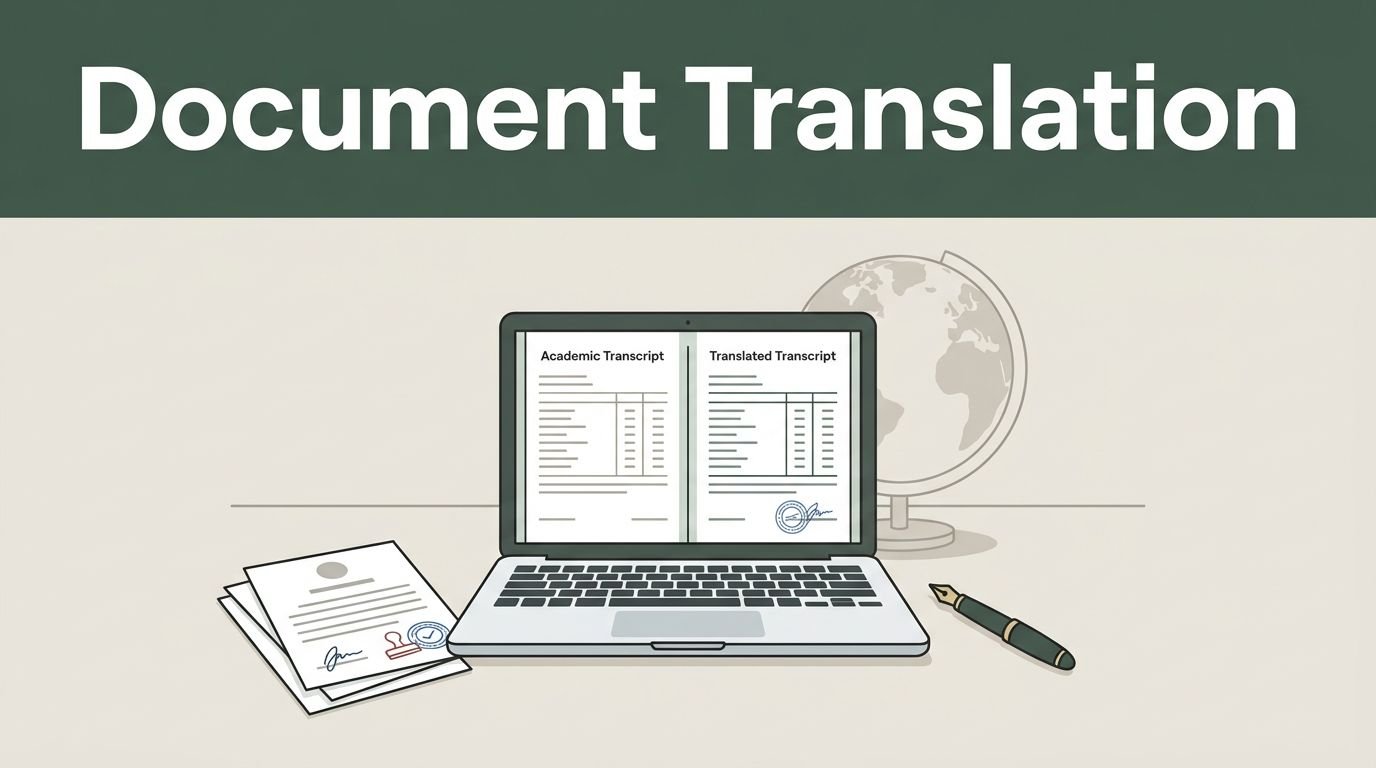
Scholarship committees rarely reject strong applicants because of one minor typo. Instead, they reject applications that feature unclear files, missing details, and translations that leave the reviewers guessing. For international students, high quality academic document translation is often the difference between a smooth review process and a stalled application.
When you are preparing your materials, you need total accuracy, the correct format, and clear proof that your translated files match the originals. Scholarship committees prioritize official documents that are easy to read and verify. If you rush this step, a wrong date or a mismatched name can create unnecessary complications. The safest path is to treat academic translation services as a vital part of your application strategy, rather than a side task you complete at the last minute.
Key Takeaways
- Prioritize official requirements: Always review specific scholarship guidelines before ordering translations to ensure you include every required document, such as grading scales or degree certificates.
- Hire professional, certified translators: Use specialized academic translators who understand educational terminology; avoid using friends or machine tools, as they lack the formal certification required by most committees.
- Provide complete source files: Submit clear, high-resolution scans of all document pages, including front and back, as well as any stamps, seals, or explanatory notes to ensure the translator has the full picture.
- Verify details meticulously: Carefully check your translated file against the original for inconsistencies in names, dates, GPA, and course credits to prevent processing delays caused by minor errors.
Start with the scholarship rules, not the translation
Before you pay for any services, read the scholarship instructions line by line. Some programs only request specific transcripts. Others require a broader range of educational documents, including diplomas, degree certificates, grading scales, or detailed course descriptions.
That matters more than most applicants realize. A translation that looks polished can still fail if it misses a page the reviewer expects to see. If the scholarship guidelines are vague, check the university admissions page for your target institution or compare the requirements with how scholarship applications ask for transcripts.
You should also look for small but important details when preparing your foreign language documents. Does the school want the translation in English only? Do they want the source document attached? Do they ask for a certified translator’s statement? These questions sound dull, but they save significant time later.
If the instructions mention a country specific format, follow that format exactly. A university in Canada may expect one style of certified translation, while a scholarship office in Germany may want something entirely different. When you are managing your educational documents, the safest move is simple: check first, translate second.
Choose a translator who can handle academic records
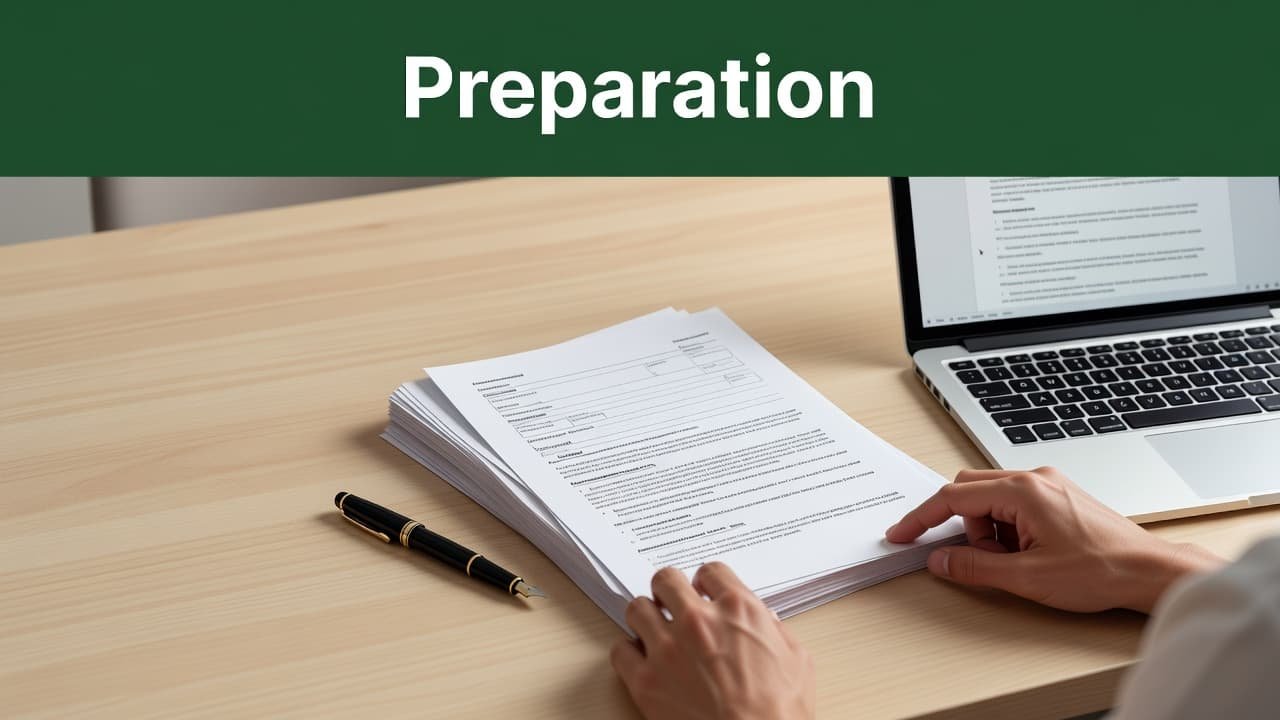
Not every bilingual person is a good choice for scholarship paperwork. Academic records are full of grade scales, abbreviations, seals, course titles, and official wording. That mix requires professional translators who understand how to navigate specialized educational terminology.
Look for someone who has handled transcripts, diplomas, and certificates before. If the scholarship committee requires a certified translation, you must hire a professional who can provide the necessary documentation and a signed statement of accuracy. For a clearer breakdown of what often gets required, see translating transcripts requirements and best practices. If your university specifies an official requirement, a certified translation is the standard you should seek to ensure your application is accepted. Furthermore, working with ATA-certified translators provides an extra layer of assurance for international scholarship boards.
A friend who speaks both languages may help you understand the document, but that does not mean they should submit the final version. Scholarships are far stricter than casual paperwork. They require a record they can trust, and machine tools cannot replace the nuance provided by human translation. When it comes to your future, relying on professional quality assurance is always better than taking a risk with an unofficial document.
If the scholarship asks for an official copy, a casual translation is a gamble, not a shortcut.
Here is a quick way to compare your options:
Translator option |
Best for |
Watch out for |
|---|---|---|
Certified academic translator |
Most scholarship submissions |
Ask for a signed statement and contact details |
University-approved provider |
Schools with a fixed vendor list |
Check the exact file format they require |
Bilingual friend or relative |
Personal review before final editing |
Usually not accepted as the final copy |
The right choice depends on the application, but the pattern stays the same. If the document will be judged formally, the translation needs formal backing too.
Give the translator the full picture
An academic transcript is not just a transcript. These documents often come with stamps, notes, seals, course codes, grading scales, and signatures. If you send only a cropped photo, you make the job harder and the result weaker.
Send clear scans of every page, front and back if needed. Keep the original order. Include attachment pages, grading legends, and any explanations that sit outside the main table. If your name changed after graduation, add the supporting document. The translator cannot guess what the school needs to process your academic transcripts effectively.
A clean source file also helps the translation read correctly. Blurry scans create ugly guesswork. Cropped margins can cut off seals or footnotes. Folded pages can hide course titles or remarks like “with distinction” or “pass with merit.” When preparing your academic records, remember that clarity is key.
Use this as a final file check before you send anything out to ensure total accuracy and completeness:
What you send |
What the translator needs to see |
Why it matters |
|---|---|---|
Full transcript pages |
All grades, credits, and remarks |
Prevents missing course data |
Diplomas and degrees |
Exact degree title and date |
Keeps qualification names consistent |
Grading systems or legends |
Letter grades, percentages, or class ranks |
Avoids wrong grade meanings |
Name-change proof, if needed |
Matching legal name details |
Helps the application match your passport |
If your documents contain handwritten notes or stamps in another language, don’t hide them. Let the translator decide how to present them. A complete file is easier to verify than a tidy but incomplete one.
Check names, grades, and dates like a gatekeeper
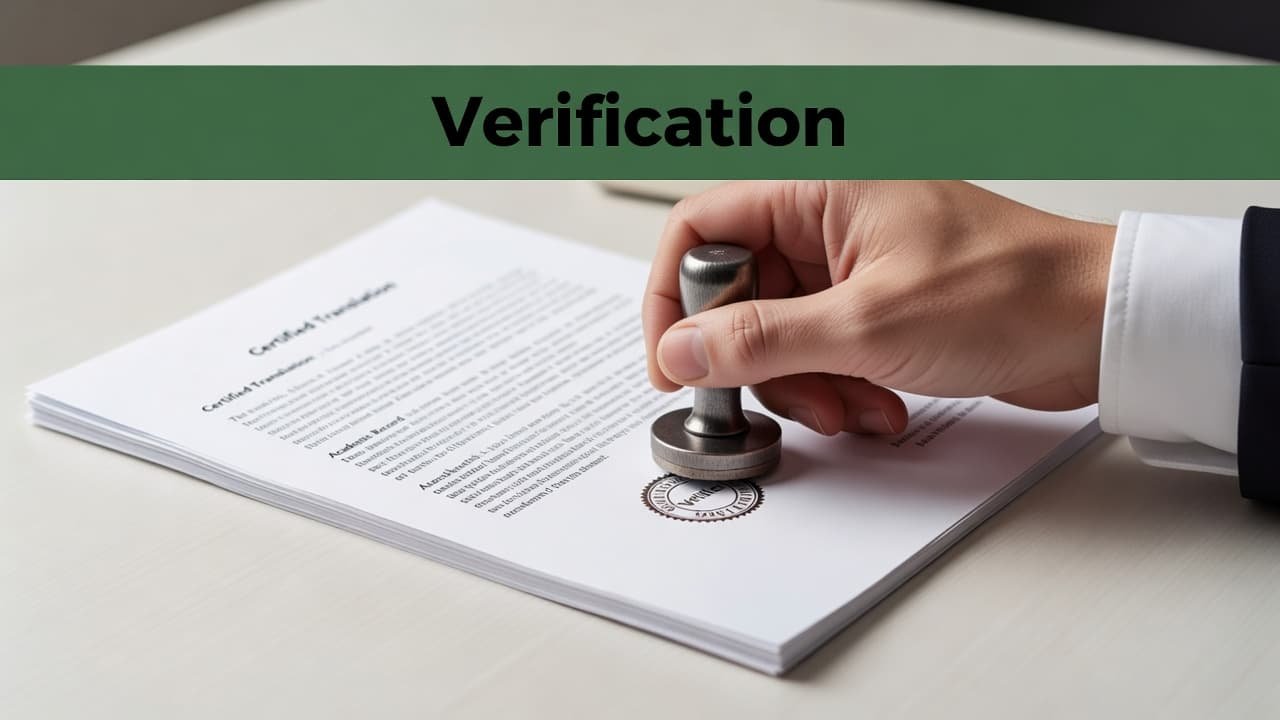
This is where many applicants slip. The translation may read smoothly, but one wrong detail can cause trouble. A missing middle name, the wrong order of surnames, or a decimal point that changed places can trigger extra review. When you are finalizing your academic document translation, precision is non-negotiable.
Read the translated file against the original, line by line. Check the spelling of your name exactly as it appears on your passport or application form. Make sure dates use the format the scholarship wants. Some offices prefer day-month-year, others use month-day-year, and some ask for both.
Pay close attention to the numbers. A GPA of 3.7 is not the same as 3.17. A percentage of 87 is not the same as a grade point. Course credits matter too. If your school uses ECTS, semester hours, or local credit units, the translator should reflect that clearly. You should ensure the final document is a faithful, word-for-word translation that mirrors the structure and data of your original transcripts.
Before you submit your certified English translation, verify these items:
- Your name matches the passport spelling.
- Course titles are translated consistently.
- Dates and graduation year are correct.
- Grade values match the source document.
- Stamps, signatures, and notes are mentioned if needed.
One more thing, do not let anyone clean up the document by changing what the original says. Translation is not a rewrite. If the source uses a local degree title, that title needs a careful equivalent, not a fancy guess. Keeping the data accurate is the best way to ensure your application passes the vetting process without unnecessary delays.
Submit the translation in the format they want
Once the translation is done, the file still needs to land the right way. Some scholarship portals require one combined PDF, while others request the original and translation uploaded separately. Certain programs may specifically ask for notarized translations as part of their official documentation requirements. Regardless of the specific mandate, always verify if they require a signed certification page to validate the authenticity of the records.
Keep the file names simple. “Transcript_Translation.pdf” is much better than “finalfinalversion3.pdf.” You want the reviewer to open the file and understand exactly what it is within two seconds. If you are working against a tight deadline, many services offer a 24-hour turnaround to ensure you have these documents ready well before the portal closes.
If the platform compresses uploads, check the quality after submission. Small fonts, seals, and signatures can blur badly during this process. A PDF that looked perfectly clear on your laptop might turn fuzzy inside an application portal, which is the kind of detail that creates unnecessary follow-up emails.
Also, keep a clean copy for yourself. Save the source file, the translation, and any certification page in one organized folder. If the scholarship office asks for a re-upload, you will not be hunting through old messages or cluttered emails at midnight.
Make your translation easy to verify
A good translation does not try to hide the original. It makes the original easier to understand. That is the standard you want to maintain for your application materials.
If the scholarship committee requires a certified statement, ask for it early. If the program wants every page translated, do not assume a summary or cover page is enough. If your documents include abbreviations or local grading terms, ensure the translation explains them in plain language. You are not trying to impress anyone, you are trying to remove doubt for the admissions team.
Beyond the scholarship application, these high-quality translations often serve a dual purpose. They are frequently required for official credential evaluation processes managed by agencies like WES. If you are preparing for future visa applications, having a clear and verified record is essential, as these documents are often cross-referenced to ensure USCIS acceptance. When your documentation is clear, it simplifies the work for any NACES member agency that may need to review your academic history later.
You can also help by adding a short note when needed, especially if the document uses terms that do not translate cleanly. That note should be factual, not wordy. Think of it like a label on a box. It helps the reviewer see exactly what they are holding.
The easiest applications to trust are the ones that feel complete. No mystery pages, no missing names, and no loose ends. By ensuring your documents are ready for both scholarship reviewers and external verification bodies, you set yourself up for a much smoother transition into your new academic program.
Frequently Asked Questions
Do I need a certified translation for my scholarship application?
Most scholarship committees and universities require a certified translation to ensure accuracy and authenticity. Using a certified translator provides a signed statement that verifies the translation is a true and faithful representation of your original academic documents.
Can I translate my documents myself if I am bilingual?
It is generally discouraged to translate your own documents for formal applications, even if you are fluent in both languages. Scholarship reviewers look for official, impartial documentation, and a self-translated file may not be accepted as an accurate or verified record.
What should I do if my document contains seals or handwritten notes?
Do not remove or crop out any seals, signatures, or handwritten marks when scanning your documents. You should provide a complete, clear copy to your translator, who will determine the best way to represent these elements in the final translated version to maintain official validity.
How can I ensure my digital files are ready for submission?
Use simple and descriptive file names to help reviewers identify your documents quickly. After uploading, verify that the portal has not compressed the files to the point where small text, seals, or signatures become blurred or illegible.
Conclusion
Scholarship paperwork becomes much more manageable when you treat it like a structured process rather than a guessing game. By carefully reviewing the requirements, choosing professional academic translation services, providing complete source files, and verifying every detail, you ensure your application stands out for the right reasons.
High quality academic translation is essential for your success. Whether you are handling transcripts or other vital academic records, the goal is always the same: keep the documentation clean, accurate, and easy to review.
Remember that most institutions will ultimately require a certified translation to validate your background. If your files are prepared to this professional standard, they will be ready for the scrutiny of any admissions committee. Give the reviewer no reason to pause, and your credentials will do their job without getting in the way.
This post may contain affiliate links. If you make a purchase through these links, I may earn a small commission at no extra cost to you.