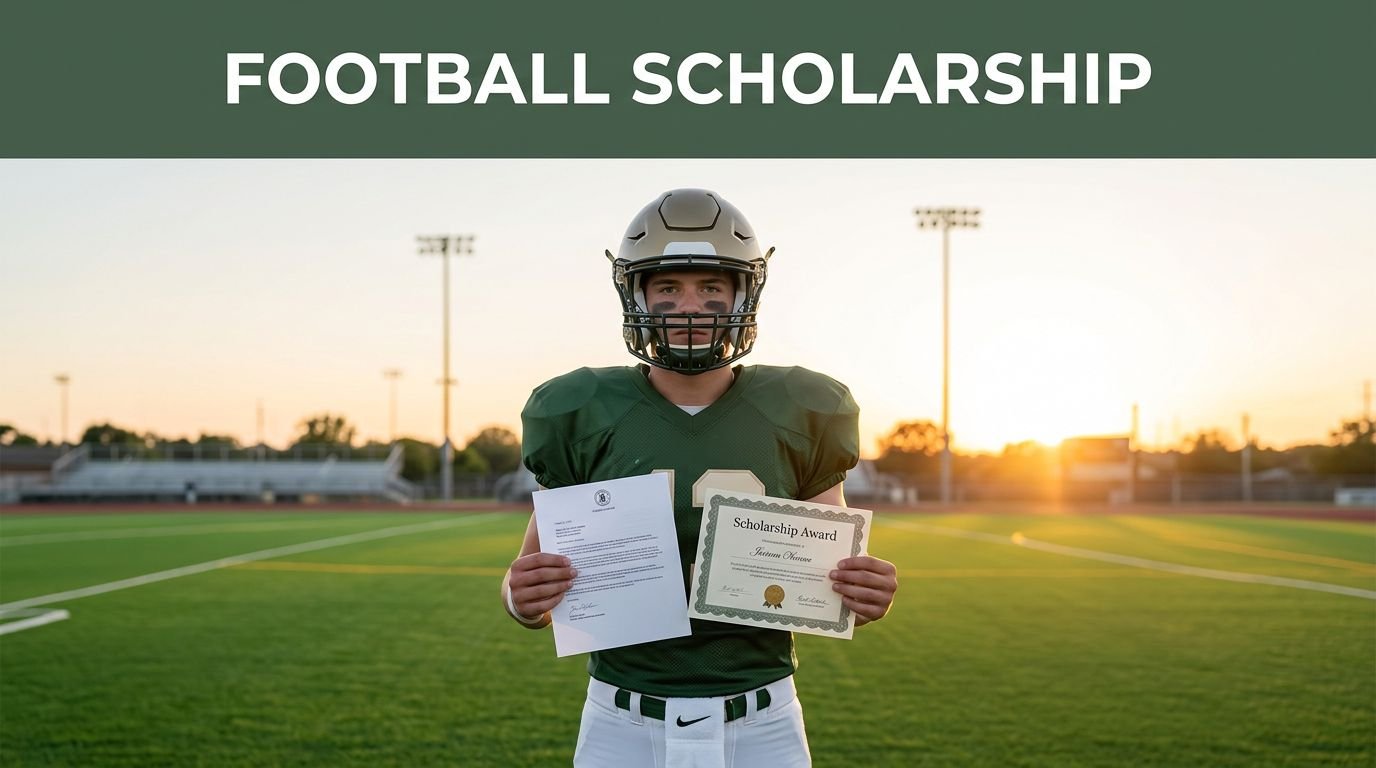
The dream of playing under the lights on a Saturday afternoon is what keeps you training when everyone else is asleep. While the talent on the field is obvious, earning a scholarship for football is rarely about being the best player in your district alone. It is a calculated process that demands as much preparation off the field as you put into your game-day performance.
Securing your future requires you to treat your recruitment like a full-time job. You need a strategy to get in front of the right coaches and ensure your academic record matches your athletic ability.
Here is how you can build a roadmap to turn your hard work into a life-changing opportunity.
Understanding How a Scholarship for Football Actually Works
The math behind a scholarship for football is rarely as simple as a direct transaction. You aren’t just handed a check for four years of tuition the moment you sign a letter of intent. Instead, athletic departments operate within strict financial limits set by the NCAA, meaning your coach has to juggle a limited bucket of money to build the best possible roster. Understanding this structure helps you set realistic expectations while you chase your goal.
Full Rides Versus Partial Awards
Coaches have a finite amount of money to offer, and they have to spread that thin to cover an entire team. This is why full rides are actually quite rare. A true full scholarship covers tuition, room, board, and books. Most athletes, however, receive partial aid, which might only cover a portion of your tuition or housing costs.
Think of the scholarship pot as a pizza. If the coach gives a full pie to one star recruit, there is less to go around for the remaining 84 players on the roster. Because of this, coaches often look for ways to stack financial aid. You should never view your athletic scholarship as your only source of funding.
Many recruits combine their athletic money with academic grants or merit-based scholarships. If you maintain a high GPA, you become a much cheaper asset for the team. A coach who knows you qualify for university-wide academic money can offer you a smaller athletic package, which leaves more room in the budget for them to recruit other players.
- Talk to the admissions office early about your academic eligibility.
- Search for institutional grants that don’t count against the football team’s budget.
- Keep your grades high to remain attractive to financial aid officers outside the athletic department.
When you bring your own academic money to the table, you become a more flexible recruit. This is a massive advantage during negotiations, as it makes your recruitment easier on the coach’s bottom line.
The Role of Recruiting Divisions
Not every college team has the same amount of money to offer. Opportunities for a scholarship for football change drastically depending on the division where the school plays. You need to know these differences so you can target programs that actually have the resources to support you.
- NCAA Division I (FBS): These programs are the heavy hitters. They offer 85 full scholarships, meaning every player on a scholarship receives a full ride. If you get an offer here, the money is significant.
- NCAA Division I (FCS): These schools are permitted to offer up to 63 scholarships. Unlike the top-tier division, these can be split up, meaning you might see more partial awards.
- NCAA Division II: These programs have a maximum limit of 36 scholarships. Because this is a lower number, almost every scholarship offered here is a partial award.
- NCAA Division III: These schools do not offer athletic scholarships at all. If you play at this level, your financial support will come entirely from academic, need-based, or merit aid.
You might be tempted to chase the biggest name programs, but the math often makes more sense at lower divisions. A partial award at a Division II school might leave you with a lower out-of-pocket cost than no athletic money at a Division III school, or a fight for a roster spot at a massive FBS program. Look at the total cost of attendance for each school and subtract your expected aid. The actual dollar amount you pay is the only number that matters for your bank account.
Building Your Athletic Resume to Attract Coaches
You aren’t just an athlete when you enter the recruiting process. You are a prospect marketing yourself to a business. Coaches see hundreds of players every season, so you need a professional way to showcase your stats, contact info, and game footage. Think of your athletic resume as your storefront. If it looks cluttered, disorganized, or empty, coaches will keep moving to the next shop. A clear, concise document that lists your physical stats, game experience, and academic record is the first thing a coach wants to see when they check out your profile.
Creating an Eye-Catching Highlight Reel
Your highlight reel is the most important piece of media you will ever produce. It is your audition tape, and you have about 30 seconds to grab a recruiter’s attention before they lose interest. Do not waste that time with long intros or flashy graphic transitions. A coach wants to see your talent, and they want to see it immediately. Start the video with your absolute best plays, and keep the total runtime under five minutes. If you can show a massive impact in three minutes, even better.
Music is a personal choice, but keep it professional. Avoid tracks with explicit lyrics or volume levels that drown out the actual action. Remember that you are sending this to a university official, not uploading it to a social media feed for your friends. If the music distracts from your movement, it is a liability.
Versatility is your greatest asset. Don’t just show highlight-reel touchdowns where you had a clear path to the end zone. Coaches want to see how you react when things get tough. Include clips that show:
- Your ability to block for teammates.
- Your technique during challenging defensive assignments.
- How you hustle on special teams.
- Your response to contact when the play breaks down.
Watching you perform the “dirty work” tells a coach more about your football IQ than a 60-yard sprint against a weak secondary ever will. Keep the footage clean, crisp, and focused on your individual contribution to each play.
The Importance of Academic Eligibility
You can be the most talented player on the field, but you are a liability if you cannot pass the entrance requirements of the school. Academic eligibility is not just a box to check; it is a primary filter for every scholarship for football program in the country. Coaches lose scholarships if their players don’t stay eligible, so they prioritize recruits who prove they can handle the classroom. Your transcripts are a direct reflection of your discipline.
A high GPA changes the math of your recruitment significantly. Many universities offer merit-based scholarships that are entirely separate from the football program’s budget. If you qualify for these academic awards, the school can pay for a large chunk of your tuition without touching their athletic funds. This makes you a much cheaper recruit, which makes you a more attractive option for a coach with a limited budget. You are essentially giving them an excuse to offer you a spot because you help them stretch their resources further.
If your grades are low, you are essentially asking a coach to gamble on your ability to catch up with the college curriculum. Most coaches won’t take that risk when they have dozens of other options who already meet the baseline standards. Treat your GPA with the same intensity as your weight room program. Staying eligible is the surest way to keep the door open, while a high GPA is the best way to walk through it with more financial support in your corner.
Mapping Out the Recruitment Timeline
You might think recruitment happens overnight, but it is actually a slow burn that requires serious patience and planning. If you wait for coaches to find you, you are already behind. You have to take control of your calendar early if you want a legitimate shot at a scholarship for football. Think of this process as a multi-year sprint where every season serves a specific purpose in building your profile.
Starting Early: Freshmen and Sophomores
Most athletes wait until they have a varsity starting spot to think about recruiting. That is a mistake. Your freshman and sophomore years are for building a foundation, gaining exposure, and making sure your name is on the radar of the coaches you want to play for. Start by attending camps held on college campuses. These camps are not just for skill work; they are your chance to get verified physical measurements in front of the coaching staff.
When you head to these events, don’t just go through the motions. Introduce yourself to the coaches and follow up with an email the next day. It sounds simple, but most kids never do it. Sending a quick note to thank them for their time helps you stand out from the hundreds of other campers.
- Create a public profile on recruiting sites to track your stats.
- Sign up for at least two to three prospect camps every summer.
- Keep your grades in check because coaches start looking at transcripts early.
- Send introductory emails to the recruiting coordinators at your target schools.
Building these relationships early means coaches already know your name by the time you hit your junior year. You are not asking for a scholarship for football yet; you are just showing them you have the drive to put in the work.
The Critical Junior Year Push
If your freshman and sophomore years are about introduction, your junior year is about closing the deal. This is the single most important window for your recruitment. Most scholarship offers for football are extended during or immediately after a prospect’s junior season, making this the time to go all-in on your outreach efforts.
Coaches focus their recruiting energy on juniors because they have enough game tape to evaluate your potential at the college level. You need to be proactive with your communication. Send your updated game film after every Friday night performance. If you had a breakout game, let them know. Don’t wait for them to ask.
Official visits also start to happen during this period. When a school invites you for an official visit, they are signaling that you are high on their recruiting board. Treat these visits with extreme professionalism. You are there to see if the campus is a good fit, but the coaches are watching how you carry yourself, how you interact with current players, and how you handle the environment.
Junior year is where you transition from a prospect to a priority. If you do not have a coach reaching out to you by the end of your junior year, you need to broaden your target list or re-evaluate your communication strategy. Stay aggressive, keep the film updated, and make it impossible for them to ignore your progress.
Mastering the Art of Direct Outreach
You have your stats, your highlight reel is ready, and you know which programs fit your academic and athletic profile. Now comes the part that scares most recruits. You have to start talking to coaches. Cold calling or emailing can feel awkward, but it is the primary way you get your name onto a recruitment board. If you sit around waiting for them to notice you, you will be waiting for a long time. Take the wheel, start the conversation, and show them you are the kind of person they want in their locker room.
How to Email College Coaches Effectively
Your email is the first impression a coach gets of your personality and attention to detail. Most coaches receive dozens of messages every single day. If your email looks like a generic mass blast, it goes straight to the trash. You need to prove you have done your homework and that you are not just copy-pasting the same note to fifty different schools. Keep your subject line professional, clear, and informative. Include your name, your position, your graduation year, and your GPA. Coaches look for players who fit their specific needs, so make that information visible immediately.
Personalize every message you send. Mention something specific about their team, like a recent game you watched or their specific offensive or defensive scheme. If you see a post about their recruiting needs, reference that directly. When you show you understand who they are, you stop being just another name in the inbox and start being a recruit who cares.
Keep the message short. Coaches are busy. They do not have time to read a three-page life story. State who you are, why you are interested in their program, and where they can find your film.
Try using a format like this when you reach out:
Subject: Recruit: [Your Name] | [Position] | [Graduation Year] | [GPA/SAT]
Coach [Last Name],
I am a [Position] at [Your High School] and have been following the [University Name] program for some time. I am interested in how your team utilizes [specific scheme or player role].
I have attached my highlight reel and my academic transcript. You can view my full profile here: [Link].
I am planning to attend [Camp Name] this summer and would appreciate the chance to meet you in person. Do you have any availability for a quick conversation regarding your recruiting needs for the [Year] class?
Best,
[Your Name] [Your Phone Number]
Always follow up if you do not hear back within two weeks. Coaches often get distracted by game prep or travel. A polite, concise follow-up email shows you are serious and consistent. Send your updated stats or a new game film link if you have one. Just do not spam them every day. Persistence is good, but pestering is a fast way to get yourself ignored.
Avoiding Common Pitfalls in the Scholarship Hunt
The recruiting process is full of traps that can easily derail your chances before you ever step onto a college field. Many talented players lose out simply because they assume the system will find them if they play well enough on Friday nights. This passive mindset is a mistake that costs hundreds of athletes their shot at a college career. You must treat your recruitment as a personal marketing project where you are the primary engine of your own success.
Why You Should Not Wait for Recruiter Attention
You might believe that if you are good enough, the scouts will eventually notice you. That logic works for the top one percent of high school athletes, but it fails for almost everyone else. Coaches have limited time, budgets, and travel resources. They cannot watch every high school game in the country, and they certainly cannot spot every talented athlete hidden in a smaller program. If you stay quiet and wait to be discovered, you are essentially gambling your future on luck.
The reality of being a hidden gem is that no one is coming to find you unless you give them a reason to look. Coaches rely on databases, email inquiries, and verified camp results to build their initial lists. If your name is not on those lists because you failed to reach out, you do not exist to them. Being a talented player is only half the battle. The other half is making sure the right people know exactly who you are, what you can do, and why they should invest their limited scholarship for football funds in you.
Self-promotion is not arrogance, it is a necessary part of the modern athletic landscape. You are competing against thousands of other motivated students who are actively building relationships with college staff. These players send their transcripts, update their film regularly, and follow up after every camp. When a coach has to choose between a player they have been talking to for a year and a total stranger, they almost always pick the familiar face.
You need to step up and take control of the conversation:
- Identify the schools that actually need your position instead of just chasing the biggest names.
- Update your contact information and highlight reel frequently so coaches always have current data.
- Ask your high school coach to help you reach out to college programs since they often have professional networks you cannot access alone.
Do not be the player who finishes a strong senior season only to realize no one bothered to recruit them because they never took the first step. By the time coaches finish their hiring rounds, the roster spots are already filled. Getting noticed is your job, not theirs. When you start making the first move, you stop waiting for permission and start creating your own opportunities.
Conclusion
Earning a scholarship for football is a task of logistics as much as it is a display of athletic skill. You have to treat your recruitment as a dedicated project, staying sharp in the classroom while you build a professional presence on the field. When you take charge of your communication and keep your film updated, you move from a background prospect to a priority recruit.
The path is rarely a straight line, but you have the tools to map your own route now. Keep your focus on schools that match your actual needs and your financial goals. Your persistence during these formative years will pay off when you finally step onto the practice field with your tuition costs handled.
You know the steps. Go out there and start making your case to the coaches who need a player exactly like you.
This post may contain affiliate links. If you make a purchase through these links, I may earn a small commission at no extra cost to you.