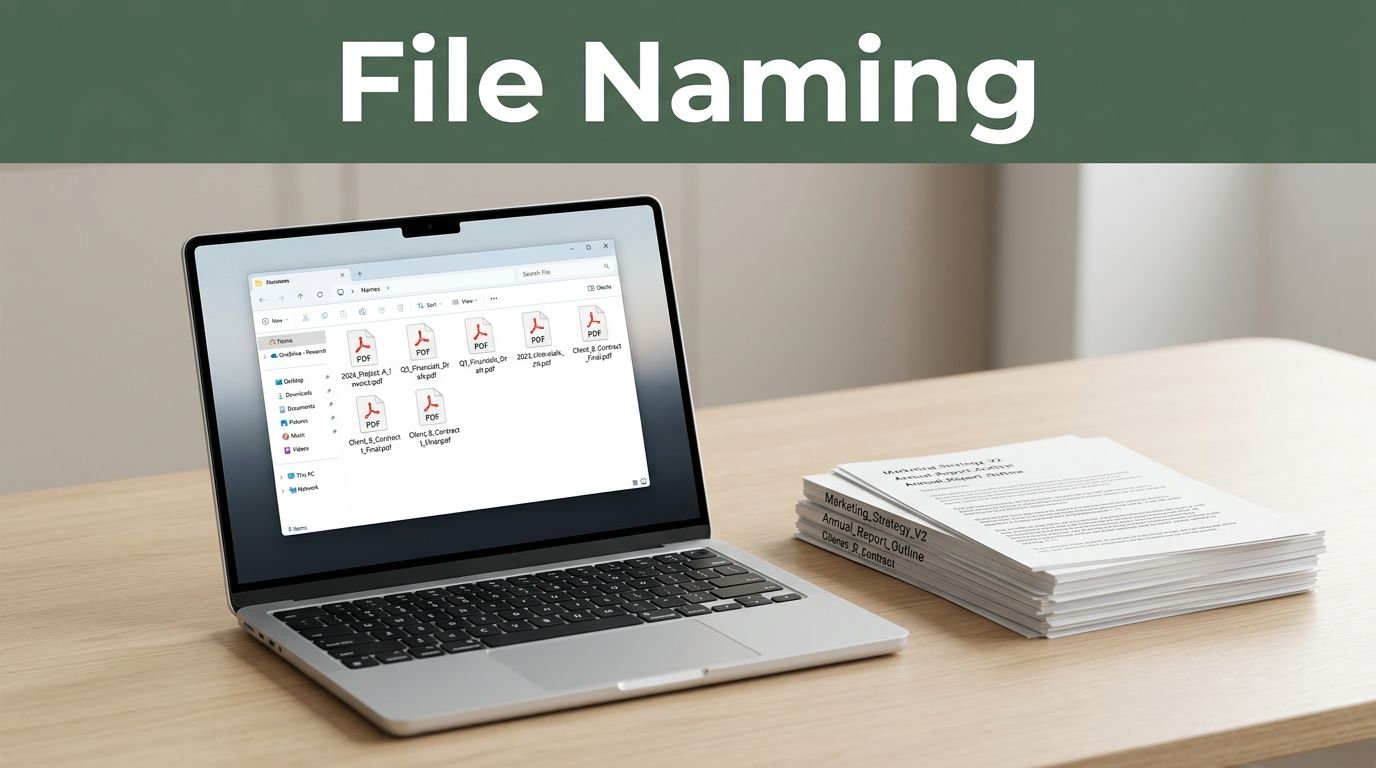
Submitting messy scholarship application file names can slow down a review process before the reader even opens your document. That sounds like a minor issue, but small details do a lot of heavy lifting when you are competing for financial aid.
Using a professional file naming format makes your materials easier to sort, easier to trust, and easier to find when deadlines arrive. If you are helping a student, this is especially important because consistent file naming is a vital part of preparing your application documents to save time and cut down on last-minute mistakes.
Key Takeaways
- Use consistent file naming conventions for every document so your files stay easy for reviewers to scan.
- Put the most useful details first, like your name, document type, and scholarship name.
- Keep file names short, clear, and free of extra symbols.
- Match each document to the application instructions and double check specific file upload requirements before you submit.
- A clean folder structure is just as important as the file name itself.
Why file names matter more than you think
The admission committee often handles a massive stack of applications. They may open dozens of academic transcripts, essays, and letters of recommendation in one sitting. If your application documents are named well, your submission feels professional and organized before anyone reads a single page.
If your files are confusing, the opposite happens. A reviewer may wonder whether a document is missing, outdated, or mislabeled. That little pause is enough to create friction, and friction never helps when someone is moving fast.
You also help yourself. When deadlines are close and you need to resend a transcript or swap in a revised essay, a clear name makes the file easy to find. Sticking to a consistent PDF format for your application documents also makes them significantly easier to manage during the review process. There is no hunting, no guessing, and no opening five different files called “final” before you reach the right one.
Think of the file name like the label on a folder tab. It does not need to be flashy. It needs to be readable at a glance.
The naming formula that keeps you consistent
The easiest way to organize your application documents is to adopt a reliable naming system that you can repeat without thinking. By applying a consistent file naming strategy, you ensure that committee members can identify your materials instantly, reducing the risk of your files getting lost in their system.
A solid format uses your name as a primary personal identifier. The following structure works well for almost any requirement:
LastName_FirstName_DocumentType_ScholarshipName_Date.pdf
You do not need to include every part every time, but keeping the elements in a consistent order helps. Start with your name, then the document type, and include the scholarship name or version detail if necessary. If your application documents change over time, add a date or version number at the end to keep track of your revisions.
Here is a simple example set to help you organize your files:
Document |
Good file name |
Why it works |
|---|---|---|
Academic transcripts |
Smith_Ava_Transcript_RiverScholarship_2026.pdf |
Clear, personal, and in PDF format for easy viewing |
Statement of purpose |
Smith_Ava_Essay_RiverScholarship_v2.pdf |
Shows the document type and version |
Resume |
Smith_Ava_Resume_2026.pdf |
Short and readable |
Letters of recommendation |
Smith_Ava_Recommendation_Lee.pdf |
Identifies the writer without clutter |
ID or proof of enrollment |
Smith_Ava_EnrollmentLetter_2026-07.pdf |
Simple date helps track the latest copy |
The goal is not perfection, but rather consistent organization. If every file follows the same logic, you can upload your materials faster and review your own work with far less stress.
What to include in each scholarship file name
Different documents need slightly different details. You do not want every name packed with so much information that it turns into a string of random words.
For academic transcripts, keep it simple. Your name, the word transcript, and a date or term are usually enough. If you are submitting to more than one scholarship, adding the scholarship name can help you keep versions apart.
For essays, a personal statement, or a statement of purpose, include the scholarship name and a version marker if you revise the file. That matters when you make scholarship specific edits late at night and forget which draft is current. Using v1, v2, or final is fine if you use them with discipline, but do not keep five different final files sitting in the same folder. This applies to your academic CV as well, which should always be clearly labeled.
For letters of recommendation, the writer’s last name can help, especially if you are managing several letters. That makes it easier to see which file came from whom without opening each one.
For financial need documentation, IDs, or other supporting proof, use a plain, direct label. These files usually do not need a lot of extra detail. A clean name is enough.
If you have to open the file to remember what it is, the name is too vague.
Mistakes that make scholarship files harder to review
Some file names create problems even when the document itself is perfect. The good news is that these mistakes are easy to avoid once you follow established file naming conventions. Failing to do so often results in neglecting specific application instructions regarding file upload requirements, which can negatively impact your candidacy.
Avoid names like these:
- “document1.pdf”
- “newfile.pdf”
- “scholarshipfinalfinal.pdf”
- “scan0004.pdf”
- “myessayupdatedreallyfinal.pdf”
Those names tell you almost nothing. They also make it significantly harder to organize your application documents, especially if you are juggling several submissions at once.
A few other mistakes are worth skipping:
- Spaces and special symbols: Some systems handle them poorly. Use underscores or simple hyphens instead.
- Too much punctuation: Keep it clean. You do not need commas, brackets, or odd characters in a file name.
- Huge blocks of text: A file name should not read like a sentence.
- Random abbreviations: If you will not understand it in two weeks, do not use it now.
- Vague version labels: “final” works only if it is truly final. If not, use dates or version numbers.
A file name should help you, not force you to decode it. That is the whole point of organized digital management.
Build a folder system before you start uploading
A professional naming convention works best when paired with effective digital document management. If your desktop is cluttered with loose PDFs, even the most consistent naming will only go so far. Using cloud storage platforms like Google Drive allows you to maintain a clean folder structure that keeps your application documents secure and accessible from anywhere.
Create one master submission folder for your scholarship cycle, then establish a dedicated subfolder for each specific scholarship. Inside these, organize your essays, IDs, and recommendation letters clearly. This setup allows you to view the status of every requirement at a glance.

If you are helping a student, this organized system makes shared work much easier. A parent or counselor can quickly scan the folders to spot missing items without opening every single document. That efficiency saves vital time during deadline week, when preventing last minute surprises is the top priority.
Before you upload anything, perform a final review:
- Open the file to confirm it is the correct version.
- Read the file name out loud to ensure it matches your naming formula.
- Check that your name is formatted exactly as requested in the application instructions.
- Verify that the scholarship title is spelled correctly and consistently across all files.
- Review your financial need documentation and academic transcripts to ensure they are complete.
- Verify that the file type is correct, as most portals require a PDF unless the guidelines specify otherwise.
That last step matters more than many applicants realize. A file can have a perfect name and still be rejected if it is saved in the wrong format. Always double-check your final output against the specific requirements provided by the scholarship committee.
Final checks before you hit submit
Once your files are named and sorted, slow down for one last pass. This final review ensures you meet all file upload requirements and follow the specific application instructions provided by the scholarship committee. It is also the perfect time to double-check that your supporting proof documents, such as transcripts or letters of recommendation, are clearly labeled.
Look for duplicate versions. If there is a v2 and a final in the same folder, ask yourself which one the reviewer should see. Delete or archive the extras so you do not upload the wrong application documents by accident. You want to ensure your application documents are organized and easy to navigate for anyone reviewing your submission.
Check for consistency across the whole application. If one file uses last name first and another uses first name first, it is not a disaster. Still, adopting a professional file naming format looks cleaner and feels more deliberate.
Also, think about readability on a phone or laptop screen. Long file names can get cut off in upload portals. Shorter names are usually better, as long as they still tell the right story. A smart file name does one simple job. It tells the reviewer what the file is, who it belongs to, and why it matters. That is enough.
Frequently Asked Questions
Should I always use the exact naming format provided by the scholarship instructions?
Always prioritize the instructions provided by the scholarship committee first. If they specify a required naming convention, follow it exactly to ensure your file is properly processed by their system.
What should I do if a file name is too long for the upload portal?
If you encounter character limits, prioritize the most important information: your last name and the document type. Keep the name concise while ensuring the reviewer can still identify the file’s purpose at a glance.
Is it necessary to save all my application documents as PDFs?
Yes, PDFs are the industry standard for scholarship applications because they lock your formatting and ensure the document appears the same on any device. Converting your documents to PDF prevents layout issues and shows that you have taken care with your final submission.
Conclusion
You do not need fancy tricks to get your scholarship files in shape. You simply need a repeatable system, a clean folder setup, and names that make sense at a glance.
By using clear scholarship application file names for your academic CV, resume or activity sheet, and other essential application documents, you create a polished scholarship packet that stands out to reviewers. When your files are organized, you lower the odds of mistakes and make every upload feel easier. That calm, professional focus is a significant advantage when deadlines are close and every detail of your submission counts.
This post may contain affiliate links. If you make a purchase through these links, I may earn a small commission at no extra cost to you.