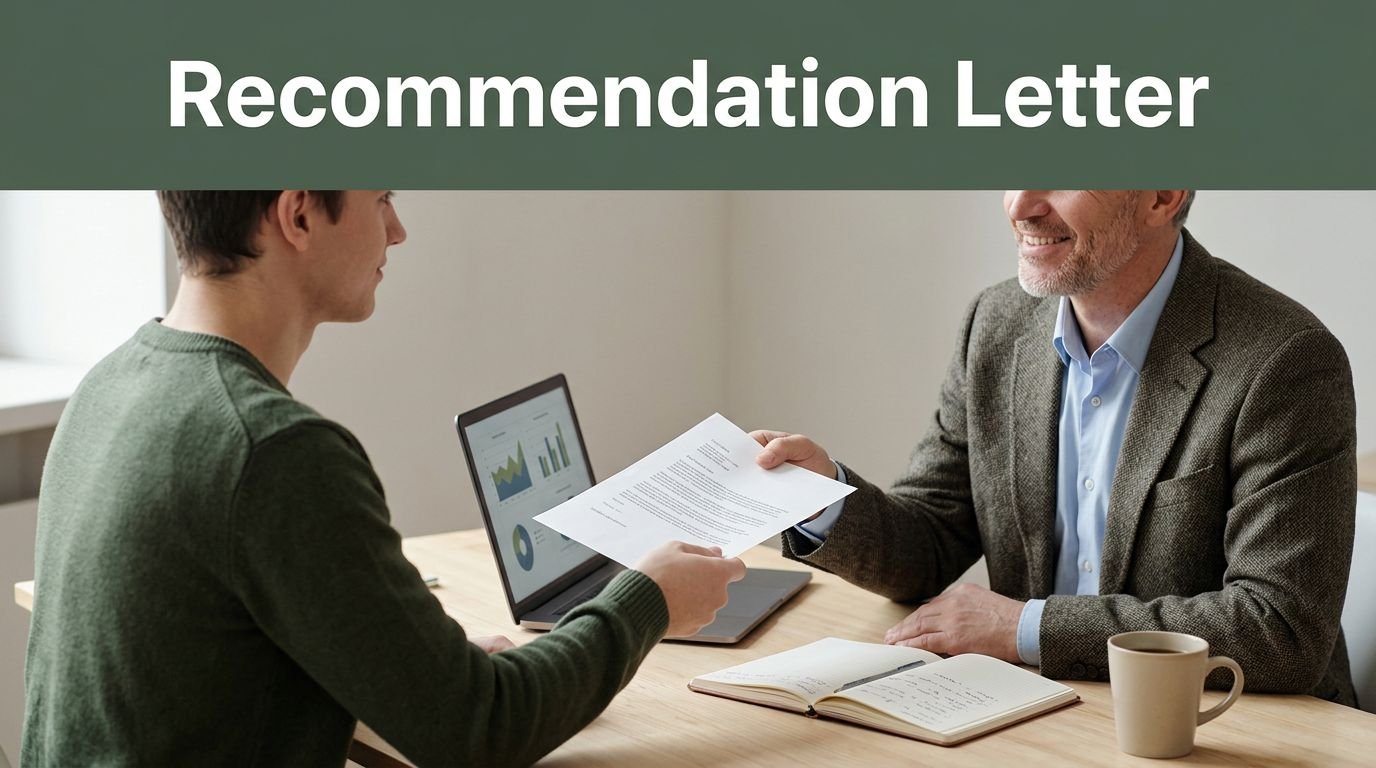
A strong scholarship recommendation letter can add context to your application that grades, test scores, and activity lists can’t provide. It gives the scholarship committee a clearer picture of your character, work habits, goals, and the way you contribute to your school, workplace, or community.
Knowing how to ask for a scholarship recommendation letter is just as important as choosing the right person to write it. You need to ask early, provide useful information, explain why you selected that recommender, and make the submission process easy to follow. This guide walks you through each step, including what to include in your request, how to follow up, and what to do if someone can’t write the letter.
1. Check the Scholarship Deadline Before You Ask
Start by writing down the exact deadline for the scholarship recommendation letter. Some scholarships require the letter to be submitted with your application, while others ask the recommender to upload it separately through an online portal. The letter may also have an earlier deadline than the rest of your application.
Read the scholarship instructions carefully and check the time zone if the deadline includes a specific time. A deadline listed as 11:59 p.m. Eastern Time isn’t the same as one listed as 11:59 p.m. Pacific Time.
You shouldn’t ask someone to write a letter the night before it’s due. Give your recommender at least three to four weeks whenever possible. A month gives them time to accept the request, review your materials, write a thoughtful letter, and correct any submission problems.
If you’re applying for several scholarships, create a simple deadline list with these details:
- Scholarship name
- Application deadline
- Recommendation letter deadline
- Submission method
- Number of letters required
- Name of each recommender
- Date you sent the request
- Date you sent a reminder
- Submission status
Scholarship listings on ScholarshipVaults can help you compare application requirements and plan ahead, but you should always confirm the current instructions on the scholarship provider’s official website.
2. Choose Someone Who Knows Your Work Well
The best recommender isn’t always the person with the most impressive job title. A department chair, executive, or famous professor might have a strong professional background, but that won’t help much if they can only write a general letter about you.
Choose someone who has seen your work, effort, growth, and character firsthand. This could be a teacher who supervised an important project, a professor whose course challenged you, a coach who saw your commitment over a full season, an employer who managed your work, or a community leader who worked with you on a service project.
Your recommender should be able to answer questions such as:
- What kind of student, employee, or volunteer are you?
- How do you respond when work becomes difficult?
- What skills have you developed?
- How have you helped other people?
- What makes you a strong candidate for this scholarship?
Academic recommenders are often a good choice for scholarships focused on grades, research, a major, or future study. A professional recommender may be more suitable for awards connected to work experience, leadership, career training, or community involvement.
A personal friend or relative usually isn’t the right choice unless the scholarship instructions clearly allow it. Scholarship committees generally want an objective recommendation from someone who has worked with you in a formal setting.
3. Consider Whether the Person Can Be a Strong Advocate
A recommender should do more than confirm that you attended a class or worked a certain number of hours. They should feel comfortable describing your strengths in specific terms.
Before you ask, think about the relationship you have with the person. Did you participate in class discussions, complete a long-term project, ask for feedback, or take on extra responsibilities? Did your supervisor trust you with important tasks? Did your coach or volunteer coordinator see you help others or stay committed during a difficult period?
A positive relationship matters, but it doesn’t have to mean you were the person’s favorite student or employee. A recommender can write an excellent letter because they noticed your progress, persistence, or improvement over time.
You can also ask yourself whether the person has enough information to write a detailed letter. If you only spoke with a professor once or worked with a manager for two weeks, they may not have enough examples to use. In that case, another person may be a better choice.
If you’re unsure, review past feedback, evaluations, project results, or messages from the person. These can help you identify people who have already recognized the qualities you want the scholarship committee to see.
4. Prepare a Resume or Scholarship Brag Sheet
Don’t send a short email asking for a letter and expect your recommender to remember every detail about your experience. Even people who know you well may be working with several students or employees at the same time.
Prepare a resume or a one- to two-page scholarship brag sheet. This document should give your recommender useful facts, examples, and reminders without telling them what to write word for word.
Include information such as:
- Your full name and contact information
- Your school, program, year, or current job
- Academic achievements
- Relevant work experience
- Internships, research, or major projects
- Leadership roles
- Volunteer work and community service
- Awards and honors
- Extracurricular activities
- Career or education goals
- The name and purpose of the scholarship
- The application deadline
- Skills or qualities you hope they can discuss
You can also include a short reminder about how you know the recommender. For example, you might write, “I took your Environmental Policy course during the fall semester and completed the water-quality research project under your supervision.”
Keep the document accurate and easy to scan. Your recommender doesn’t need every activity you’ve completed since middle school. Focus on experiences connected to the scholarship and the qualities the award committee is likely to value.
5. Gather Every Document Your Recommender May Need
A complete scholarship packet saves time and prevents unnecessary back-and-forth. Send all important materials together unless the recommender asks you to provide them in a different way.
Your packet may include:
- Your resume or scholarship brag sheet
- The scholarship webpage or application PDF
- A copy of the scholarship eligibility requirements
- Submission instructions
- Your personal statement or essay draft
- Your academic transcript, if relevant
- A list of your completed courses with the recommender
- A description of your intended major or career
- A copy of your application, if available
- The deadline and time zone
- Your phone number and email address
Check every file before sending it. Make sure the documents open correctly, have clear names, and contain the current version of your information. A file called “Essay_Final_Final2.pdf” can create confusion, so use names such as “Jordan_Lee_Scholarship_Essay.pdf” and “Jordan_Lee_Resume.pdf.”
You don’t need to send private information that the recommender doesn’t need. If your transcript contains sensitive details unrelated to the letter, ask whether a summary of your academic record would be enough.
6. Explain Why You Chose That Recommender
Your request should make it clear that you selected the person for a reason. A specific explanation is more thoughtful than saying, “I need a recommendation letter, and I thought of you.”
Mention the class, project, job, team, or organization you shared. Then connect that experience to the scholarship. For example, you might explain that you chose your biology professor because they supervised your research project and saw your interest in public health develop throughout the semester.
You can write:
I wanted to ask you because your Public Health Research course helped shape my interest in community health, and you supervised the project I completed on rural vaccination access. The scholarship supports students pursuing careers that improve health services, so I believe you could speak about my research skills and long-term goals.
This kind of explanation gives the recommender a clear starting point. It also helps them decide whether they know you well enough to write a useful letter.
Be honest about your relationship. Don’t exaggerate your connection or claim that someone mentored you if you only had limited contact. A straightforward request usually feels more comfortable for both of you.
7. Ask in Person When It Makes Sense
An in-person request can be a good option if you regularly see the person and have a comfortable professional relationship. You might ask after class, during office hours, or at the end of a scheduled meeting.
Keep the conversation brief and respectful. You can say:
I’m applying for a scholarship related to public health, and I wanted to ask whether you’d feel comfortable writing a strong recommendation letter for me. The deadline is October 15, and I can send you my resume, personal statement, and the scholarship details.
The phrase “strong recommendation letter” gives the person a graceful way to decline if they don’t feel able to support your application. A vague or lukewarm letter may not help you, so it’s better to give them room to be honest.
After an in-person conversation, send a follow-up email with the scholarship information and documents. This creates a written record of the deadline and submission instructions.
If an in-person meeting isn’t practical, email is completely acceptable. Professors, supervisors, and mentors often manage recommendation requests through email, especially during busy application periods.
8. Write a Clear Scholarship Recommendation Letter Request Email
Your email should be polite, direct, and easy to understand. Avoid making the reader search through a long message to find the actual request or deadline.
Use a subject line that identifies the purpose of the email. Examples include:
- Scholarship Recommendation Request, Jordan Lee, October 15 Deadline
- Recommendation Letter Request for the Community Health Scholarship
- Request for Scholarship Recommendation Letter
- Scholarship Reference Request, Due November 1
Begin with a professional greeting. Use the person’s title and last name unless they have specifically told you to use their first name.
A clear request email can follow this structure:
- Greet the recommender.
- Remind them how you know each other.
- Name the scholarship.
- Ask whether they would feel comfortable writing a strong letter.
- State the deadline and submission method.
- Explain why you selected them.
- List the materials attached or linked.
- Offer to answer questions.
- Give them a respectful way to decline.
- Thank them for considering your request.
Here is a sample email:
Subject: Scholarship Recommendation Request, Jordan Lee, October 15 Deadline
Dear Professor Martinez,
I hope you’re doing well. I took your Community Health Research course last spring and completed my final project on access to preventive care in rural communities.
I’m applying for the National Public Health Scholars Award, which supports students who plan to pursue graduate study and careers in public health. Would you feel comfortable writing a strong recommendation letter for my application? The deadline is October 15 at 11:59 p.m. Eastern Time, and the letter must be uploaded through the scholarship portal.
I’m asking you because you supervised my research project and provided feedback on my analysis and presentation. I believe you could speak about my research skills, interest in public health, and growth as a student.
I’ve attached my resume, personal statement draft, transcript, and a one-page summary of the scholarship. I’ve also included the submission instructions and the portal link. Please let me know if you need any other information. I completely understand if your schedule doesn’t allow you to write the letter.
Thank you for considering my request.
Best, Jordan Lee
Edit the sample so it sounds like you. Check the spelling of the person’s name, the scholarship name, the date, and the submission method before sending it.
9. Give Your Recommender Useful Talking Points
Your recommender should write the letter in their own words, but you can make it easier for them to remember important examples. Include a short list of experiences or qualities they may want to discuss.
These aren’t instructions that force the content of the letter. They’re reminders that help the writer connect your experience to the scholarship.
You can answer these five questions in your scholarship packet:
- What accomplishment are you most proud of, and what did you do to achieve it?
- What challenge did you face, and how did you respond?
- Which project, course, job, or service experience relates most closely to the scholarship?
- What skills or qualities do you want the scholarship committee to understand?
- How will the scholarship support your education or career plans?
For example, if you’re applying for a scholarship for future engineers, remind your recommender about the design project where you tested several solutions, worked with a team, or revised your approach after an unsuccessful result. If the scholarship focuses on community service, include the number of hours you completed, the responsibilities you held, and the people or organization you served.
Use facts instead of empty descriptions. “I am hardworking” doesn’t give the writer much to use. “I worked 15 hours per week while carrying a full course load, then completed a community garden project with 20 volunteers” gives the writer a real example.
10. Make the Submission Instructions Easy to Follow
Scholarship organizations use different systems for recommendation letters. Some ask recommenders to upload letters directly to an application portal. Others accept letters by email, require a signed document, or provide a special link that connects the letter to your application.
Read the instructions closely and send your recommender the exact process. If the scholarship portal sends the request automatically, tell your recommender to look for an email from the scholarship organization and check their spam folder if necessary.
Confirm details such as:
- Whether the letter must be on official letterhead
- Whether a signature is required
- Whether the letter should be a PDF
- Whether the recommender must use a work or school email address
- Whether the recommender must answer specific questions
- Whether the letter is confidential
- Whether you can view the letter
- Whether the system sends a confirmation after submission
Don’t ask your recommender to email the letter directly to you if the scholarship requires confidential submission. Following the instructions matters, and a letter sent through the wrong method may not count.
If the portal asks for your recommender’s phone number, job title, or organization, enter the information carefully. A typo can prevent the system from sending the request or can attach the letter to the wrong application.
11. Send a Polite Follow-Up Before the Deadline
People get busy, emails get buried, and online portals sometimes create problems. A polite reminder is normal, especially when you send it at least one or two weeks before the deadline.
Your follow-up shouldn’t sound like a demand. Keep it short, include the deadline, and ask whether the recommender needs anything else.
You can write:
Subject: Reminder, Community Health Scholarship Recommendation Due October 15
Dear Professor Martinez,
I wanted to follow up on my recommendation letter request for the National Public Health Scholars Award. The letter is due through the scholarship portal by October 15 at 11:59 p.m. Eastern Time.
Please let me know if you need another copy of my materials or any additional information. Thank you again for your time and support.
Best, Jordan
If the recommender confirmed that they would write the letter, you don’t need to send several reminders every few days. One reminder a week or two before the deadline is usually enough. If the deadline is close and the letter hasn’t been submitted, send a brief message or ask whether you can help resolve a portal issue.
Keep track of the submission status without making your recommender feel monitored. The goal is to prevent a missed deadline, not to pressure them.
12. Know What to Do If the Recommender Is Delayed
If your recommender hasn’t responded to your initial request, wait a reasonable amount of time and then send one follow-up. They may have missed the message, need more information, or be unable to accept the request.
If they agreed to write the letter but haven’t submitted it as the deadline approaches, contact them politely. Ask whether the portal is working and whether they need anything from you.
You should also know the scholarship’s rules about replacing a recommender. Some application systems let you update the recommender’s information, while others don’t allow changes after the request is sent. Check the official instructions before assuming you can switch people.
If you need a backup recommender, choose someone who already knows your work. Don’t send a last-minute request to a person who has never taught, supervised, or worked with you unless the scholarship deadline leaves you no other option.
A backup request could say:
I’m sorry for the short notice, but I’m applying for a scholarship with a recommendation deadline of November 10. Would you feel comfortable writing a strong letter based on our work together on the community outreach program? I understand if the timing doesn’t allow it, and I can send all materials immediately.
If the deadline has passed, contact the scholarship organization directly. Ask whether late letters are accepted or whether the application can still be reviewed without the recommendation. Don’t assume that a late submission will be ignored, but don’t assume it will be accepted either.
13. Handle a “I’m Too Busy” Response Professionally
A busy professor, manager, or mentor may decline because they don’t have enough time to write a thoughtful letter. That response isn’t necessarily a judgment about your ability or achievements.
Thank the person for being honest and move on to another recommender. Don’t argue, ask them to squeeze you in, or make them feel guilty. A rushed letter usually isn’t the result you want.
You can respond:
Thank you for letting me know. I understand, and I appreciate your honesty. I’ll contact another recommender who has more availability. Thank you again for your time.
Some recommenders may ask you to prepare a draft for them to review. Be careful with this request. You can provide facts, examples, and a summary of your goals, but the final letter should reflect the recommender’s honest opinion and writing style.
Don’t write a letter yourself and ask someone to sign it without their full review and approval. Don’t invent achievements, exaggerate your relationship, or provide language that the recommender can’t support. Scholarship applications should be accurate, and recommendation letters carry professional and academic responsibilities.
14. Bundle Multiple Scholarship Requests Without Creating Confusion
If you’re applying for several scholarships, you may need letters from the same person. You can make this manageable by organizing the requests instead of sending a new, incomplete message every few days.
Create a shared folder or document with a separate section for each scholarship. Include the award name, purpose, deadline, submission method, essay topic, and any qualities the committee wants the recommender to address.
Send a short message explaining the group of requests:
I’m applying for three scholarships this semester, and each one allows a recommendation from a professor. I’ve organized the details in the attached document, including the deadlines and submission links. Two letters can use similar information about my research experience, while the third asks about community service. Please let me know which requests fit your schedule.
Don’t assume that one generic letter will work for every scholarship. A letter for a research award may need to discuss academic work, while a service scholarship may focus on leadership and community involvement.
Give the recommender the option to accept only some requests. They may be willing to write one or two letters but not five. Respecting that limit helps protect the relationship.
15. Avoid Three Red Flags When Asking a Busy Professor or Boss
Certain mistakes make a request harder to accept. Avoid these three red flags:
- Asking at the last minute. A request sent two days before the deadline suggests that you haven’t planned the application carefully. It also leaves the recommender with little time to write a thoughtful letter.
- Sending incomplete or confusing information. Missing deadlines, broken links, unclear files, and unexplained forms create extra work. Review the packet before sending it.
- Expecting a generic letter to fit every scholarship. A recommender can’t connect their letter to the award if they don’t know what the scholarship supports. Share the scholarship’s purpose and your reason for applying.
You should also proofread your request. A few grammar mistakes won’t automatically ruin your chances, but a careless email can make the process less professional. Check the scholarship name, your recommender’s title, the deadline, and every attachment.
16. Confirm That the Letter Was Submitted
When your recommender tells you the letter is complete, check whether the scholarship portal shows it as received. Some systems send a confirmation email, while others update the application dashboard.
If the system doesn’t update right away, wait before sending another message. Uploads can take time to process, and the scholarship organization may not mark a letter as received immediately.
Once you confirm submission, thank the recommender promptly. You can write:
Thank you for submitting the recommendation letter for the National Public Health Scholars Award. I appreciate the time you spent reviewing my materials and supporting my application. I’ll let you know when I receive an update from the scholarship committee.
Save the confirmation for your records. If the scholarship organization later says the letter is missing, you’ll have the date and details needed to investigate the problem.
17. Send a Genuine Thank-You Note
A thank-you email is appropriate, but a handwritten note can feel more personal when someone has spent time supporting your application. Your message doesn’t need to be long. Mention the specific scholarship and the effort the person made on your behalf.
You can say:
Thank you for writing and submitting my recommendation letter for the Community Leadership Scholarship. I appreciate the time you spent reviewing my goals and activities, and I’m grateful for your support during the application process.
Send the thank-you note after the letter is submitted, not months later. If you receive the scholarship, send another message with the result. If you aren’t selected, you can still thank the person and share what you learned from the process.
A recommendation request shouldn’t be the only reason you contact a mentor, professor, or former supervisor. Keep the relationship professional and respectful after the application is finished.
18. Keep in Touch With Your Recommender
Staying in contact doesn’t mean sending frequent personal updates or asking for another favor every time you write. A short, useful update once in a while is enough.
You can stay in touch by:
- Sharing the outcome of the scholarship application.
- Sending an update when you begin a new program, job, internship, or research project.
- Thanking the person when their advice helps you reach a goal.
- Congratulating them on a professional achievement when you have a genuine reason to do so.
- Asking for guidance only when your question relates to their experience and you can explain what you need.
Keep your messages brief and specific. “I wanted to let you know that I was accepted into the public health master’s program, and your recommendation was part of my application” is more meaningful than a general check-in with no context.
You may need another letter in the future, but the relationship shouldn’t feel like a series of requests. Showing appreciation and sharing progress helps your recommender understand how their support contributed to your next step.
19. Complete a Final Recommendation Request Checklist
Before you send your request, review every detail. A quick checklist can prevent mistakes that are easy to avoid.
- Did you choose someone who knows your work well?
- Did you ask whether they can write a strong letter?
- Did you provide at least three to four weeks when possible?
- Did you include the exact deadline and time zone?
- Did you explain why you selected this recommender?
- Did you attach your resume or scholarship brag sheet?
- Did you include your personal statement or essay draft?
- Did you send the scholarship link or application instructions?
- Did you explain how the letter must be submitted?
- Did you provide accurate contact information?
- Did you check that every attachment opens?
- Did you proofread the email?
- Did you give the recommender a respectful way to decline?
- Did you record the request and deadline on your calendar?
- Did you plan when to send a reminder?
- Did you save the submission confirmation?
- Did you send a thank-you message?
This checklist also works when you’re applying for multiple scholarships. Create a separate entry for each scholarship so the requirements and deadlines don’t get mixed together.
Conclusion
Learning how to ask for a scholarship recommendation letter comes down to preparation, clarity, and respect for the recommender’s time. Choose someone who can describe your work with real examples, ask early, explain why the scholarship matters, and provide every document needed for a complete letter.
Your recommender isn’t expected to remember your entire academic or professional history. A focused resume, personal statement, scholarship summary, and list of relevant experiences give them the information they need to write a detailed recommendation.
Once the letter is submitted, confirm receipt, send a thank-you note, and share the result when you hear back. With organized planning and a clear request, you can make the process easier for your recommender and strengthen the overall quality of your scholarship application.
This post may contain affiliate links. If you make a purchase through these links, I may earn a small commission at no extra cost to you.