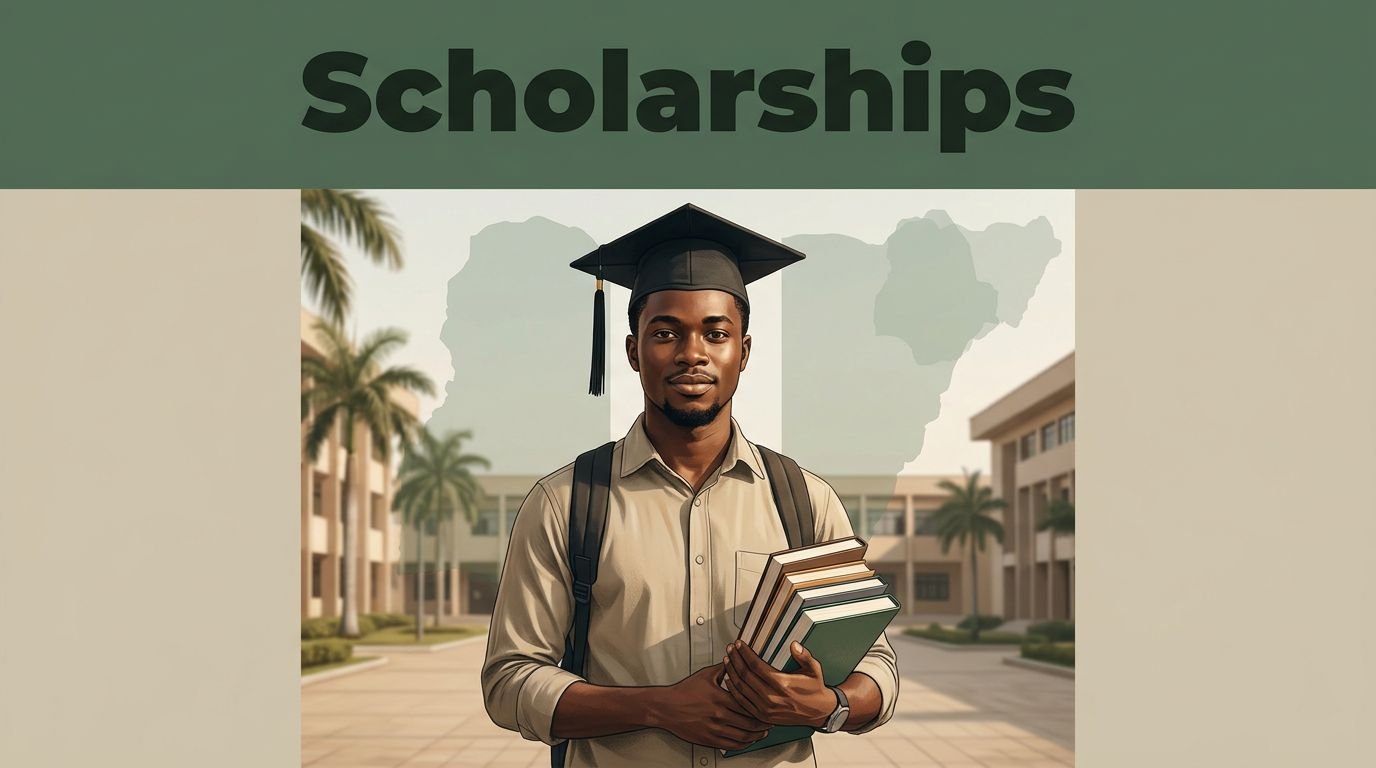
A Nigeria student scholarship is financial aid given to a student for study, usually based on need, merit, or both. It may cover tuition, books, transport, living costs, or exam fees.
The demand is obvious. Tuition keeps rising, rent and transport take a larger share of family income, and exam costs can arrive before the previous bill is cleared. Scholarships matter because they keep undergraduates, postgraduates, and research students in school, both in Nigeria and abroad.
The market is broad. Government programs, university awards, corporate funds, foundation grants, and international scholarships all compete for attention. Each one has its own rules, but the same pattern keeps appearing: know the fit, prepare the papers, and apply on time.
The main scholarships Nigerian students can apply for
Most awards fall into two main groups. Need-based scholarships look at financial hardship. Merit-based scholarships reward strong grades, leadership, sports, research, or community work. Many programs mix both, so a student may need good results and proof of need.
The wider field usually includes:
- Government scholarships, which are often tied to national priorities, state quotas, or bilateral agreements.
- University scholarships, which come from colleges and universities, sometimes automatically after admission.
- Private foundation awards, which support students through tuition help or one-time grants.
- Corporate scholarships, which are funded by companies and often tied to certain courses or communities.
- International scholarships, which support study outside Nigeria and usually carry stricter entry rules.
Some awards are meant for study inside Nigeria. Others pay for study abroad. The right choice depends on academic level, field of study, and the documents already at hand.
Government scholarships and bilateral awards
Federal and state scholarships are among the most searched options for Nigerian students. They may come through ministry portals, state scholarship boards, or country partnerships linked to embassies and foreign education agencies.
These awards are often tied to specific fields. STEM courses, medicine, education, agriculture, and public policy appear often because governments want graduates in those areas. Some programs also use local quotas, age limits, or regional balance.
Deadlines matter a lot here. Government portals open and close on tight schedules, and missing one window can mean waiting another year. Official pages are safer than social posts, forwarded messages, or screenshots shared in student groups.
University, corporate, and foundation scholarships
Universities use scholarships to attract strong students and support current ones. Some awards reduce tuition only. Others add stipends, accommodation support, or one-time grants for books and research.
Corporate scholarships work differently. A bank, telecom firm, oil company, or manufacturing group may fund students in fields linked to its business. These awards often reward strong grades, leadership, volunteering, or a clear career path.
Foundations often focus on students who show discipline and promise. They may ask for recommendation letters, community service records, or a personal statement that shows steady progress. A perfect transcript helps, but many foundations also look for persistence and direction.
Scholarships for study in Nigeria versus abroad
Local and overseas scholarships share the same basic idea, but the paperwork is not the same. Scholarships for study in Nigeria often ask for admission status, transcripts, and proof of citizenship or state of origin. Competition can still be fierce, but the document list is usually shorter.
Overseas scholarships are more demanding. They often ask for IELTS, TOEFL, or another English test. Many require an admission letter, a research proposal for graduate study, and stronger proof of academic readiness.
In 2026, examples of international options seen by Nigerian applicants include GREAT Scholarships in the UK and the University of Manchester Global Futures Scholarships. The federal scholarship portal in Nigeria also remains a key reference point for local programs.
How Nigerian students can check if they qualify
Eligibility rules change from one scholarship to the next, so the official page always comes first. Still, most programs ask for the same core details: nationality, school level, academic record, course of study, age range where relevant, and English language proof for overseas awards.
A quick eligibility check usually covers:
- Nigerian nationality or residency status
- Undergraduate, master’s, or PhD level
- Minimum CGPA or percentage score
- Approved course or department
- Age limit, if the program sets one
- Proof of English for international study
Common disqualifiers are simple, and avoidable. Late applications, missing files, wrong names, incomplete profiles, and uploads in the wrong format often remove an applicant before review begins.
Many strong applicants lose out on paperwork, not potential.
Academic records and grade requirements
Transcript review is standard. Scholarship panels use CGPA, class rank, and grade trends to sort applicants quickly. Some awards ask for a first-class or second-class upper result. Others set a lower floor but expect consistency.
Steady improvement can matter too. A student whose early grades were weak but whose final years were strong may still stand out, especially in programs that value growth and discipline. Panels want evidence that the student can cope with the pace of the award.
Documents most scholarships ask for
Most applications ask for a familiar set of papers. Accuracy matters as much as the content.
Common documents include:
- National ID or passport data page
- Passport photograph
- Transcript or statement of result
- Admission letter, where required
- Curriculum vitae
- Personal statement or essay
- Recommendation letters
- Test scores, such as IELTS or TOEFL
- Research proposal for graduate study
Names, dates, and course details should match across all documents. Small mismatches create delays, and in some cases they cancel a file outright.
When language tests and interviews matter
Language tests matter most for overseas scholarships. IELTS and TOEFL are still the most common, but some schools accept other recognized English proofs. The key is to check the exact score and test type before paying for an exam.
Interviews appear often in competitive awards. So do short essays and screening tests. These stages are used to check clarity, motivation, and fit. A polished application still has to sound like the same person in every document and interview answer.
A simple application process that improves the odds
The strongest scholarship applications usually follow a simple order. First, the student finds awards that fit the right level and field. Next, the rules are read line by line. Then the documents are gathered before the deadline pressure begins.
A practical sequence looks like this:
- Find scholarships that match the course, level, and location.
- Read the eligibility rules and deadline carefully.
- Gather transcripts, ID, passport photos, and reference letters early.
- Write a focused personal statement that fits the award.
- Submit before the last day, then save proof of submission.
Selection panels notice careless work fast. Blurry scans, missing pages, and weak essays create a bad first impression before grades are even reviewed.
Where to find trusted scholarship listings
Official scholarship sites, university admission pages, government portals, and established scholarship databases are the safest sources. They may be slow to update, but they are far better than random reposts.
Social media can help students discover opportunities, yet every post should be checked against an official source. If a scholarship only appears in a forwarded message and nowhere else, it deserves caution.
How to write a stronger personal statement
A good personal statement does four things well. It explains the student’s academic focus, the reason for the chosen course, the impact of the award, and the next step after graduation.
Generic essays fail because they sound replaceable. Copying a sample from another applicant is worse. Panels can spot that style quickly, and the essay loses force the moment it stops sounding specific.
How to avoid common application mistakes
The most common errors are boring, but they cost awards every year. Wrong file formats, a weak email address, late uploads, and spelling mistakes in names or dates can all cause trouble.
It also helps to keep one clean folder for every application. That folder should hold the final transcript, passport scan, recommendation letters, and a draft personal statement. When deadline week arrives, order matters more than luck.
What to expect after submitting an application
After submission, most scholarships move through screening, verification, shortlisting, and final selection. Some add interviews or tests. Others stop at document review and pick winners from there.
Response times vary. A few programs reply in weeks. Others take months, especially when many students apply or when external funders are involved. It helps to watch the portal and email inbox without sending repeated messages.
How scholarship committees usually review applications
Review teams usually start with eligibility. If the student misses a basic rule, the file may stop there.
After that, the panel compares grades, the personal statement, references, leadership records, and financial need, depending on the award. Some scholarships care most about academic merit. Others weigh community service or field relevance more heavily.
Signs that an award is legitimate
Real scholarships do not ask for an upfront fee to “secure” funding. They do not promise guaranteed selection. They also avoid vague contact details and unofficial email addresses.
Warning signs include requests for payment, pressure to act immediately, and application forms with no clear sponsor. A real award has a traceable sponsor, a clear deadline, and rules that can be checked on an official page.
Conclusion
A Nigeria student scholarship is rarely about luck alone. Fit, timing, and careful preparation carry far more weight than chance.
The strongest applications start early, follow the rules closely, and keep documents ready before the deadline rush begins. That habit matters whether the award is local, foreign, merit-based, or need-based.
For many Nigerian students at home and abroad, scholarships are more than financial relief. They widen access to education and keep ambition tied to a real path.
FAQ
What is a Nigeria student scholarship?
It is financial aid for Nigerian students, usually based on need, merit, or both.
Are there scholarships for postgraduate and PhD students?
Yes. Many government, university, and international awards are open to master’s and PhD applicants.
Do all overseas scholarships require IELTS or TOEFL?
No. Many do, but some accept other English proofs or waive the test under set conditions.
Can a student apply for more than one scholarship?
Yes. Applying to several suitable awards often improves the odds, as long as each application is complete.
Which documents cause the most delays?
Missing transcripts, mismatched names, incomplete recommendation letters, and unclear scans cause the most trouble.
This post may contain affiliate links. If you make a purchase through these links, I may earn a small commission at no extra cost to you.