
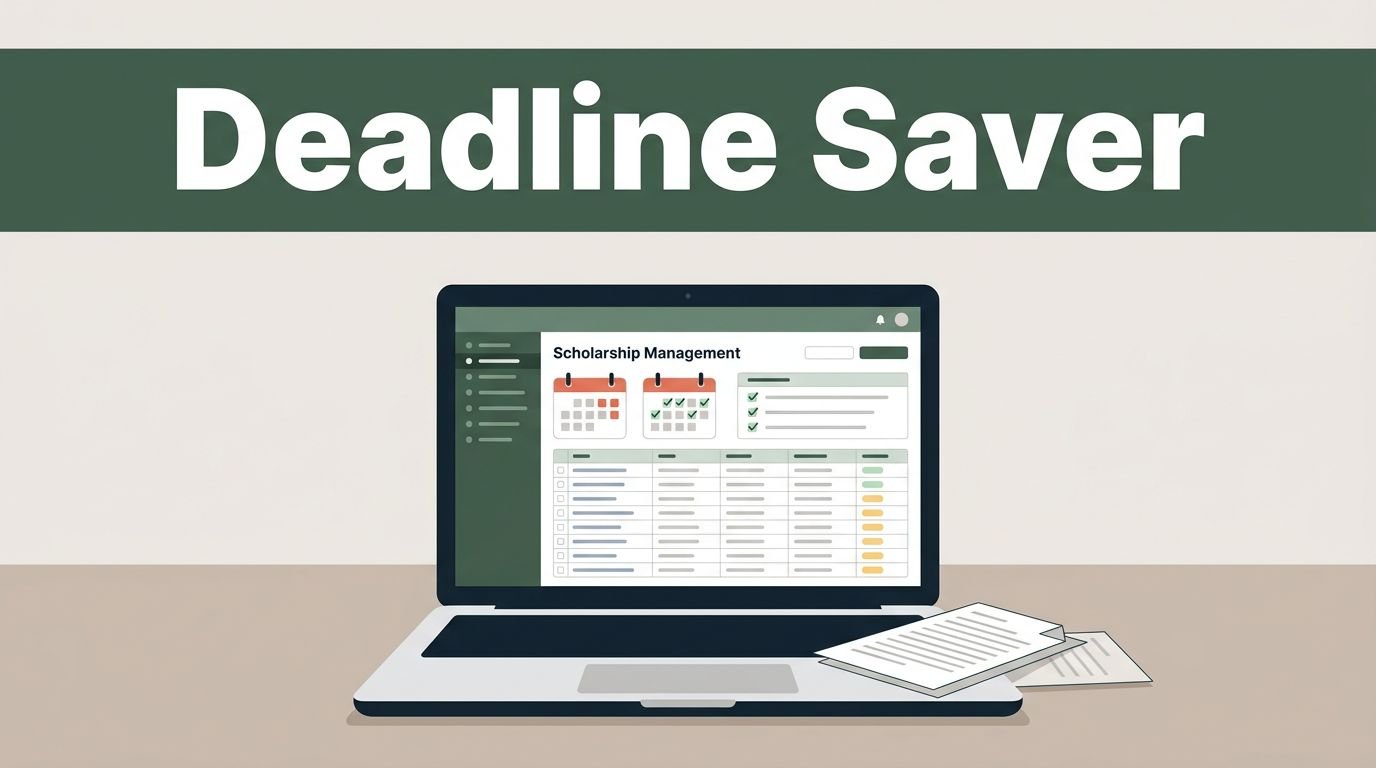
You know that familiar panic when you realize you missed a scholarship deadline by two hours. It happens to the best of us; you juggle five spreadsheets, a dozen browser tabs, and a calendar that looks like a war zone.
Managing your applications manually is a recipe for burnout and lost money. If you want to stop letting opportunities slip through the cracks, scholarship management software is the upgrade you need to actually stay on track.
This tool takes the chaos out of your application process so you can focus on writing better essays instead of chasing dates. Here is how you can use these systems to organize your search and stop missing those critical cutoffs.
Why Manual Scholarship Tracking Holds You Back
You probably started your scholarship hunt with a simple Google Sheet or a notebook. It felt organized at the time. You had columns for names, amounts, and dates. But as the number of applications grows, that system begins to break. You aren’t just missing deadlines because you’re busy; you’re missing them because your manual tracking system is fundamentally flawed. Relying on static documents creates friction that stops you from actually applying. If you want to win more awards, you have to move past the DIY spreadsheet approach.
The Hidden Costs of Traditional Spreadsheets
Excel and Google Sheets look like safe havens for your data, but they are traps for any serious applicant. They require constant manual input, which means they are only as accurate as your last typing session. One typo in a date field can cost you a thousand dollars. You might type a deadline incorrectly or leave out a crucial requirement. Without built-in reminders or status updates, you are constantly re-reading your notes to figure out what needs your attention next.
These tools also lack any form of automation. Think about the manual labor involved in your current process:
- You manually search for new opportunities.
- You copy and paste requirements into different cells.
- You check your own calendar every day to see what is due.
- You update the status of each application by hand.
When you use dedicated scholarship management software, these tasks vanish. You stop acting as a data entry clerk for your own future. The software tracks the progress, sends you notifications before dates arrive, and holds your files in one place. Spreadsheets can’t tell you that you forgot to upload your transcript, but a good management platform flags missing items before you even hit submit.
Finding Time for What Truly Matters
Every minute you spend color-coding cells or hunting for a forgotten URL is a minute you aren’t writing an essay. Scholarship applications demand focus, creativity, and energy. If your brain is cluttered with administrative logistics, your writing will suffer. You can’t produce your best work when you are stressed about whether you remembered to check a specific box on your spreadsheet.
True success comes from your ability to craft a compelling story, not your ability to maintain a complicated table of contents. When you let an automated system handle the deadlines, you regain that headspace. You can stop worrying about missing a cutoff and start thinking about how to refine your personal statement.
Software provides a clear path forward. It gives you a bird’s eye view of your commitments without the manual grind. By offloading the organization to a digital tool, you give yourself the time to tailor your applications. You stop rushing to meet requirements and start aiming for the quality that actually wins money. When the administration is handled, the path to your next scholarship becomes much clearer.
How Scholarship Management Software Changes the Game
Moving from a DIY tracking method to a professional platform turns your application process into a predictable machine. You stop reacting to emergencies and start controlling your own timeline. By using scholarship management software, you remove the guesswork that usually plagues students during application season. These systems bring together every moving part of your search, from initial discovery to the final click of the submit button.
Automated Reminders to Keep You on Track
You know the feeling of looking at a calendar and realizing you missed a deadline by an hour. It is a sinking, gut-wrenching experience that usually happens because you relied on your memory or a note tucked away in a notebook. Scholarship management software acts as a secondary brain that never sleeps or gets distracted. Once you input a due date, the platform keeps watch for you.
Most systems send email or push notifications as the cutoff approaches. You can set these alerts for a week, three days, or even twenty-four hours before the deadline. This setup prevents the last-minute scramble that kills the quality of your essays. If you have five scholarships due in one month, the software prioritizes them based on date, showing you exactly what requires your focus today. You stop wasting energy on worry because the system handles the accountability.
Centralizing All Your Important Documents
Keeping track of your files is just as hard as keeping track of dates. You likely have different versions of your transcript, various drafts of essays, and multiple recommendation letters scattered across folders or saved in email threads. A digital vault within a scholarship management software platform fixes this fragmentation. You upload your core documents once and attach them to specific applications as needed.
This storage approach offers three distinct benefits for your workflow:
- Your most recent transcript version is always accessible in one spot.
- Recommendation letters stay secure until you are ready to include them in an application.
- Drafts of essays are grouped with the requirements for the specific award you are targeting.
Having everything in one place means you don’t spend twenty minutes searching for a file when you could be editing a sentence. The software effectively labels your documents so you don’t accidentally send a generic essay to a committee that asked for a specific prompt. You keep your materials tidy, accessible, and ready for use. When you see your progress consolidated in a clear, digital view, you gain confidence that your application package is complete.
Choosing the Right Platform for Your Needs
Not all scholarship management software is built the same. Some platforms lean heavily into massive databases for finding awards, while others focus purely on the logistical heavy lifting of your existing list. Choosing the right fit depends on where you feel the most friction. You need to look for a tool that solves your specific pain points, not just one that looks pretty on a screen. If you spend your time hunting for new opportunities, a tool with a deep, verified database is your best friend. If you already have your list but struggle to keep track of the mounting paperwork, look for software that emphasizes document organization and calendar control.
Features That Actually Make a Difference
When you start browsing options, you will see a lot of marketing fluff about “integrated ecosystems” and “smart portals.” Ignore that noise and focus on what you actually do every day. A good tool doesn’t need to be a complex, heavy-duty administrative suite. In fact, most students are better off with a lightweight interface that lets them store files and set simple, recurring reminders.
You should prioritize features that change your daily behavior rather than features that just look like impressive data displays. Consider these essential differences:
- Storage capacity and file organization tools are your bread and butter. You need a place where your essay drafts, letters of recommendation, and transcripts live in harmony. A platform that allows for tagging and easy searching is significantly more useful than one with a fancy dashboard that shows you analytics about your competition.
- Simple, reliable reminders beat complex reporting tools every time. You don’t need a visual chart showing how many hours you spent on an application. You need a system that pings your phone or inbox two days before a deadline. If the software makes you jump through five menus just to see what is due this week, you won’t use it.
- Ease of entry for new data prevents burnout. If you have to manually copy and paste every detail for every single scholarship, the software isn’t doing its job. Look for platforms that allow you to import data from your current spreadsheets or offer quick-add buttons to grab info from a browser window.
Think of it this way: your scholarship management software is a tool, not a project in itself. You want it to disappear into the background so you can spend your energy writing. If you find yourself spending more time formatting the software than you do on your essays, you have chosen a platform that is too complex for your goals. Stick to the basics that ensure you hit your deadlines, and you will find the extra time you need to actually win.
Getting Started with Your New Digital Workflow
Starting your journey with scholarship management software feels like clearing off a desk that has been covered in stacks of paper for months. You aren’t just changing your tools; you are changing how you interact with your future. When the chaos of manual tracking disappears, you finally have the bandwidth to treat each application like a project that deserves your best effort. Getting set up correctly is the difference between feeling overwhelmed and feeling like you are actually in charge of your path.
Setting Up Your First Tracking Dashboard
Your dashboard is your new command center. Most of these platforms allow you to create a high-level view of your progress, but the real power comes from how you categorize your search. Stop trying to track every scholarship you find on the internet. Instead, build your dashboard to focus only on the ones that fit your profile perfectly. Start by importing your existing list or creating entries for the immediate, high-priority awards you intend to apply for this month.
Organize your dashboard by grouping applications based on their due date, which helps you see the urgency of your upcoming week. You should create specific tags or categories for each award to keep your search logic sound. Consider these groupings to keep your focus sharp:
- Use an “Active” category for scholarships you are currently writing.
- Create a “Backburner” list for opportunities that have later deadlines or require materials you don’t have ready yet.
- Set up a “Submitted” status to keep a clear history of what is already in the hands of the review committee.
- Establish a “Follow-up” tag for awards that require a secondary step or a thank-you note after submission.
Once you have your categories established, map them out on your calendar view. If your scholarship management software offers a calendar overlay, ensure it syncs with your personal digital calendar. This puts your deadlines directly alongside your school exams and work shifts, making it impossible to ignore an approaching date.
Category |
Typical Action |
Priority |
|---|---|---|
To-Do |
Gather transcripts or letters |
High |
Drafting |
Write or revise your essay |
Medium |
Ready to Send |
Final proofread and upload |
Critical |
Submitted |
Wait for results |
Low |
This organizational flow removes the mental tax of trying to remember where you stand with each provider. If you see a deadline approaching in the “To-Do” column, you know exactly which phase of the process requires your attention. By shifting from a static spreadsheet to a dynamic, tag-based dashboard, you regain control over your time and stop the cycle of missing dates. You aren’t just checking boxes; you are building a professional habit that makes every application count.
Conclusion
You have a choice between chasing deadlines in a sea of messy tabs or moving your process to a dedicated platform. Scholarship management software is the simple fix for the burnout that comes from manual tracking. When you stop worrying about losing a file or missing a date, you finally have the room to produce the high-quality writing that wins awards.
Pick one tool this week and move your current list into it. Your future self will thank you when you realize you haven’t missed a single cutoff all semester.
This post may contain affiliate links. If you make a purchase through these links, I may earn a small commission at no extra cost to you.