

Your application can look perfect and still miss the deadline by one day. The Chinese government scholarship is a generous opportunity for international students, but it remains highly selective regarding routes, documentation, and precise timing.
In June 2026, some universities still have open tracks, while others closed months ago. That means you need to read the rules like a detective rather than a daydreamer.
If you want a clean shot at a successful application, start by identifying your specific route, then build your file around the requirements needed to study in China.
Key Takeaways
- Select the Correct Route: Your success starts with identifying whether you should apply through the embassy, the university, or another specific nominating body, as each has distinct deadlines and procedures.
- Prioritize Documentation Accuracy: Ensure your personal information, such as name spelling and passport details, is perfectly consistent across all documents; even minor discrepancies can lead to significant delays or immediate rejection.
- Follow Institutional Specifics: Do not rely on general summaries; always read the specific 2026 application notice for your target university to see if they require pre-admission letters, specific language certifications, or dual-portal submissions.
- Craft a Tailored Study Plan: Avoid generic essays by clearly linking your past academic or professional background to the specific research environment and goals offered by your chosen Chinese university.
Who Can Apply, and Which Route Fits You
The first question is not whether your grades are good. It is whether you are applying through the right channel.
The core eligibility rules are generally straightforward. To be considered, you must be an international student who is not a Chinese citizen, in good physical and mental health, and able to meet the age and language requirements for your program. The Ministry of Education oversees these opportunities, and while specific requirements vary, applicants for undergraduate studies are typically expected to be under 25. Meanwhile, those applying to master’s degree programs should be under 35, and applicants for doctoral degree programs are generally expected to be under 40. Keep in mind that individual Chinese universities can set tighter age limits for their specific programs. Additionally, Chinese-taught programs often require HSK certification, while English-taught programs may request IELTS, TOEFL, or official proof that your previous degree was taught in English.
Some applicants also need to show they are not already holding another Chinese government scholarship. That detail matters more than people expect, because overlapping funding can block an otherwise strong file.
Here is the easiest way to think about the main application routes.
Route |
Who handles it |
Best for |
Watch out for |
|---|---|---|---|
Embassy or mission route |
Your local Chinese embassy or consulate |
Applicants who need nomination through a government channel |
Deadlines can be earlier and vary by country |
University route |
The Chinese university |
Most degree applicants |
You may need to use both the CSC system and the university portal |
Other nomination route |
A partner institution or nominating body |
Applicants with a sponsor, exchange link, or special program access |
Rules can change from one nominator to the next |
The route matters because deadlines and document flow are not the same. One university may require a scholarship form, a pre-admission letter, and a completed online profile before it reviews your file. Another track may require you to engage with the embassy first.
For a clean official reference, the Chinese Embassy’s CGS 2026 application page is useful because it points you back to the current notice instead of a repost. If your target school asks for pre-admission, treat that as a mandatory part of the scholarship file, not an extra.
Documents That Usually Make or Break the File
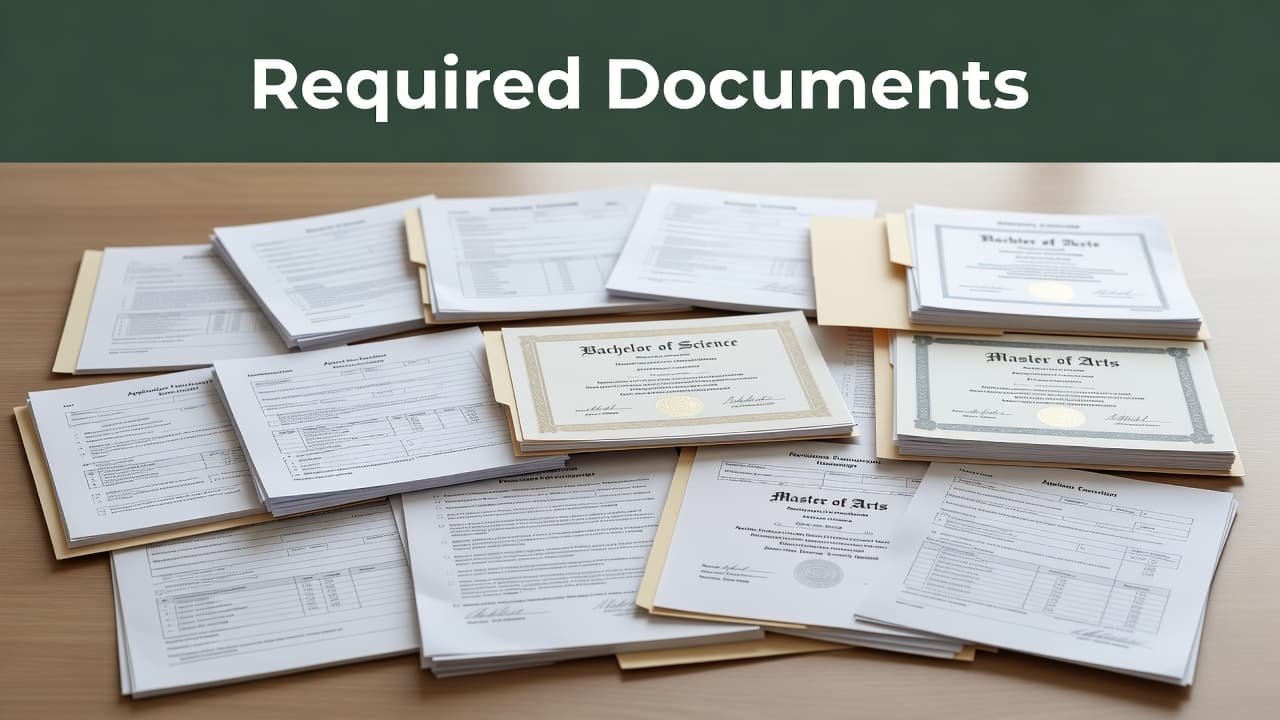
Documents are where good applicants lose easy points. Missing stamps, mismatched names, and blurry scans can make a strong profile look sloppy.

A typical file includes these items, though your university may ask for more or less:
- Application form from the China Scholarship Council system or the university portal.
- Passport bio page with enough validity left for admission and visa work.
- Highest diploma or graduation certificate, depending on whether you have already finished your current program.
- Official transcripts for every degree you are using in the application.
- Study plan or research proposal, written for the program you want.
- Two recommendation letters for many postgraduate programs.
- English Proficiency Certificate or other language proof, such as HSK, IELTS, or TOEFL.
- Foreigner Physical Examination Form or medical report when required.
- Acceptance letter or pre-admission letter if the school wants one before review.
- Extra certificates, such as awards, publications, or work experience proof, if the program asks for them.
A plain checklist like the one on the CUCAS scholarship overview helps you compare the usual document stack before you upload anything. You can also see how a university guide lays out the file, such as this 2026 application notice example, which shows how direct some schools are about what they want.
Read every instruction line by line. If the university asks for notarized copies, send notarized copies. If it wants an original-language transcript plus translation, do not send only one version and hope for the best.
If the school asks for both the China Scholarship Council upload and its own portal, do both. One missing submission can end the review before it starts.
One more thing, keep your name identical everywhere. Your passport, transcripts, recommendation letters, and online form should all show the same spelling. A tiny mismatch can turn into a long delay.
The 2026 Application Steps, in the Right Order
Once you have your document list ready, the application process becomes a strategic timing game.
Start with the program, not the paperwork. If you select the wrong degree level, the wrong language track, or an incompatible funding route, you risk building a perfect file for the wrong door.
- Pick your degree and the Chinese universities that suit your goals. Decide whether you want to pursue a bachelor’s, master’s, doctoral, or non-degree program. Research which Chinese universities offer your specific field of study to ensure a strong academic match.
- Confirm your specific scholarship channel. Determine if your application follows the embassy route, the university route, or another nomination channel. For example, if you are applying through Program Category Type B, you will need the correct agency number assigned to your specific institution. Some schools require you to follow two separate systems simultaneously.
- Read the 2026 official notice carefully. Check for specific language score requirements, age limits, file formatting rules, and whether you need to obtain a pre-admission letter. Do not rely solely on third-party summaries found on social media.
- Prepare your documents before accessing the online application system. Scan all your files into high-quality PDFs, save them in the required format, and verify that every page is clearly legible. A well-organized upload folder protects you from last-minute technical panic.
- Create your accounts and ensure consistency. When registering for the CSC Scholarship portal or specific university platforms, use the same legal name, passport number, and email address across every system to avoid processing errors.
- Submit through the portal and meet all institutional requirements. Some programs require submission via the official CSC portal while others mandate a secondary application directly through the university. Follow the current 2026 instruction sheet precisely rather than relying on last year’s procedures.
- Track your inbox and portal notifications. Interview requests, notifications regarding missing documents, and pre-admission updates often arrive quietly. Check your status frequently to stay ahead of the process.
- Keep every confirmation record. Save all screenshots, submission receipts, and PDF confirmation files in one dedicated folder. If a discrepancy arises later, you will need this documentation as proof of your timely submission.
A single typo in your passport number can cause significant delays. Similarly, a missing file may disqualify your application entirely. A methodical, careful submission process will always outperform a rushed, last-minute click.
Deadlines, Timing, and the Window You Can’t Miss
There is no universal application deadline for this scholarship. That is the trap that catches many aspiring students.
Some universities open their portals in late 2025 and close them in the first months of 2026. Others post separate windows for each program, and a few keep reviewing applications until all seats are filled. By June 2026, many options are already closed, but some schools still have active or rolling notices. To ensure you can successfully study in China, the only safe move is to check the specific program page for your target institution.
Here is a simple way to time your work.
Time before deadline |
What you should do |
|---|---|
3 to 6 months |
Shortlist Chinese universities, confirm language rules, and contact referees |
6 to 8 weeks |
Request transcripts, notarize papers, and draft your study plan |
2 weeks |
Upload final files, check scan quality, and verify file sizes |
After submission |
Monitor email, portal updates, and interview requests |
If your chosen institution uses a rolling review, early is always better. A clean application submitted first usually beats a perfect one submitted late.
You should also leave room for document delays. Some transcripts take time to process, some recommendation letters move slowly, and some notary offices work on their own clock. The scholarship deadline is not just a date on a page; it is the final endpoint of several smaller deadlines you must manage yourself to make your dream to study in China a reality.
How to Write a Study Plan That Sounds Like You Mean It
Your study plan or research proposal should read like a deliberate choice rather than a generic speech.
A strong study plan gives the reviewer one clear idea: you know exactly what you want to study, and you understand why this specific program is the perfect fit for your academic goals.
Start by outlining your current academic or professional standing. Then, move to what you want to study, why you have chosen China, and why that specific university is your top priority. If you are applying for a research-based degree, your research proposal must clearly define your topic and methodology. If you are applying for a taught master’s degree, focus on the academic direction and the specific skills you intend to build to advance your career in higher education.
Do not write a page of vague praise. Do not simply state that the university is famous and leave it at that. Reviewers are looking for institutional fit. They want to see that your background connects to your study plan in a way that feels authentic and professional.
A simple, effective structure for your document includes:
- Your current degree or work background
- The academic problem or subject you intend to study
- The reason this university is the ideal environment for your work
- The tangible results you hope to achieve through this program
- Your next step after graduation within your chosen field of higher education
Keep the language direct. Short sentences help the reader follow your logic. Honesty is equally important; if your future plan is still developing, say so clearly. If your focus changed after a specific class, project, or internship, explain that transition in one clear line.
A weak study plan or research proposal sounds copied or formulaic. A strong one sounds like you wrote it on a day when you knew exactly why you were applying and how it contributes to your future in higher education.
Common Mistakes That Cost Strong Applicants
Most rejected files are not weak. They are simply messy. When you apply for a full scholarship through the China Scholarship Council, you are competing for a prestigious package that covers tuition fees, a monthly living allowance, and comprehensive medical insurance. Remember that maintaining this support depends on your academic performance during the annual review. Avoid these common pitfalls to ensure your application remains competitive:
- Mixing up the application route: You apply through the wrong portal, then wonder why your file is not being processed.
- Ignoring language proof: If the program requires HSK certification, provide it. If it specifies IELTS or TOEFL scores, ensure those are included.
- Using inconsistent name spellings: Your passport, transcripts, and official forms should match exactly to avoid administrative delays.
- Submitting blurry scans: Poor image quality makes the reviewer work harder, which never helps your case. Ensure every document, including your final visa application form (JW201 or JW202), is scanned clearly.
- Writing a generic study plan: If your essay could apply to any university in any country, it is too broad. Tailor your goals to the specific program.
- Waiting too long for recommendation letters: Your referees are busy professionals. Give them ample time to provide a strong endorsement.
- Skipping pre-admission instructions: Some schools have specific requirements for early contact. Verify if the university expects you to reach out to professors before they review your file.
- Uploading expired or nearly expired documents: Passport validity and medical exam forms deserve a careful final check before you hit submit.
A good trick is to print your checklist and read it as if you were the reviewer. Would every page make sense to someone who has never seen your file before? If the answer is no, fix it before you finalize your submission.
Frequently Asked Questions
Do I need to be fluent in Chinese to receive a scholarship?
Not necessarily. While many programs require HSK certification for Chinese-taught degrees, there are numerous programs taught entirely in English that only require proof of English proficiency, such as IELTS or TOEFL scores.
Can I apply to multiple universities at the same time?
The rules for multiple applications vary by route and institution. It is essential to check the specific requirements of each university, as some may prohibit applying to other schools simultaneously while others allow it if you clearly rank your preferences.
What should I do if my university requires a pre-admission letter?
Treat the pre-admission letter as a mandatory prerequisite rather than an optional piece of documentation. You must contact the international office or potential supervisors at your target university well in advance to follow their specific process for obtaining this letter before your final scholarship submission.
How strictly are the age limits enforced?
Age requirements for undergraduate, master’s, and doctoral programs are generally set by the China Scholarship Council and individual universities as standard guidelines. While specific exceptions are rare, it is always best to verify the exact age limit stated in your target program’s official 2026 notice to ensure you remain eligible.
Conclusion
The 2026 cycle is not difficult because the requirements are mysterious. It is challenging because the guidelines are specific, and every institution expects them to be followed with precision.
If you choose the right application route, keep your documentation consistent, and write a study plan that sounds authentic rather than copied, your file will immediately stand out. This is the core of a successful Chinese government scholarship application. Remember that the China Scholarship Council manages these awards, so adhering to their standards is vital. Whether you are aiming for a specific program or exploring various Chinese universities, stay diligent. By checking official notices, submitting your materials early, and double-checking every passport detail and file name, you increase your chances of securing a CSC Scholarship. Keep your goals clear, and your path toward studying in China will be much easier to navigate.
This post may contain affiliate links. If you make a purchase through these links, I may earn a small commission at no extra cost to you.