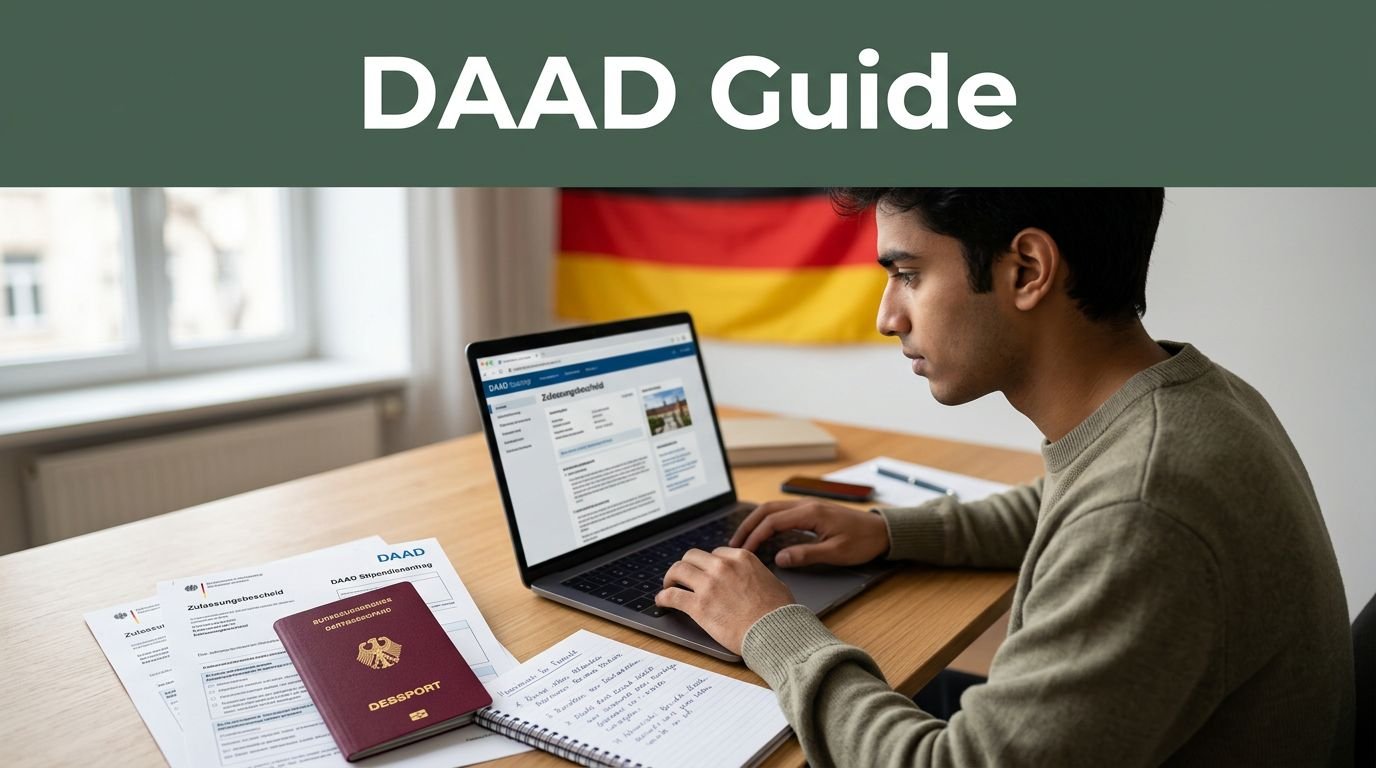
Many applicants lose valuable time because they treat the DAAD scholarship application like a single, universal form. It is not. The program you select, the documentation you provide, and the specific deadlines you face can change significantly from one scholarship to the next.
If you master these fundamental requirements early, the entire process becomes much more manageable. If you overlook these basics, even a highly qualified profile can be rejected for a simple oversight, such as submitting the wrong document or missing a submission deadline.

Key Takeaways
- Prioritize official rules: Treat the official DAAD portal as your primary guide, as individual programs have unique requirements that override general scholarship information.
- Match your profile to the right route: Focus on scholarships that align with your specific degree level, academic history, and work experience rather than applying for programs that do not fit your background.
- Focus on document quality: Ensure your motivation letter is tailored and specific while treating your transcripts and other documents as essential evidence of your readiness for the program.
- Manage your timeline aggressively: Always work backward from the stated deadline, accounting for administrative tasks like translation and securing recommendations well before the final submission date.
Start with the official rules, not with guesswork
Before you write a single paragraph, open the official pages. DAAD maintains rules within the DAAD portal, and that should be your first stop, not a repost, not a forum thread, and not a random summary from last year. The DAAD information for scholarship applicants page explains the selection process, the basic conditions, and the pieces that matter most.
Why does this matter? Because DAAD scholarships are not built around one master list. A master’s scholarship, a research grant, and a development-related course can all ask for different things. If you start with the wrong assumption, you may spend hours preparing the wrong file for your chosen study programme.
Think of the official page as your map. Without it, you are guessing the road.
Here is the part many students miss: the scholarship you want may have its own page with its own instructions. That means you should read the exact page for your specific German university or study programme, not just the general rules. A small difference in wording can change what you need to submit, and that difference can be the gap between a neat file and a messy one.
Once you understand the rules, use the DAAD scholarship database to search by degree level, subject, and country. If you want another search point, the DAAD Office New York scholarship database is an excellent scholarship database that helps you compare options clearly before you finalize your documents in the DAAD portal.
Match your profile to the right scholarship route
The right scholarship is not always the one with the biggest name. It is the one that fits your level, background, and study plan. That sounds obvious, yet plenty of applicants still chase a scholarship that was never built for their profile.
A quick comparison helps.
Scholarship route |
Who it usually fits |
Deadline pattern |
|---|---|---|
Study scholarship |
You want a Master’s degree program or a similar academic path |
Usually fixed on the program page |
Research grant |
You have a defined project; ideal for doctoral students |
Often tied to a specific call |
Development-related course |
You have work experience and want a course linked to development topics |
Usually set by the university or course |
Shorter funding options |
You need a limited study or research stay |
Often depends on the higher education institution |
The table is the easy part. The harder part is being honest about your fit. If a program asks for work experience, do not treat that as a soft suggestion. If a scholarship is aimed at a certain academic stage, do not try to squeeze a different profile into it.
For many international students, the smartest move is to narrow the search fast. A scholarship that fits your chosen study programme, your degree level, and your timeline is better than five that almost fit. Almost is not enough when the competition is strong.
You should also pay attention to the funding period. Some scholarships start in a specific academic intake, while others follow a separate cycle. That means your admission plan and your scholarship plan need to sit next to each other on the same calendar.
Build the file they expect, not the file you hope is enough
This is where the application starts to feel real. The documents tell the story, and they need to tell it clearly. Your grades matter, but your file also has to show that you understand the study programme and that you are ready for it.
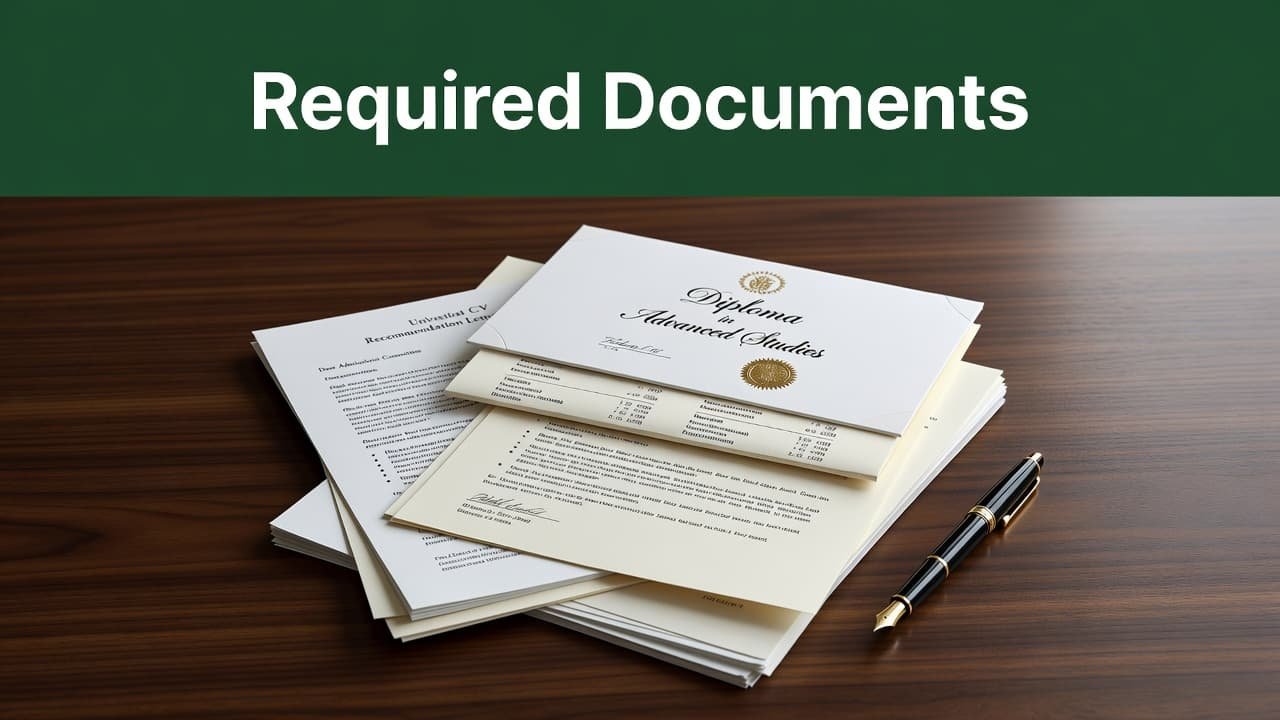
When gathering your materials, follow this application checklist to ensure you have everything required:
- A current CV in a clear format
- Undergraduate degree certificates and transcripts
- A motivation letter or statement of purpose
- Language certificates, if the program asks for them
- Recommendation letters
- Passport copy and program-specific forms
- Certified copies and an official translation, if your documents are not in the required language
Do not treat these as loose pieces. They are a set. If one item is weak, the whole file feels less convincing. If one item is missing, the application can stall before anyone reaches your essay.
Your motivation letter should sound like you, with a plan
A good motivation letter is not a poem about dreams. It is a straight answer to a simple question: why this scholarship, why this program, and why now?

You do not need dramatic language. You need direction. Explain what you studied, what you want to study next, and how the scholarship fits that path. If you have research experience or work experience, connect it to the course without forcing it.
A strong structure usually looks like this:
- Why the subject matters to you
- What you have already done in the field
- Why the German program is the right next step
- How the funding will help your long-term plan
Keep it specific. If you say you want to solve a problem, name the problem. If you say a program fits your goals, show the link. Vague praise for Germany or DAAD does not help much. A real plan does.
If your letter could apply to ten other scholarships, it is too broad.
That one sentence can save you a lot of revision. Your letter should feel tailored, not copied from your last application.
Treat your transcript like evidence
Your transcript is not background noise. It is proof. It shows how you performed, what you studied, and whether your academic path makes sense for the scholarship you want.
If your grades improved over time, that can work in your favor. If your degree is in a related field, say so clearly. If you have a gap or a change in direction, explain it without turning the letter into an apology. The file should answer questions before the reviewer has to ask them.
Check the eligibility requirements before you commit
This part sounds dry until it blocks your application. Then, it sounds very important.
For many DAAD Master’s degree programs, your undergraduate degree usually should not be older than six years. In some cases, you also should not have stayed in Germany for more than 15 months by the application deadline. These admission restrictions matter a lot for international students who have already spent time in the country, as they are used to ensure the program reaches those who truly need personal funding and academic support.
If your scholarship route asks for work experience, do not round it up in your head and hope nobody notices. Some development-related programs ask for at least two years of relevant professional experience. If you do not have it yet, choose a different route.
Language rules also matter. German-taught programs may ask for proof at application time, then a stronger certificate before the study begins. For some tracks, that can mean B1 at the application stage and a higher result later. English-taught programs can still ask for formal proof, so never assume the language section is optional.
Here is the safest way to think about eligibility requirements; if the rule is specific, it is there for a reason. The scholarship office is not looking for creativity here. It is looking for fit.
Before you submit, compare your profile with the exact program page and ask yourself three questions:
- Do I meet the academic level?
- Do I meet the experience or language requirement?
- Do I meet the residency or degree-age rule, if it applies?
If the answer is unclear on any of those, stop and check again. A quick review now is better than a rejection later.
Handle your application deadline like it is the whole game
The application deadline is not just the final step in the process. It is a critical part of your overall strategy. If the program has a fixed date, you must build your timeline backward from it. If the university sets the deadline, you follow that specific calendar rather than relying on a general estimate.
Many students lose valuable time because they wait for the perfect moment to start. In reality, the right moment is much earlier than you might think. Recommendation letters take time to secure. Translations require coordination. University stamps involve administrative delays. Even a simple upload to the DAAD portal can fail if your internet connection is slow or if your file size exceeds the limit. Always remember that the application deadline is set in Central European Time, so adjust your personal calendar accordingly.
Use this simple order to stay on track:
- Read the program page and note the exact application deadline.
- Check every required document against your application checklist.
- Ask for recommendation letters well in advance.
- Scan and name your files cleanly for easy identification.
- Submit your documents before the final hour, not during it.
That last point matters more than most applicants realize. The system can slow down as traffic increases, or a file may be rejected for a minor technical reason. A single missing upload can create a problem that a brilliant essay cannot fix.
Your application is only complete when every required file is inside the system, not when you think it is ready.
If you want one practical habit that helps, make a master folder on your laptop. Keep only the final, ready-to-send versions there. Then, create a separate folder for your drafts. That simple practice prevents you from uploading an outdated CV or the wrong transcript by mistake.
Additionally, verify whether the scholarship requirements call for one combined PDF or multiple separate uploads. That tiny detail can save you from a last-minute panic. Many strong applications stumble on file formatting errors rather than a lack of merit.
Submit cleanly, then prepare for the next step
Once you hit submit, your task is not over, but the nature of the pressure changes. You are no longer building the file; you are transitioning from the registration process into a period of waiting for reviews, potential follow-up questions, or an invitation to the interview stage.
This is where organized applicants keep a small edge. Save every confirmation email and keep copies of your finalized application form. Write down the exact scholarship title and the version of the documents you used. If the committee contacts you, you want to be able to respond quickly and clearly.
Some applicants also use this time to prepare for admission steps at the university itself. That is a smart strategy. Scholarship funding and university admission often move on related but separate tracks. You might need to coordinate with the international office of your chosen German university, or navigate the uni-assist portal to ensure your academic credentials are processed. If you keep both tracks in view, you avoid the common trap of winning one while missing the other.
If you are called for an interview, do not panic and do not overperform. Speak plainly. Know your project, understand why the program fits your goals, and be clear about how you will use the funding. A calm, genuine answer does more for your candidacy than a rehearsed speech.
If you are not selected, keep your files organized. You may be able to adapt parts of your materials for a different scholarship cycle or a related program. This does not mean copying and pasting the same letter forever. It means building a stronger, more refined base for your next attempt.
Frequently Asked Questions
Can I use the same motivation letter for different DAAD scholarship applications?
You should avoid using a generic template, as a successful letter must be highly specific to the program and scholarship you are applying to. If a letter could apply to ten other scholarships, it is likely too broad and will fail to demonstrate why you are a perfect fit for a particular institution.
What happens if I miss an application deadline?
Missing the application deadline typically results in an automatic rejection, as the DAAD process is strictly regulated and highly competitive. Because system traffic can increase near the deadline, it is vital to submit your documents well before the final hour to avoid technical delays.
Do I need to be fluent in German to apply for all DAAD scholarships?
Language requirements depend entirely on the specific program, as some are taught in English while others require German proficiency. Always check the individual program page to see if they require proof of language skills at the application stage or at a later date.
Is it possible to apply for multiple scholarships at once?
You can apply to different programs, but you must ensure that each application is treated as an independent project with its own set of tailored documents. Never assume that a document prepared for one scholarship will satisfy the unique, specific requirements of another.
Conclusion
The strongest DAAD scholarship application entries are usually the clearest ones. You know the program, you meet the rules, and your documents tell one solid story. When you look at the landscape of funding organisations, it becomes clear that preparation is the most important factor in your success.
If you stay close to the official guidance, compare the right programs, and submit a clean file on time, you give yourself a real shot. The whole process becomes less confusing once you stop treating it like one universal form and start tailoring your work to the specific requirements of your chosen study programme.
Your next move is simple: find the exact scholarship, read its page twice, and build your documents from there. That is how your DAAD scholarship application starts to look serious before a committee member even opens your motivation letter.
This post may contain affiliate links. If you make a purchase through these links, I may earn a small commission at no extra cost to you.