
The most challenging part of applying for a DAAD scholarship is not the application form itself. Instead, it is selecting the correct program offered by the German Academic Exchange Service before the clock starts. International students aiming to pursue higher education in Germany must first identify the right program, note the specific deadline, and gather the required documentation to make the process much smoother.
This level of preparation is essential in 2026, as the German Academic Exchange Service does not operate a single, universal scholarship route. You are looking at various calls for applications, different timelines, and unique requirements for every individual program. If you want a competitive application that feels professional rather than rushed, you need to approach the entire process like a precise, high-stakes checklist.
Key Takeaways
- Select the correct program: DAAD is not a single scholarship but a collection of specific programs with unique deadlines and criteria; identify the exact call that fits your academic profile.
- Prioritize document quality: Submit clean, high-quality, and correctly named PDF files that explicitly match the requirements listed in the DAAD database.
- Build a compelling narrative: Craft motivation letters and research proposals that demonstrate a specific, evidence-based fit for your chosen university and supervisor.
- Mind the timeline: Treat application deadlines as hard locks and aim to submit at least 48 hours early to avoid technical issues or time zone confusion.
Pick the right DAAD program before you touch the form
A DAAD scholarship is not a single application with a universal date. It is a family of programs, each designed with a specific goal in mind. Whether you are aiming for Master’s study, doctoral research, arts, language courses, or internships, each path follows a unique schedule. To find the best match for your academic goals, international students should use the official DAAD scholarship database to filter opportunities by their specific field and academic level.
If you are reading this in 2026, keep in mind that some windows for the current funding cycle may have already closed. This does not mean your path is blocked. It means you must identify the exact call that fits your profile and work forward from the next opening rather than relying on a general timeline.
Here is a quick snapshot of the verified application deadline dates for 2026-related calls:
Program |
Typical applicant |
Current verified application deadline |
|---|---|---|
Study scholarships, Master’s Studies in All Academic Disciplines |
Master’s applicants |
31 October 2025 |
Research Grants in Germany |
PhD candidates, postdocs |
31 October 2025 |
Postgraduate Studies in Architecture |
Architecture graduates |
24 September 2025 |
Graduate Studies in Music |
Music graduates |
25 September 2025 |
Fine Art, Design, Visual Communication, and Film |
Creative field applicants |
10 November 2025 |
Performing Arts |
Performing arts applicants |
10 November 2025 |
University Summer Course Grant |
Language and culture course applicants |
30 October 2025 |
RISE Germany Summer Research Internship |
Undergraduate research interns |
30 November 2025 |
The pattern is clear. You do not apply to DAAD in one generic way. You apply to a specific program.
EPOS and other development-related options are handled differently. Each postgraduate course has its own unique requirements, and deadlines often depend on the specific program page. Some of these calls open well before the academic year begins. Because a few calls may open within 2026 for later intakes, the date on your calendar is only useful if it matches the specific scholarship page you are tracking. Furthermore, international students should always check for specific regional calls that may apply to their home country.
If the portal opens for only a short window, treat the application deadline like a door lock, not a suggestion. Submitting the right file in the wrong window will result in a missed chance.
Check eligibility and funding rules
Eligibility is where strong applicants sometimes wobble. You can have good grades and a clean CV, then lose points because your degree is too old, your field does not match the call, or your language proficiency is missing.
Most DAAD programs look first at your academic level. If you are going for a master’s award, you usually need a completed bachelor’s degree or proof that you are in the final stage. For doctoral students, you normally need a relevant master’s degree or research experience. Furthermore, applicants from developing countries often have specific paths available, such as the EPOS program, which includes its own unique set of requirements. Some development-related programs also expect professional work experience, not just classroom results.
That part matters more than people think. A research proposal can be excellent, but if the call is aimed at mid-career professionals and you are still early in your studies, the fit is off. DAAD is not looking for the loudest profile. It is looking for the right profile based on specific selection criteria set by the committee.
DAAD does not usually run on a simple age limit, but some calls care about how recent your degree is. That catches people off guard. A plain-language overview of common rules is in this German scholarships guide for foreign students, and a useful note on degree timing is in this DAAD scholarship guide for Indian students. The exact wording can change by program, so your final check should always come from the call itself.
Language proficiency requirements also shift by program. Some scholarships ask for English test results. Others want German. A few accept your previous degree as proof if it was taught in English, but you should never assume that without checking. If the call asks for TestDaF, DSH, IELTS, or TOEFL, upload the score report they want, not the one you already happen to have.
What about funding? That part varies too. A DAAD scholarship may include a monthly scholarship payment, travel support, health insurance, and sometimes help with rent, language courses, or research costs. Some awards are broad and generous. Others are narrower and only cover part of the stay. Keep in mind that while these awards are comprehensive, some tuition fees at private institutions might not be included, so verify the financial scope of your specific grant.
The safest way to read a scholarship page is to split it into three questions. Do you match the degree level? Do you match the field? Do you match the language and timing? If all three line up, you are in the conversation. If one of them is shaky, fix that before you spend time on the rest.
Read the benefits section of the exact call, not a summary from someone else’s cycle.
That one habit saves you from false expectations. It also helps you compare programs without getting distracted by the word “fully funded.” That phrase sounds neat, but it does not mean the same thing in every scholarship.
A better question is simple: does this call match your degree level, your field, your timeline, and your documents? If the answer is yes, you are looking at the right path. If the answer is vague, keep moving.
Build the document set DAAD actually wants
Most applications fall apart in the document pile, not in the academic idea. Your proposal can be strong, but if the file looks messy, incomplete, or copied from another program, it loses weight fast.
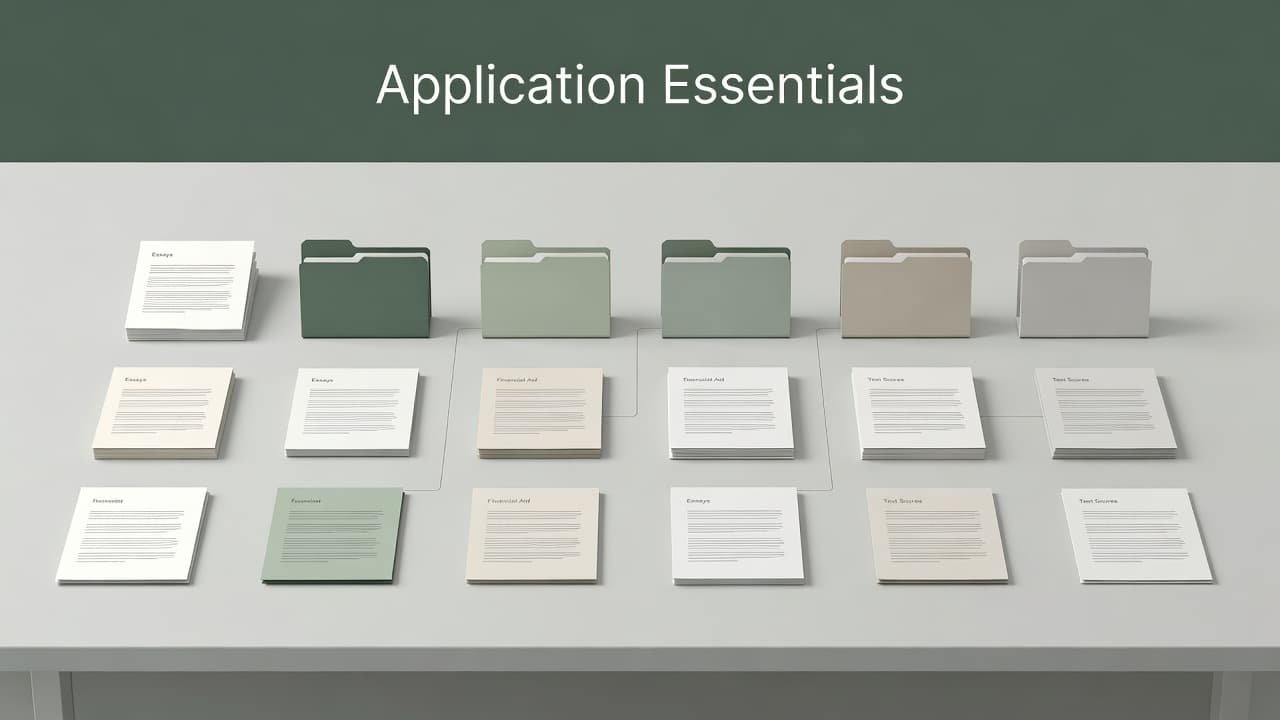
To stay organized, cross-reference your collection of files against the specific requirements found in the DAAD scholarship database to ensure you do not miss a single document. Start with the items most calls ask for:
- A CV that matches your real timeline, with no gaps disguised as creative writing.
- Academic transcripts and degree certificates, plus certified translations if the program asks for them.
- A letter of motivation or statement of purpose, written for the exact scholarship.
- A research proposal or study plan, if the call requires one.
- A letter of recommendation or academic references, usually from people who know your work.
- Proof of language skills, such as IELTS, TOEFL, TestDaF, DSH, or another accepted certificate.
- A portfolio, writing sample, or project file if you are applying in art, design, film, architecture, or music.
- Proof of admission, supervision, or contact with a host institution when the program asks for it.
If you have documents in more than one language, keep both versions ready. You must upload these files correctly to the application portal to avoid technical rejections. If the portal wants a single PDF for each item, do not split one transcript into three uploads. If the call asks for certified copies, a basic scan is not enough. Small mismatches like that waste time at the end, when you can least afford them.
File naming matters more than most students expect. Clean names like “Surname_CV.pdf” or “Surname_Transcript.pdf” are easier to review than random file codes. They also help you keep track of the versions you upload. You want your folder to feel boring in the best way possible.
For portfolios, curate instead of dumping everything you have ever made. Choose the work that matches the scholarship. A design applicant does not need every sketch from the last four years. A film applicant does not need ten clips if three strong samples tell the story better. The same goes for research proposals. Sharp beats scattered.
Keep your scans clean. Blurry pages, cropped corners, and missing signatures make a file feel unfinished. Save every final version in a folder before you upload anything. Then open the PDFs yourself and check them on a laptop, not only on your phone.
A clean DAAD file is not flashy. It is calm, complete, and easy to read.
Match your host institution and write for fit
Choosing a university is not just decoration. It is essential proof that your academic plan makes sense. For a research grant, you need a supervisor who actively works in your specific field. When pursuing a Master’s degree, the course content must align perfectly with your previous academic background. For fields like architecture, film, design, or performing arts, your portfolio and the institution need to demonstrate a clear professional synergy.

Photo by Esteban Arango
Think about your host university as the structural frame around your application. A famous name helps less than a genuine, evidence-based fit. If your project focuses on renewable energy policy, a department with that specific research track carries more weight than a random school in a city you happen to like. If you are applying for a lab-based doctoral programme, one suitable supervisor often matters more than three prestigious names.
For a Master’s application, your study plan should connect specific course modules to your unique background. That sounds simple, but many applicants only state that they want to study in Germany. That is not enough. You need to articulate exactly why this specific course fills a gap in your training that other German universities cannot.
For a research grant, your proposal should read like a scientific inquiry rather than a wish list. What are you studying? Why now? Why Germany? Why this specific lab, archive, or department? When you answer those questions clearly, the reviewer sees a logical path instead of vague ambition.
If you contact a supervisor, keep your initial outreach short and factual. Introduce yourself, attach a brief CV, name your topic, and explain why their work aligns with your project. Do not send a long story before you have established a clear connection. Academic staff are busy. They need to know quickly whether a conversation is worth continuing.
Your motivation letter should make that fit obvious without sounding rigid. You do not need flowery language. You need a clear narrative spine. Why this program? Why this host university? Why Germany? Why now?
A high-quality letter usually answers four things quickly:
- The academic path that brought you to this point.
- The specific reason this scholarship fits your next professional step.
- The direct link between your past work and the chosen course or project.
- The measurable outcome you expect after the scholarship ends.
That last point matters more than many applicants think. DAAD wants to support people with a concrete plan, not a general wish. If you can show how the study or research fits your long-term career path, your application feels grounded and professional.
Keep your tone direct. Skip the praise parade. You do not need to call the program life-changing, revolutionary, or perfect. You simply need to demonstrate that you understand it. Short sentences help, but specific examples help more. A single line about one course, one lab, one professor, or one project says more than three paragraphs of general enthusiasm.
If your reader can swap your university name for any other school, the letter is too vague.
That is the ultimate test. If your draft still works after you remove the institution name, you need more detail. If it only works because of one exact course, one exact lab, or one exact supervisor, you are on the right track.
Avoid the mistakes that waste good applications
A strong DAAD file can still fail due to a minor oversight. The most frustrating part is that most of these errors are entirely avoidable.
The most common mistakes are easy to identify:
- You send the same motivation letter to every program instead of highlighting your unique academic achievements.
- You upload blurry scans or documents with missing pages that fail to represent your academic achievements clearly.
- You wait too long for references and miss the application deadline.
- You ignore the difference between CET and your local time when navigating the application portal.
- You apply for a scholarship that does not match your specific degree level.
- You forget a portfolio, admission letter, or language certificate that the call clearly mandates for international students.
The time zone issue in the application portal deserves a specific warning. Many portals close at 23:59 CET or CEST. That can feel generous until your internet connection slows down or your file takes an unexpected amount of time to upload. Do not use the final hour as a strategy. Use it only as a backup.
Set your own personal deadline at least two or three days earlier than the official application deadline. That gives you room for a missing signature, a slow referee, or a file that needs one last clean scan. It also keeps you from making poor choices because the clock is loud. International students should verify that all scans are high-quality, legible, and complete before hitting the final submit button.
If a deadline has already passed, move on cleanly. Some DAAD calls open a year ahead, which means your real advantage is preparation rather than last-minute pressure. That is why a mid-2026 applicant should keep one eye on the current call and one eye on the next opening. The best file is often the one built long before the rush starts.
A final check helps more than a final panic. Read the instructions again. Match each document to the exact requirement. Open every PDF to ensure it is the correct version. Confirm the status of your application portal. Then, submit and keep a copy of the confirmation page.
That sounds basic because it is basic. Consistency and attention to detail are what get applications approved.
Frequently Asked Questions
Do I need to be fluent in German to win a DAAD scholarship?
Not necessarily, as requirements depend entirely on your specific program and chosen course of study. Some programs require German proficiency (e.g., TestDaF or DSH), while others are taught in English and may only ask for IELTS or TOEFL scores. Always check the language requirements for your specific call before applying.
Can I apply for multiple DAAD scholarships at the same time?
You generally should focus on one specific program that aligns best with your academic level and field. Submitting generic applications to multiple programs usually weakens your profile because DAAD reviewers look for a tailored, specific fit between your background and the program’s unique goals.
What if I miss the application deadline?
DAAD deadlines are strict and are treated as final, meaning late submissions are almost never accepted. If you miss a window, you must wait for the next call to open, so it is vital to track future dates carefully rather than hoping for an extension.
Should I include all my academic work in my portfolio?
No, you should curate your portfolio to show only your strongest, most relevant work that aligns with the specific scholarship you are targeting. A concise, high-quality portfolio that demonstrates professional synergy with the host institution is much more effective than a large volume of unrelated samples.
Conclusion
The strongest applications are not noisy. They are clear, specific, and complete. You choose the right program, you prove the fit, and you submit before the portal turns into a countdown.
If you are applying in 2026, the real edge is timing plus precision. A DAAD scholarship is a premier path to study in Germany, and it is easier to win when your documents, your institution choice, and your motivation letter all point in the same direction. By carefully researching German universities and aligning your profile with the goals of this funding organisation, you significantly improve your chances of success.
That is the part many applicants miss. They focus on writing harder when they should be organizing better. The good news is simple, you can fix that before the next deadline window opens.
This post may contain affiliate links. If you make a purchase through these links, I may earn a small commission at no extra cost to you.