
Denmark scholarships are often easier to miss than to understand. The primary reason is that many of these opportunities, including various Danish government scholarships, are embedded directly within the university admissions process rather than being hosted on a separate, dedicated scholarship portal.
If you want to study in Denmark in 2026, your success will depend on meeting high higher education standards, timing your application correctly, and choosing the right program rather than relying on luck. While this may sound blunt, focusing on these criteria saves you from wasting time on the wrong forms. Here is how the system works, what you can actually win, and where the most critical deadlines sit.
Key Takeaways
- Scholarships are integrated: Most Danish scholarships are embedded within the university application process rather than offered as standalone, national programs.
- Prioritize the program: Focus on choosing your specific degree program first, then investigate the funding opportunities attached directly to that course.
- Automatic vs. manual: Verify whether scholarship consideration is automatic upon admission or if it requires a separate submission, as failing to distinguish between the two is a primary reason for missed funding.
- Deadlines are rigid: Scholarship eligibility is strictly tied to university admission windows, and missing these dates almost always results in a total loss of funding opportunities for that cycle.
- Academic excellence is required: Financial aid is highly competitive and is typically awarded based on your previous academic performance and the alignment of your background with the specific program requirements.
What Denmark scholarships usually cover
When you search for Denmark scholarships, you are typically exploring three types of funding: a tuition fee waiver, support for living expenses, or a combination of both. Some awards cover your entire bill, while others only reduce the cost of your education. A smaller group of awards also provides additional funds to help you manage your monthly living expenses while studying abroad.

The official scholarship overview for Denmark explains that many awards for international students come through universities or institutional agreements. This means that the financial aid is directly linked to the specific degree program you apply for. You are generally not applying for one large national pot of money.
That setup changes how you plan your financial approach. You do not start with a central scholarship office and then find a school; you start with the degree program, then look at the funding attached to it.
Here is the usual split of available aid:
- Tuition fee waiver: These remove all or part of your academic costs.
- Monthly stipend: These grants help cover rent, food, and basic student costs throughout the year.
- Partial tuition fee: These awards reduce the price of your degree, though they do not cover every expense.
- Institution-based funding: These depend on the university, rather than a single national rule.
A tuition fee waiver lowers the biggest upfront cost, but it does not always solve the entire budget requirement for your stay.
Some universities are more generous than others. At the University of Copenhagen scholarship page, the award can be full or partial, and in some cases, it includes help with living expenses. That is why you should read the program page first, then check the funding note underneath it.
A scholarship in Denmark is not a single fixed product. It is a financial package built around your degree, your personal profile, and the specific rules of the university.
Who can apply, and who is usually left out
Most Danish government scholarships for international students are primarily designed for non-EU/EEA students. This category specifically includes applicants from outside the European Economic Area and Switzerland. If you fall into this group, you are in the primary target pool for many financial awards. If you are a citizen of these regions, your funding options may differ significantly.
The majority of these funding opportunities are centered around master’s degree applicants. While a few scholarship options for a bachelor’s degree exist, they are less common and often come with more specific restrictions. If you are applying for a PhD, your funding route is usually entirely different, as most doctoral positions in Denmark are treated as employment, tied to salaries or research contracts.
The basic eligibility profile is straightforward, but the specific details are crucial:
- You must belong to the correct citizenship category.
- You must apply for a degree program that is eligible for funding.
- You must demonstrate high levels of academic achievement.
- You must provide English language proficiency documentation that meets the requirements of the specific programme.
- You must obtain a valid residence permit if you are admitted to the university.
The academic bar can be quite high. Some universities require excellent grades rather than simply average ones. For example, the University of Copenhagen expects very strong academic achievement for certain scholarship routes, so your transcript is a more significant factor than many applicants realize.
You can also be ruled out before the scholarship review process even begins. If you already qualify for standard Danish state support, or if you are a Danish citizen, you are generally excluded from these scholarship categories. The same applies to applicants at certain artistic higher education institutions, which operate under different funding regulations.
Because of these strict criteria, your first priority should not be building a dream budget. Instead, confirm whether you are actually eligible.
A good rule of thumb is this: if the programme page does not clearly state that you are eligible, do not assume you are. Assume nothing. Read the requirements carefully, and then read them again.
The 2026 deadlines you cannot ignore
The application deadline is the gatekeeper of your academic future. Miss it, and the opportunity for funding usually disappears alongside it.
For many programmes starting in autumn 2026, the primary application deadline was 15 January 2026. That date is critical because scholarship consideration is often tied directly to your admission application. If you missed this window, you likely missed your chance at financial support for that cycle. Proper study abroad planning requires you to treat these dates as non-negotiable.
The table below outlines the important dates you should track throughout the 2026 cycle.
Deadline Type |
Typical Significance |
Recommended Action |
|---|---|---|
15 January 2026 |
Main application deadline for many autumn 2026 programmes |
Submit your degree application early |
1 March 2026 |
Separate scholarship deadline at institutions like SDU |
Review specific programme requirements |
Ongoing |
Erasmus Mundus scholarship timelines |
Research independent funding cycles |
15 September 2026 |
Secondary application deadline for remaining openings |
Monitor university portals for late availability |
The SDU scholarship page and the Aarhus University admissions portal serve as excellent examples of why you should never rely on generic forum advice. Universities manage their own specific timelines, and the scholarship application deadline may fall exactly on or slightly before the main admission cut-off. Furthermore, if you are looking for alternative funding, keep in mind that Erasmus Mundus programmes operate on their own unique schedules that often differ from standard university intake dates.

If you are reading this in June 2026, many autumn application deadline windows have already closed. This does not mean your academic plans are over. Instead, it means you should shift your focus toward the next available intake and lock in those programme-specific dates immediately.
The safest habit is simple. Open the official programme page, verify the admission application deadline, and confirm whether scholarship consideration is automatic or requires a separate submission. Adopting this routine can save you weeks of stress and ensure your application remains competitive for the upcoming cycle.
How to apply without missing the scholarship
Most applicants overcomplicate this process. In Denmark, the application procedure is usually more straightforward than people expect, but it only works if you follow the correct order to help international students secure funding.
- Choose the right programme. Start with the degree, not the scholarship headline. If the programme is not a good fit, the funding does not matter.
- Read the admission page closely. Carefully check the entry rules, language scores, grade requirements, and other admission requirements to ensure you meet all criteria.
- Upload every required file before the deadline. Late uploads are the fastest way to lose your chance at funding.
- Submit the degree application. In many cases, your university application serves as your scholarship application.
- Watch for automatic consideration. If the university confirms that eligible applicants are evaluated through automatic consideration, you do not need to fill out a second form.
At many Danish universities, that automatic setup is the primary method for awarding aid. The University of Copenhagen scholarship page and the SDU page both show that funding is often tied directly to your admission application rather than a separate competition you join later. By utilizing automatic consideration, the University of Copenhagen streamlines the process for prospective students.
If the university says “automatic consideration,” treat the admission deadline like a scholarship deadline.
That is the step many students miss. They keep looking for a second form, only to discover later that the scholarship decision was already attached to the application they rushed through.
If a programme asks for an extra personal statement, research proposal, or portfolio, make sure to include it. Do not guess that these items are optional. Read the instructions line by line. A clean application often beats a flashy one.
And yes, the small details matter. Your passport copy, transcript format, language test date, file names, and document order can all affect how smoothly your application moves through the system.
The documents that matter most
Your documents are not just paperwork. They are the evidence that you are ready for the programme and worth funding.
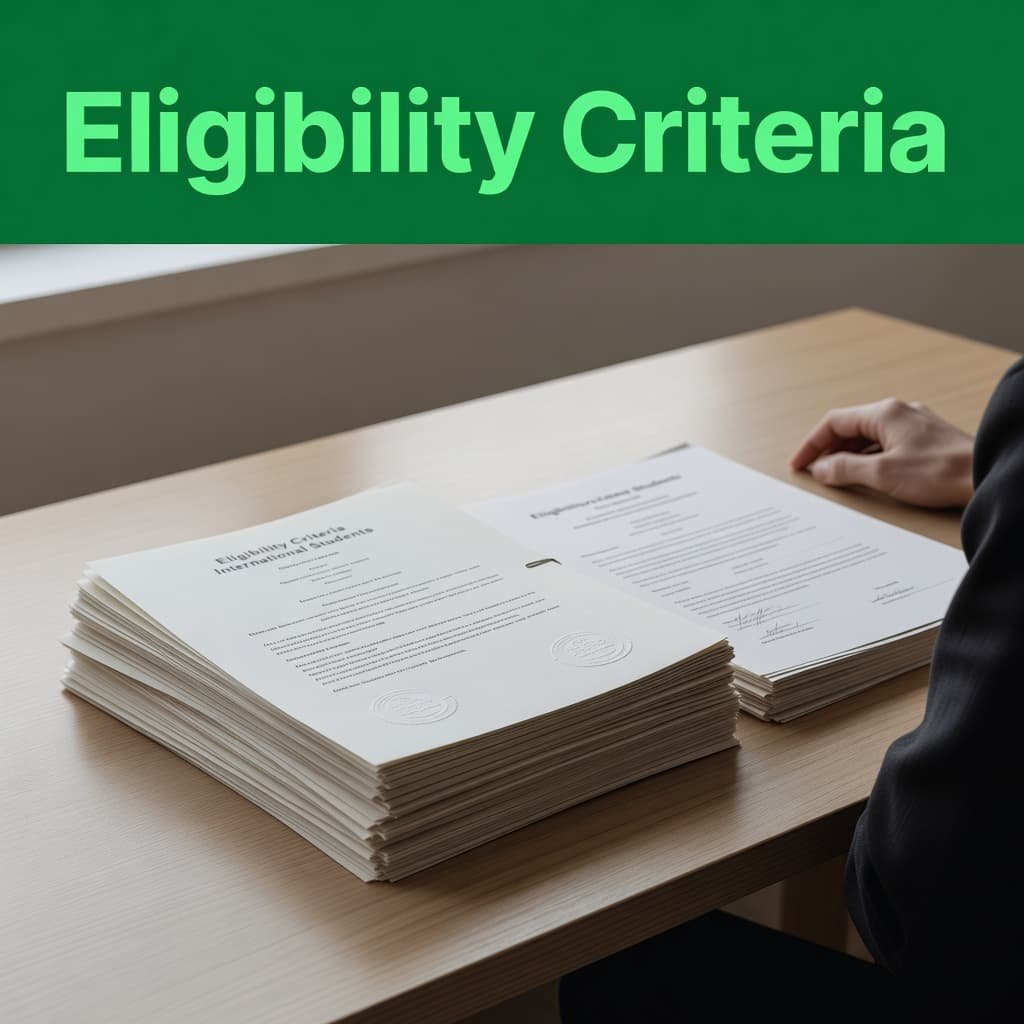
The exact list depends on the university, but these are the documents you should expect to prepare:
- Official transcripts: These show your grades and completed courses.
- Degree certificate: Full degree students must provide a complete bachelor’s degree certificate or their high school diploma to prove they have finished the required level of study.
- Passport copy: This confirms your identity and citizenship.
- English language proof: For those applying to English taught programmes, results from IELTS, TOEFL, or another accepted test are vital to prove your proficiency.
- CV or résumé: This helps show your academic and professional path.
- Personal statement: Many programmes want to understand your motivations and why you are the right fit for their specific environment.
- Portfolio or writing sample: Creative and research-based programmes may ask for one to demonstrate your skills.
If your documents are not in English or Danish, you may need certified translations. Do not leave this until the last minute. Translation delays are a classic way to turn a strong application into a rushed one.
Your grades carry real weight, but they are not the only thing reviewers see. A strong transcript with a weak or messy application can still lose. A slightly less perfect transcript with a complete, clear package often does better.
For PhD students, the document list can shift significantly. You may need a research proposal, evidence of supervisor contact, or a list of your previous publications. For bachelor’s study, the focus is usually on school records and language proof.
The trick is to build your file like a final version, not a draft. If a document feels half finished, it probably is.
How selection works at Danish universities
Scholarship decisions in Denmark are highly competitive for international students. Because the number of awards is limited, universities must be selective when reviewing a large pool of strong applicants.
The SDU scholarship page notes that the university offers a limited number of scholarships to highly qualified applicants. These awards are not random; they are reserved for those who show clear academic potential and a strong fit for their chosen degree. When competing for Danish government scholarships, your academic achievement acts as the primary benchmark for selection.
At the University of Copenhagen, financial aid can take the form of a full tuition waiver, a partial waiver, or a stipend for living expenses. Because funding structures vary, not every award provides the same level of support, and rules often differ between faculties. Regardless of the institution, ensuring you meet all admission requirements is the vital first step toward becoming a candidate for these awards.
So, what are reviewers looking for?
They generally focus on four core criteria:
- Your grades are strong enough to meet the competitive threshold for the programme.
- Your previous academic background closely aligns with the subject you intend to study.
- Your English proficiency is sufficient for high-level study.
- Your application is complete, professional, and easy for the committee to assess.
This is why generic applications often struggle. A scholarship committee wants to see a precise fit rather than irrelevant information. They need to be confident that you possess the skills to handle the rigorous academic workload and successfully complete your degree.
A well-written motivation letter can significantly boost your chances, provided it demonstrates specific knowledge of the programme. Avoid broad statements about wanting international exposure. Instead, clearly articulate what you want to study, why Denmark is the right environment for your goals, and how the degree connects to your professional future.
If you are applying for a research-heavy programme, your proposal must be focused and well-defined. If you are pursuing a taught master’s degree, your academic history must demonstrate a clear path to the subject matter. The closer your profile matches the department’s expectations, the better your odds of success.
You must also maintain a sense of balance throughout the process. A scholarship is not a guaranteed component of your admission. Many students are accepted into their chosen programme but do not receive funding, as some awards are only granted to those who rank at the very top of the applicant pool.
What your budget still needs to cover
A scholarship can change the numbers on paper, but it does not erase the real cost of studying abroad. Even if you are one of the fortunate full degree students who secures a tuition fee waiver, you still need a solid financial plan for rent, food, transport, books, and daily life.
That is the part many students underestimate. Tuition is the big headline, but living expenses can eat into your budget fast, especially in larger cities. Living in Copenhagen is significantly more expensive than residing in a smaller university town, and your rent alone can change the entire calculation for your study abroad experience.
If your scholarship only covers your academic fees, your job is to close the rest of the gap. That might come from personal savings, family support, another grant, or part-time work if your visa rules allow it. Even if your award includes a monthly grant, you still need to verify whether the amount provided matches your actual monthly living expenses.
A smart budget starts before you accept your offer. Look closely at these factors:
- housing deposits
- monthly rent
- transport
- food
- course materials
- residence permit costs
- emergency savings
That list is not glamorous, but it reflects the reality of the move.
You should also compare scholarship terms across universities rather than just looking at brand names. Two awards can sound similar and still cover very different things. One may cover tuition only, while another may include a stipend. One may last for the full duration of the program, while another may renew only if you maintain a certain grade level.
When you compare the full funding package rather than just the headline amount, the financial picture gets much clearer. This helps you determine whether your time in Denmark is truly fully funded, partially funded, or requires a secondary backup plan to cover your total costs.
Frequently Asked Questions
Do I need to apply for scholarships separately from my university application?
It depends on the university and program. In many cases, consideration for scholarships is automatic when you submit your application, but some institutions require you to provide additional documents or a separate form, so always verify the specific instructions on your chosen degree’s webpage.
Are scholarships for international students available for all degree levels?
Scholarships are most commonly available for master’s degree applicants. Funding for bachelor’s degrees is much rarer and more restricted, while PhD positions are generally treated as employment with a salary rather than traditional scholarship aid.
Can I receive a scholarship if I am an EU or Swiss citizen?
Most Danish government-funded scholarships are specifically designed for non-EU/EEA students. If you are a citizen of an EU or EEA country, your eligibility for these specific awards is usually limited or excluded, and you should investigate other funding routes available to EU students.
What happens if I miss the main university application deadline?
Missing the application deadline means you will likely lose the opportunity to be considered for any attached scholarships. Because funding is tied to the admission process, there are rarely secondary windows for scholarship applications once the main intake date has passed.
Conclusion
If you want to secure Denmark scholarships in 2026, keep your eyes on three things: eligibility, the application deadline, and programme fit. Funding is usually tied directly to your university application, so the fastest way to lose your chance is to treat the financial aid process like an afterthought.
Start by visiting your degree page to confirm whether the Danish government scholarships are automatic or require a separate submission. Ensure every document is complete before you hit send. That is the most reliable route for those who want to study in Denmark, and it works far better than chasing rumors or waiting for a secondary form that may never exist.
The students who succeed are not necessarily the ones who apply for the most programs. They are the ones who read instructions carefully, respect every application deadline, and demonstrate a strong academic fit for their chosen university.
This post may contain affiliate links. If you make a purchase through these links, I may earn a small commission at no extra cost to you.