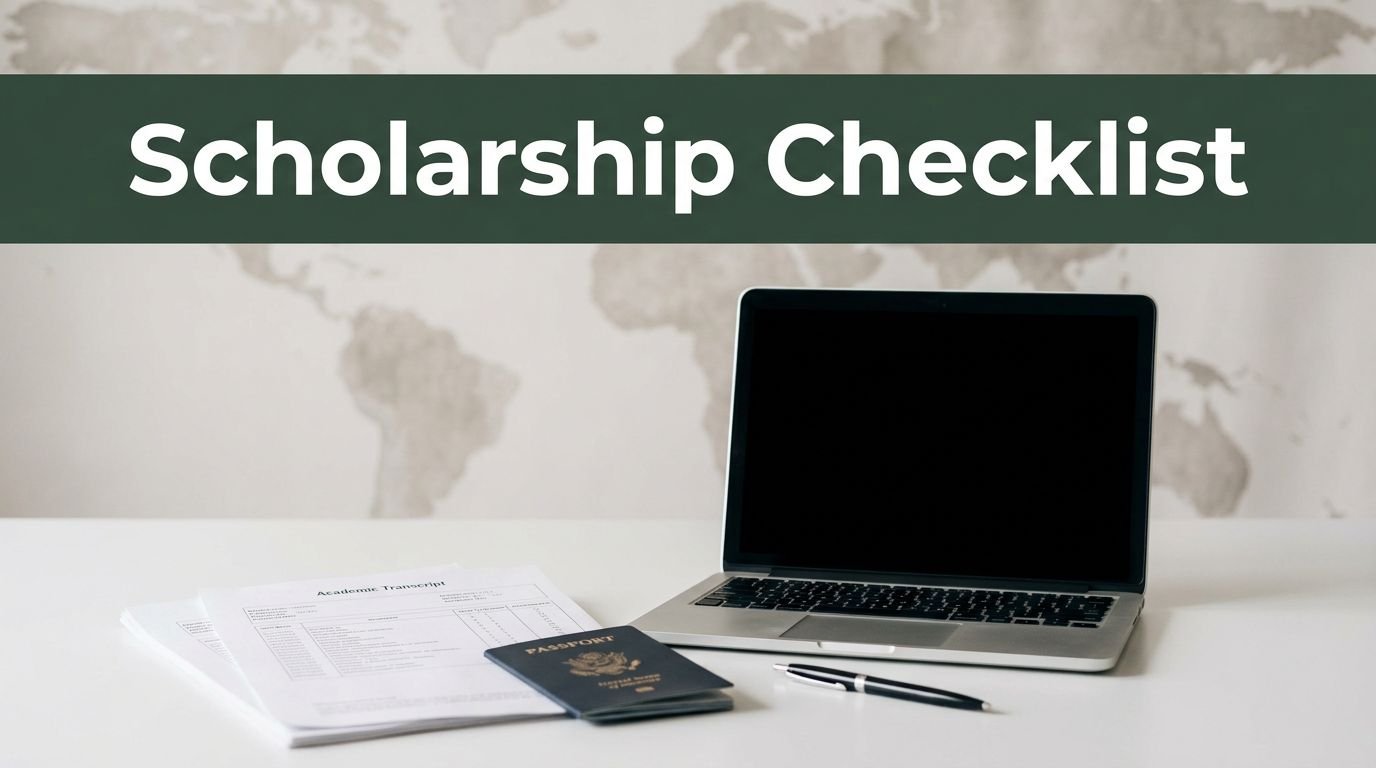
One missing transcript can sink a strong scholarship application. For international student scholarships, the best results usually come from clear planning, clean documents, and early action.
When we know what each award wants, the process gets much easier. We stop guessing and start sending complete applications that look prepared from the first page.
Scholarship types that deserve our first look
Not every scholarship asks for the same proof, so we save time when we sort them by type first. A quick match between our profile and the award rules helps us avoid wasted applications.
Scholarship type |
Best fit for |
What we usually need |
|---|---|---|
Merit-based |
Students with strong grades or test scores |
Transcripts, test scores, awards, essays |
Need-based |
Students who can show limited financial support |
Financial documents, sponsor letters, income proof |
University-funded |
Applicants to one school or department |
Admission file, personal statement, references |
Government-funded |
Students from many countries |
Nationality details, study plan, language scores |
Subject-specific |
Students in a set field, like STEM or arts |
Portfolio, project samples, field-based essay |
The main lesson is simple. We should read the scholarship category before we start the form, because the documents change fast.
Where we can find strong opportunities fast
Official sources save us time and reduce mistakes. University scholarship pages, ministry portals, embassy sites, and department pages usually give the clearest rules.
A good example is the Texas Global scholarships page, which shows how a university explains eligibility and support in plain language. When we compare pages like that, we learn how official programs expect us to present ourselves.
We should also build a short search list by region and study level. A master spreadsheet helps more than random bookmarks, because we can track deadlines, essay prompts, and reference needs in one place.
The document checklist we should build before applying
Our strongest applications usually look finished before we click submit. That means every document is ready, readable, and named in a simple way.

- Academic transcripts. We should gather official copies from every school or university we attended. If the scholarship asks for scanned copies, we keep them clear and complete.
- Passport or ID details. Many programs ask for identity pages, nationality proof, or date of birth details. We should check that the passport is valid long enough for travel and visa steps.
- Proof of language ability. Some scholarships need IELTS, TOEFL, or another test score. If the award does not ask for it, we still check whether the university admission file needs it.
- Personal statement or essay. This is where we explain our goals, our field, and why the scholarship matters. The best essays feel direct and specific.
- Letters of recommendation. We should ask referees early and give them the deadline, program name, and our CV. A rushed letter often looks generic.
- Updated CV or resume. This should include education, work, volunteering, leadership, research, and awards. We keep it short, clear, and free of clutter.
- Financial documents. If the scholarship is need-based, we prepare the exact proof the program asks for. That may include bank statements, sponsor letters, or income records.
- Portfolio, writing sample, or project file. Arts, design, media, and research awards often want proof of work. We should send only the best samples, not everything we have.
A complete file beats a perfect idea. Missing pages, blurry scans, and late references cause more problems than weak grammar.
A simple document list also helps us stay calm. If we want a plain checklist structure, the international scholarship application checklist shows the usual items many awards request.
We should save every file in PDF format unless the portal says otherwise. We should also use clean names like Surname_Transcript.pdf, because that makes our application easier to review.
Country-specific scholarship paths worth checking
Scholarship options change by region, but the search pattern stays familiar. We look first at official programs, then at university awards, then at department or embassy support.
- In the United States, we often start with university scholarships, department funding, and major awards like Fulbright.
- In the United Kingdom, Chevening, Commonwealth awards, and university scholarships are common starting points.
- In Canada, we look at university entrance awards, provincial schemes, and research funding at the school level.
- In Europe, Erasmus+ and national scholarship programs are strong options for many students.
- In Africa, Asia, and Latin America, we often find value in ministry programs, embassy-backed schemes, and regional university partnerships.
The names change, but the checklist stays the same. We still need eligibility proof, clean documents, and a file that matches the instructions exactly.
Common mistakes that cost us scholarships
A strong profile can still lose out because of small errors. These problems show up more often than most students expect.
- We miss a deadline. Many scholarships close months before classes start, so late planning causes avoidable losses.
- We send the same essay everywhere. Reviewers can spot a generic statement fast, and it rarely feels convincing.
- We ignore eligibility rules. A scholarship may look perfect, but one missing requirement can end the application.
- We leave files incomplete. One missing transcript or unsigned form can push a strong file aside.
- We ask referees too late. Good recommenders need time, and rushed letters often read that way.
A careful review before submission usually catches most of these problems. One final read-through can save weeks of waiting.
Habits that improve our odds
Early action is the biggest advantage we can give ourselves. When we start weeks ahead, we have room for delays, corrections, and follow-up emails.
We also do better when we keep one master folder for every scholarship. That folder should hold transcripts, essays, passport scans, and reference letters in separate subfolders.
A few small habits make a real difference:
- We ask referees at least two weeks early.
- We tailor each essay to the program, not to a general audience.
- We check email daily after submission, because some awards move fast.
- We keep a simple tracker with deadline, status, and next action.
This kind of routine feels modest, but it keeps the whole process under control. Scholarship season is easier when we treat it like a system, not a scramble.
Conclusion
The scholarship process gets far less stressful when we work from a solid checklist. Once our documents, deadlines, and target countries are organized, we can focus on the quality of each application.
That is the real lesson behind every strong international student scholarships file. We win more often when we submit complete, specific, and timely applications instead of rushing at the last minute.
FAQ
What documents do we need for most international student scholarships?
We usually need transcripts, a personal statement, recommendation letters, and a passport or ID page. Many programs also ask for language scores, financial proof, or a portfolio.
When should we start applying?
We should start several months before the deadline. Some scholarships close long before admission decisions, so early planning gives us more room to fix problems.
Can we apply for more than one scholarship?
Yes, and we often should. Applying to several suitable awards raises our chances, as long as we tailor each application and track the rules carefully.
Do we need perfect grades to win?
No, perfect grades are not the only path. Some awards value leadership, service, research, talent, or financial need, so a strong story can matter as much as a high GPA.
This post may contain affiliate links. If you make a purchase through these links, I may earn a small commission at no extra cost to you.