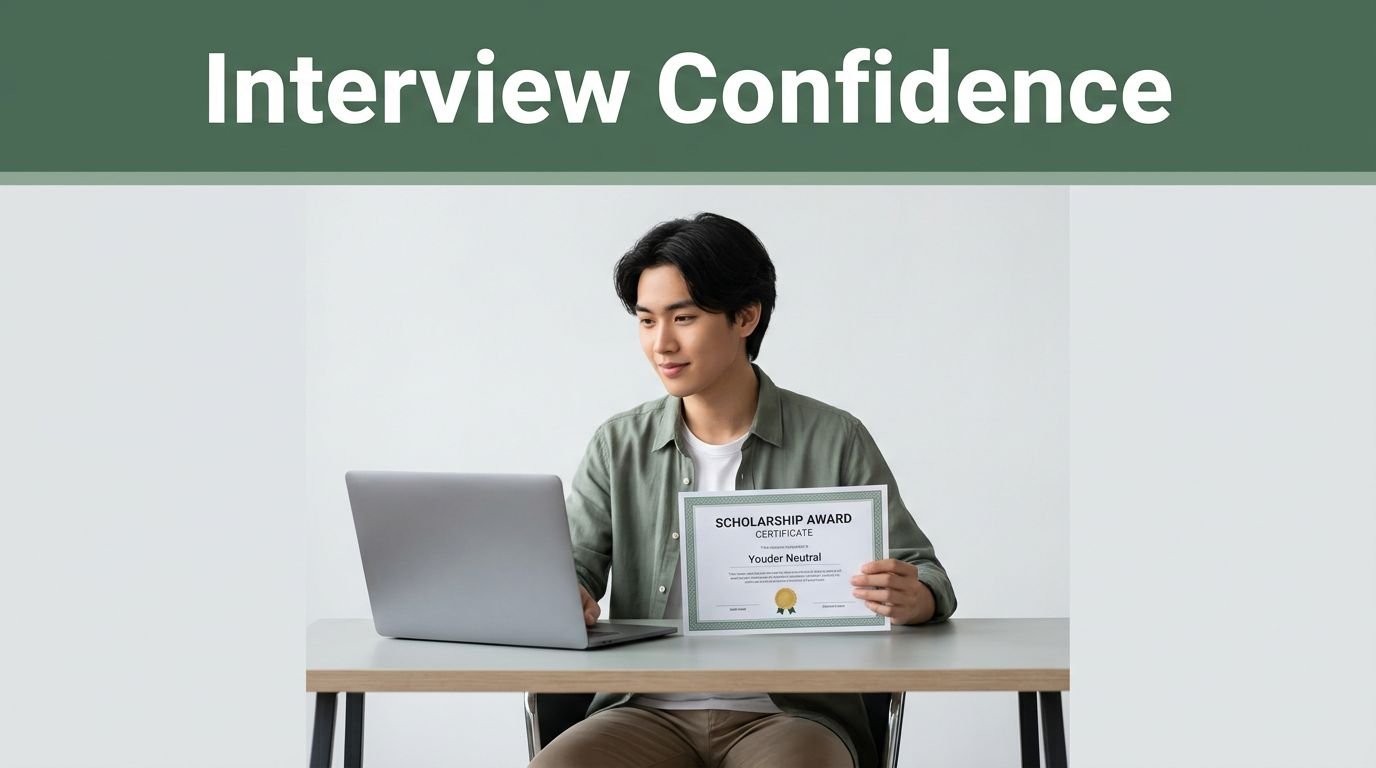
Scholarship interviews can feel short, but they carry a lot of weight. One clear answer can show more than a long application ever could.
Most panels ask about the same themes, our goals, our background, our strengths, and the impact we want to make. Once we know how to answer common scholarship interview questions with honesty and structure, the room feels less intimidating.
We can prepare for the usual topics, adapt answers to different scholarship types, and avoid the mistakes that make good candidates sound unsure. Start with what scholarship committees are really listening for.
What scholarship panels are really checking
A scholarship interview is rarely about perfect speech. It is about fit, clarity, and follow-through. Committees want to see whether we understand the award, whether we can explain our choices, and whether we have a real plan for the future.
Different awards focus on different strengths. Academic scholarships usually look at grades, study habits, and subject interest. Need-based awards ask about money with care and honesty. Leadership and community service awards look for initiative, teamwork, and public impact. Subject-specific scholarships want to hear why a field matters to us. International awards often focus on how our goals connect with the school, country, or program.
A useful guide to the most common themes appears in Citizens Bank’s scholarship interview guide. The same basic ideas show up again and again, even when the wording changes.
If we want to do well, we should prepare a few things in advance:
- a short summary of who we are
- one strong example of effort or leadership
- a clear reason we want the scholarship
- one honest weakness and how we handle it
- a simple plan for the next few years
Scholarship panels do not want a perfect performance. They want a clear, believable one.
Scholarship interview questions with sample answers
A lot of applicants worry that every question needs a polished speech. That usually makes answers sound stiff. A better approach is to prepare for the questions that come up most often and keep our answers direct.
Here is a quick reference we can use while practicing.
Question |
What they want to hear |
Sample answer angle |
|---|---|---|
Tell us about yourself. |
A focused snapshot, not a life story. |
We can mention our current study, one interest, and one goal. |
Why do you deserve this scholarship? |
Evidence, not bragging. |
We can connect our grades, service, or need to the award’s purpose. |
What is your greatest strength? |
Self-awareness and proof. |
We can name one strength and give one example that shows it. |
What is a weakness you are working on? |
Honesty and improvement. |
We can choose a real weakness and explain what we do about it. |
Tell us about a challenge you faced. |
Resilience and growth. |
We can show the problem, the action, and what changed. |
Where do you see yourself in five years? |
Direction and purpose. |
We can link the scholarship to our study and career plans. |
Short sample answers help more when they sound natural.
“I’m studying computer science because I enjoy solving problems and building useful tools. I have also volunteered at a local school, where I helped younger students with math. This scholarship would help me keep growing in a field where I want to make a real difference.”
“I deserve this scholarship because I have worked hard to stay consistent, even when my schedule was full. I balance classes, family duties, and community work, and I still keep my grades strong. The award would let me focus more on my studies and long-term goals.”
If we want more examples of answer style, Indeed’s scholarship interview guide shows how simple, direct responses work in interview settings.
A simple answer structure that keeps us calm
Memorized scripts often fall apart when the interviewer asks a follow-up. A simple structure keeps us steady and makes our answers easier to remember.
We can use this three-part formula:
- Start with the main point. Say the answer first, in plain language.
- Add one real detail. Use an example from school, work, service, or family life.
- End with the link to the scholarship. Show how the answer connects to our goals.
That formula works because it keeps us focused. It also helps us avoid rambling when nerves kick in. If we are asked about leadership, for example, we do not need a long speech. We can name the project, explain what we did, and say what we learned.
Body language matters too. We should sit up, keep our voice steady, and pause before we speak. A short pause sounds thoughtful. It does not sound weak.
Clear answers beat polished jargon.
Scholarship opportunities and interview styles around the world
Scholarship interviews do not look the same everywhere, but the core idea stays similar. In the US and Canada, many scholarships come from universities, private foundations, and local groups. In the UK and much of Europe, we often see university awards, charities, and national programs. Across Africa, Asia, and Latin America, government schemes, NGOs, employers, and professional groups play a big role.
The best places to search are often the simplest ones:
- university financial aid or scholarship pages
- official government scholarship portals
- embassy, exchange, and cultural institute websites
- nonprofit foundations and professional associations
- employer sponsorships and alumni networks
When we apply across countries, we should read the award page carefully. Some panels want academic focus. Others care more about service or financial need. A few use online interviews, while others use panel discussions or written screening first.
Because interview style can vary, we should adapt our tone. In some places, direct self-promotion is expected. In others, a modest, fact-based answer feels more natural. The safest path is to stay respectful, specific, and honest.
Mistakes that weaken strong candidates
Strong students lose points when their answers sound rushed or vague. The good news is that these mistakes are easy to spot before the interview.
A few common ones stand out:
- giving answers that are too long
- repeating the application word for word
- speaking in broad claims without examples
- turning every answer into a rehearsed speech
- forgetting to connect answers to the scholarship’s purpose
- speaking too fast when nervous
We can fix most of these with one simple habit, practice out loud. A mirror helps, but a phone recording helps more. When we hear our own answers, we spot filler words, weak endings, and missing details right away.
It also helps to practice follow-up questions. If we answer, “I want to study nursing,” the next question may be, “Why that field?” If we answer, “I volunteer often,” the next question may be, “What did that teach you?” Preparing for that second question keeps us ready for the real interview, not just the first one.
Conclusion
Scholarship interviews feel easier when we treat them as a focused conversation. The committee wants purpose, proof, and a clear reason to trust us with the award.
When we prepare for the usual questions, keep our answers specific, and stay calm under pressure, we give ourselves a real advantage. The goal is not to sound perfect. The goal is to sound like a serious applicant with clear plans.
FAQ
How should we answer “Tell me about yourself” in a scholarship interview?
We should keep it short and focused. A good answer covers our current studies, one relevant interest or activity, and one future goal.
Should we talk about financial need?
Yes, if the scholarship asks for it. We should be honest, brief, and respectful. If the award is based more on merit or leadership, we can keep the focus there.
How long should our answers be?
Most answers should take about 30 to 60 seconds. Bigger questions, like goals or challenges, can take a bit longer if the answer stays clear.
What if we do not know how to answer a question?
We can pause, take a breath, and answer the part we do know. A calm, honest response is better than guessing or rushing into the wrong answer.
This post may contain affiliate links. If you make a purchase through these links, I may earn a small commission at no extra cost to you.