
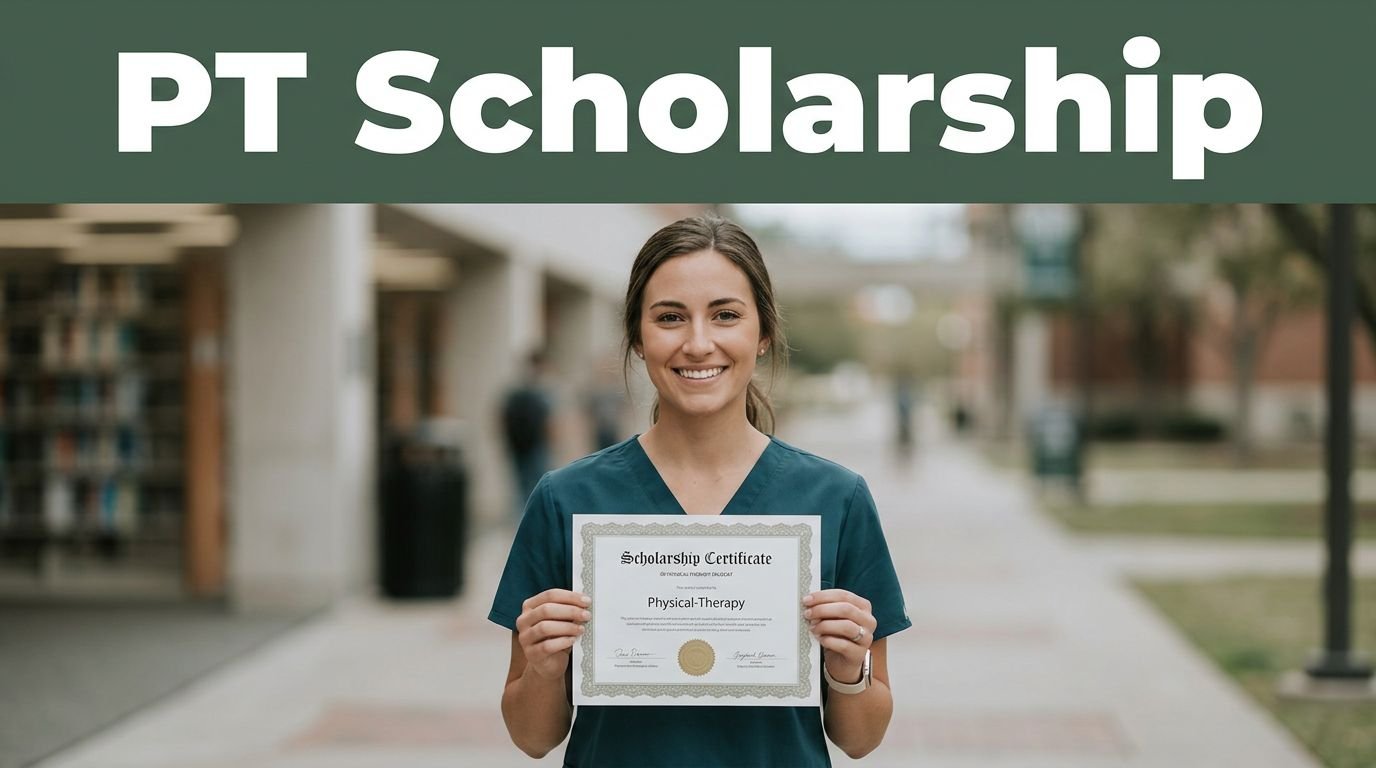
PT school isn’t cheap, and the bill can hit hard before you even earn your first paycheck. The average total cost in the U.S. can run past $100,000, and that’s before living expenses, books, and loan fees start stacking up.
A physical therapist scholarship can take a real bite out of that debt, which is why you don’t want to wait until the last minute. The earlier you start looking, the better your chances of finding awards that fit your background, your program, and your goals.
If you’re trying to keep student loans under control, this matters more than most applicants realize. Here’s how you can find the right scholarship, apply smart, and give yourself a stronger financial start.
Why You Should Apply for a Physical Therapist Scholarship
PT school is expensive, and the bill grows fast once tuition, books, clinical supplies, and living costs stack up. A physical therapist scholarship can ease that pressure right away, and it gives you more room to focus on becoming a strong clinician instead of staring at loan balances.
The bigger win is what happens after graduation. Less school debt can change the jobs you consider, the city you live in, and how quickly you can get ahead.
Reducing Your Long-Term Student Debt
Every scholarship dollar is one less dollar you need to borrow, and that matters because student loans often come with years of interest on top. If you rely less on high-interest loans now, you can keep your repayment burden smaller later.
That lower balance can give you real breathing room after school. You may have more freedom to choose a job based on fit, not just salary, which is a huge deal when you’re deciding between a clinic, hospital, school, or specialty setting.
A few ways this helps you long term:
- Less borrowing means less interest piling up while you study.
- Smaller monthly payments make it easier to manage your budget after graduation.
- More career flexibility lets you pick the role that matches your goals, not only the one that pays fastest.
The less debt you carry out of school, the more choices you have when your career starts.
Building Your Professional Network Early
Many physical therapist scholarship programs are tied to professional organizations, schools, health systems, or community groups. That means the application process is not just about money, it also puts you in front of people already working in the field.
When you join early, you start meeting mentors who can answer questions about PT school, clinical rotations, and job hunting. You also get closer to future employers, and that connection can matter when you’re looking for references, internships, or your first full-time role.
Even a simple application can open doors if it includes essays, interviews, or member participation. It gives you a reason to show up, stay visible, and make your name familiar in the right circles.
Where to Find the Best Scholarship Opportunities
If you want a physical therapist scholarship, start close to home and work outward. The best awards are often sitting in places you already have access to, and they don’t always get the loudest promotion.
That means you should check professional groups, your school, and your PT department before you spend hours chasing random listings. A focused search saves time, and it puts you in front of scholarships that fit your stage in the program.
Using Professional Associations and Local Chapters
The American Physical Therapy Association (APTA) is one of the first places you should check. It offers student-focused awards, including scholarships through programs like the Access and Opportunity Scholarship Fund, and some opportunities are built for students in their final year of an accredited PT or PTA program.
Local and state chapters can be just as useful. Groups like APTA Wisconsin and APTA North Carolina list their own scholarship options, and these regional awards often go to members who already have ties to the area or profession.
That gives you a real advantage if you stay organized. Many of these applications ask for a resume, personal statement, recommendation letters, or proof of membership, so keep those ready before deadlines hit.
A good search routine looks like this:
- Check APTA student scholarship pages for national awards and eligibility rules.
- Review your state APTA chapter for regional grants and member-only options.
- Read the requirements carefully so you don’t miss a final-year rule or membership cutoff.
- Prepare your documents early since recommendation letters and essays can take time.
Local chapter awards can be smaller, but they can also be less crowded. That makes them worth your time.
Checking with Your University Financial Aid Office
Your own school is another place you should not ignore. University financial aid offices often know about department-specific awards, college scholarships, and internal grants that never get much public attention.
These awards can be easier to win because the applicant pool is smaller. If you’re in a PT program, your department may have scholarships for academic performance, community service, clinical promise, or financial need.
Start by asking for three things: department scholarships, outside scholarships for PT students, and any awards tied to your college or health sciences division. Then ask your program director or advisor if there are scholarships that only students in your cohort hear about.
You can make the process faster by keeping a few items on hand:
- Your transcript for GPA-based awards.
- A current resume for applications that ask for your experience.
- Short personal statements so you can apply quickly when a deadline opens.
- A list of references who know your academic or clinical work.
These internal awards are often the easiest to overlook, and that is exactly why they matter. If you check your school first, you may find money that other students never even see.
Mastering the Scholarship Application Process
Winning a physical therapist scholarship is rarely about luck alone. You need a clean application, a clear story, and enough lead time to avoid rushed work that feels flat.
The best applications read like they know exactly who you are and why you belong in PT. That means your essay, recommendations, and supporting materials need to work together, not sit there like separate puzzle pieces.
Writing a Powerful Personal Essay
Your personal essay should answer one simple question: why physical therapy? Not the polished version, not the safe version, the real one. Maybe you saw recovery up close after an injury, watched a therapist restore someone’s confidence, or found yourself drawn to movement, function, and patient care.
Don’t just say you care. Show it. A short scene, a turning point, or a specific moment does more work than a page of broad claims. If you write, “I want to help people,” that says very little. If you write about helping a patient take their first steps after surgery or watching a family member fight to regain mobility, the reader can feel your reason.
A strong essay usually does three things well:
- Tells a real story that pulled you toward physical therapy.
- Shows what you learned from that experience.
- Connects your goal to the kind of PT you want to become.
Keep the focus tight. You don’t need to list every volunteer shift or every class you took. Pick one or two experiences that explain your path, then connect them back to your future in the profession. That makes your essay feel grounded, not stitched together.
If your essay could fit any healthcare field, it needs more work. A strong PT essay sounds specific from the first paragraph.
Gathering Strong Letters of Recommendation
The best letters come from people who know your work, not just your name. Choose recommenders who have seen you in action, such as a professor, a supervising physical therapist, a clinical mentor, or an employer who can speak to your discipline and character.
A vague letter is weak. A detailed letter that talks about how you handle pressure, learn quickly, or connect with others is far more useful. If someone only knows you casually, keep looking.
Give your recommenders plenty of time. A rushed request usually gets a rushed letter, and that can hurt you. Ask early, share the deadline clearly, and make the process easy by sending the items they need upfront.
Before you ask, prepare a small packet with:
- Your resume
- Your transcript, if relevant
- Your personal statement or a short draft
- The scholarship prompt or program details
- The exact due date and submission method
A quick, respectful follow-up is fine if the deadline gets close. You don’t need to nag, just remind them politely and keep things moving. A well-timed request and a strong fit between you and the writer can make your application feel much more credible, which is exactly what you want.
Navigating Specific Requirements and Deadlines
Once you start applying for scholarships, the details matter more than the hype. One award may want a short essay and transcript, while another asks for recommendation letters, proof of enrollment, or a separate financial need form. If you miss one requirement, the application usually stops there.
That’s why you need a system that keeps you ahead of the paperwork. A good physical therapist scholarship application strategy is not just about finding opportunities, it’s about tracking every moving piece before the clock runs out.
Staying Organized with a Tracking System
A simple tracker can save you from last-minute stress and missed deadlines. You don’t need anything fancy, just one place where you can see each scholarship, what it needs, and when it’s due.
A spreadsheet works well because you can sort, filter, and update it fast. A paper calendar can help too, but a spreadsheet gives you more room to compare deadlines side by side, which is useful when several scholarships overlap.
Here’s a simple setup you can copy into Google Sheets or Excel:
Scholarship |
Deadline |
Requirements |
Status |
|---|---|---|---|
APTA local chapter award |
March 15 |
Essay, transcript, 2 letters |
In progress |
University PT department scholarship |
April 1 |
Short application, GPA verification |
Ready to submit |
Community health foundation award |
April 20 |
Essay, volunteer history, FAFSA info |
Not started |
Use the tracker to mark what’s missing, what’s done, and what still needs follow-up. That way, you can spot trouble early instead of finding out the night before that a letter is still outstanding.
A few habits make the system work better:
- Put every deadline on your calendar as soon as you find it.
- Set a reminder at least one week early, then another a few days before.
- Create an internal deadline for yourself, so you’re never racing the real one.
- Keep your transcript, resume, and essay drafts in one folder for quick access.
- Track recommendation letters by name, date requested, and date received.
If a scholarship has a hard deadline, treat your own deadline as the real one. That buffer can save the application.
You should also check each scholarship’s requirements twice. Some awards have small details that can trip you up, like page limits, file type rules, membership status, or eligibility by year in school. A clean tracker makes those details easier to catch before they become a problem.
Review it every week, even if only for a few minutes. That one habit keeps your applications moving and helps you stay ready when a new physical therapist scholarship opens with little notice.
Maximizing Your Chances of Getting Funded
You can spend weeks tracking down awards, but your effort only pays off if your application stands out. Scholarship committees go through hundreds of entries, so they look for reasons to filter people out fast. When you treat your application like a professional project rather than a chore, you turn the odds in your favor.
Tailoring Your Application to the Mission
Every organization offering a physical therapist scholarship has a reason for doing it. They might focus on helping rural communities, promoting diversity in healthcare, or recognizing academic excellence. You need to identify that core goal and weave it into your materials. If a foundation cares deeply about underserved populations, talk about your volunteer work at local clinics. If they value leadership, highlight your time in a student group or your role in mentoring classmates.
Read the fine print on the scholarship website to find their mission statement. Use those exact themes to frame your essays and resume. You want the reviewers to see your name and immediately think that you are the person they designed this award for.
Showing Your Value Through Concrete Evidence
Anyone can say they are hardworking or dedicated to the field, but those words are cheap. You need to prove it with specific evidence that sticks in a reader’s mind. Instead of claiming you have great clinical skills, describe a time you helped a patient overcome a specific movement barrier or learned a difficult technique during a rotation.
Think of your application as a case study of your potential. When you write your response, follow these simple rules to keep it grounded:
- Focus on the actions you took instead of listing your character traits.
- Use numbers when they tell a story, like the hours spent volunteering or the number of patients you observed.
- Connect every achievement back to your future goals as a physical therapist.
Making It Easy for Reviewers to Say Yes
Most people lose out because they forget the small stuff. If the guidelines ask for a specific file format, a certain font size, or a strict page limit, follow them to the letter. A messy submission suggests you might be disorganized in your professional life, which is the last thing you want to signal to a potential benefactor.
Check your application against the requirements twice before you hit submit. Make sure your name is on every page if required, and double-check that your transcripts are official. If you provide exactly what they ask for, you show them you respect their time. This simple attention to detail separates the serious candidates from everyone else, and it makes it much easier for the committee to focus on your story rather than your mistakes.
Your Next Steps Toward a Debt-Free Degree
You have a plan and a target list of awards. Now you need to turn those intentions into actual submissions. Winning a physical therapist scholarship is a marathon, not a sprint, so you should focus on building habits that keep you consistent. Instead of trying to do everything in one weekend, break the process into smaller tasks that you can knock out between study sessions or clinical rotations.
Building Your Scholarship Routine
Consistency wins more money than intensity. If you commit to working on your applications for just one or two hours each week, you will avoid the panic that comes with rushing a submission two hours before the cutoff. Treat your scholarship hunt like a part-time job that pays you back later.
- Set a recurring time each Sunday to check your tracking sheet and identify the next two deadlines.
- Use a dedicated folder on your laptop or a cloud drive to store your core documents, like your resume and transcript, so you don’t have to scramble when a new application pops up.
- Draft your personal statement early and refine it over time, as having a solid base essay makes it much easier to tweak for different prompts.
- Reach out to your mentors or instructors early in the semester, because giving them a month of lead time for recommendation letters shows you respect their schedule.
Staying Consistent Throughout the Year
Scholarship seasons don’t always align with your academic calendar. Some open in the fall, others in the spring, and some operate on a rolling basis. You want to remain active even when you feel busy with exams or clinic work, because the most successful students keep their names in the hat year-round.
If you don’t win a specific physical therapist scholarship on your first try, keep your materials on file and reapply if you remain eligible for the next cycle. You can update your resume with new clinical rotations, add a recent community service project, or sharpen your essay based on the feedback or self-reflection you gathered from the previous attempt.
Commit to these three habits to keep your momentum high:
- Visit the APTA scholarship page and your state chapter website at least once a month.
- Ask your clinical instructors if they know of any local health foundation grants or regional awards.
- Refresh your brag sheet or list of accomplishments every time you finish a clinical rotation.
Preparing for the Long Term
While you focus on immediate funding, remember that your financial health is a long-term project. Winning a physical therapist scholarship helps, but managing your overall debt is about your entire approach to school expenses. Be honest about your FAFSA status, look into loan forgiveness programs for PTs working in high-need areas, and keep your living expenses as lean as you can manage comfortably.
Each award you land is a piece of the puzzle that reduces your total interest burden later. Even a small grant that covers your books or clinical fees makes a difference. Focus on the small wins, stay organized with your tracking system, and don’t stop putting yourself out there until you have your degree in hand. You have worked hard to get into this program, and finding these funds is just the final push to set yourself up for a career where your professional choices are not dictated solely by your monthly loan bill.
Conclusion
Landing a physical therapist scholarship isn’t just about grabbing extra cash for tuition. It is a strategic move that buys you professional freedom and gives you more room to breathe once you start your career. Every application you finish is a step toward a lighter debt load and more choices when you finally step into your first clinic.
Stay organized, keep your materials ready, and treat the search like part of your professional training. If you put in the work now, you set yourself up to focus on your patients rather than your interest rates.
Ready to lower your costs? Start by checking the APTA website and your local university department today.
This post may contain affiliate links. If you make a purchase through these links, I may earn a small commission at no extra cost to you.