If you were hoping to submit a Romanian government scholarship application for 2026, the submission window is now closed. With the deadline having passed on March 31, 2026, there are no extensions or alternative pathways for late submissions.
However, this guide remains an essential resource for international students. It provides the roadmap you need to prepare for future cycles without guessing which documents are required or which common errors lead to disqualification.
The best place to begin your research is the official Study in Romania platform, which helps you explore how to study in Romania, and the official Ministry of Foreign Affairs scholarship page. Once you are familiar with how these platforms function, the next step is building a competitive application file that highlights your academic potential.
Key Takeaways
- The 2026 window is closed: The application period for 2026 ended on March 31, and no late submissions or extensions are permitted.
- Prepare documents early: Success relies on having a clean, digital, and organized folder containing all required files, authorized translations, and valid credentials well before the portal opens.
- Understand strict eligibility: The scholarship is exclusively for non-EU citizens, excludes specific fields like medicine and pharmacy, and often requires a Romanian language preparatory year for bachelor’s and master’s levels.
- Focus on research for PhDs: Unlike undergraduate or master’s applications, PhD candidates must provide a well-developed research proposal and secure a match with a potential supervisor to be competitive.
- Prioritize accuracy and formatting: Reviewers prioritize applications that use separate, clearly named PDFs and demonstrate total consistency between identity documents, transcripts, and the application form.
The 2026 round is closed, so plan for the next opening
The most important thing to know is simple, you cannot submit a 2026 file anymore. The official 2026 application deadline was March 31, and missed applications were not carried over to future cycles.
That sounds harsh, but it also clears the fog. You do not need to waste time searching for an extension that will not appear. Instead, you need a ready folder, a clean scan set, and a robust study plan for the next call for applications.
This opportunity remains highly competitive because it is a fully funded program designed to support international students in their academic pursuits. The scholarship calendar has usually been short. In the 2026 round, the window opened in February and closed at the end of March, while results were expected around mid-July. That gives you a rough rhythm to prepare around, even if the next cycle shifts a little.
A polished CV does not save a missed deadline. A complete file, ready before the portal opens, does.

If you use the waiting period well, you will not be rushing later. You will already know your documents, your target universities, and your study level before the next form opens.
Who can apply: Understanding the eligibility criteria
The core eligibility criteria for the Romanian Government Scholarship are fairly direct. You must meet specific nationality, academic, and study-path requirements. If you do not meet these standards, your application will not move forward in the selection process.
Here is the fast version of what you need to know:
Requirement |
What it means for you |
|---|---|
Citizenship |
You must be from non-EU countries, open to non-EU citizens only |
Academic record |
Your academic performance must reflect an average of at least 7 on the Romanian scale, or “Good” |
Study level |
You can apply for a bachelor’s degree, master’s degree, or PhD studies |
Language |
Bachelor’s and master’s programs are usually in Romanian, while PhD studies may be in Romanian or another language |
Excluded fields |
Medicine and pharmacy, as well as dental medicine, are not eligible |
If your home institution uses a different grading system, do not guess. Compare your grades carefully against the Romanian standard before you assume you qualify. Many candidates lose time because they interpret “good results” as a general feeling rather than a quantifiable grade point average.
Language proficiency is another vital factor. If you do not already speak Romanian, the scholarship typically includes a Romanian language preparatory year. This is a significant benefit if you are applying for a bachelor’s degree or a master’s degree, as it allows you to gain proficiency before your formal studies begin.
PhD applicants must approach the process differently. Your file is not based solely on academic performance. It must also demonstrate a clear research proposal, a strong fit with a potential supervisor, and evidence that your topic is relevant within a Romanian university setting.
If you are under 18, expect to include parental consent in your application. That one detail can stall a strong application if you leave it until the final week, so ensure all documentation is handled well in advance.
Your document stack, sorted before you touch the portal
The application process is much smoother when your required documents already live in one digital folder. Rather than juggling a mixed PDF, maintain a single folder with clearly named, separate files ready for upload.
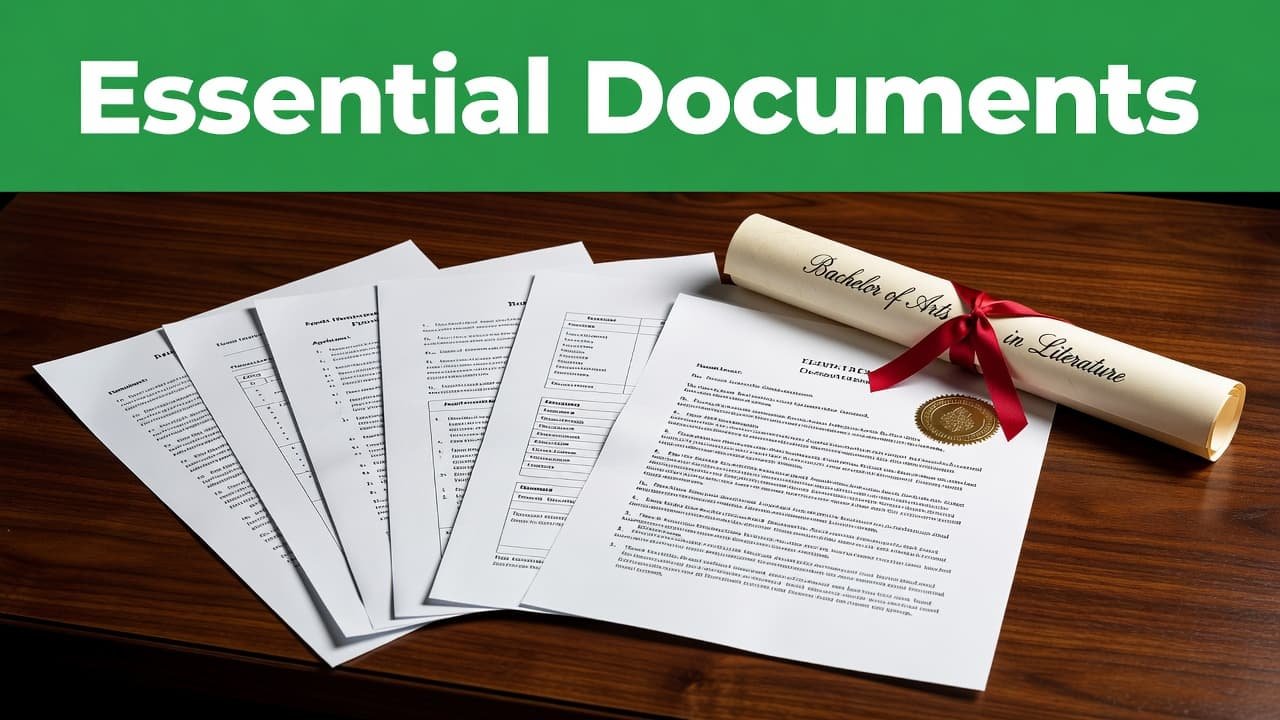
The guidance for the Romanian Government Scholarship usually points to separate PDF files, which matters more than many applicants realize. If you merge everything into one document, you make the review process unnecessarily difficult for the committee. If any of your documents are not in Romanian, English, or French, you must provide an authorized translation to ensure compliance with the official requirements.
Your basic file set usually includes:
- Diploma copy: A high school diploma for a bachelor’s degree, a bachelor’s diploma for a master’s degree, or a master’s diploma for PhD studies.
- Transcripts or grade sheets: These documents demonstrate your academic performance and reflect your full history beyond just the final certificate.
- Birth certificate copy: Keep this scan clear and readable. Your birth certificate is a core identity document that must be legible.
- Passport pages: The first three pages of a valid passport are typically required.
- CV: Use English or French unless the specific call for applications states otherwise.
- Passport-style photos: Two recent photos are generally requested.
- Medical certificate: Official proof that you are physically fit to study in Romania.
- PhD-specific file: A formal letter of intent, a detailed research description, a list of publications or scientific works, and a supervising tutor agreement.
- Extra items if asked: A recommendation letter, parental consent if you are under 18, or language proficiency proof when the program requires it.
Don’t wait until the last minute to scan anything. Bad scans are a silent problem. If the text is fuzzy or the edges are cut off, you are forcing the reviewer to work harder than they should.
A practical habit helps here. Name your files in a way that tells you exactly what they are. Using names like Passport, Transcript, or Diploma is much better than uploading files with random camera-generated labels.
The apostille or legalization check also matters. For the Romanian Government Scholarship, the guidance often points applicants toward apostilled documents before submission. If your country uses a different legalization route, follow the rule that applies to your specific issuing authority rather than relying on forum rumors.
The file should feel boring. Clean scans, separate PDFs, matching names, and no missing pages.
That kind of boring is good. It tells the reviewer that you are serious, organized, and prepared to succeed.
How the online application works step by step
The official route runs through the online application form, not email and not social media messages. The Romanian MFA page mandates that all materials must be submitted via the Study in Romania platform, so treat that portal as the center of your process.

Once the next call opens, the flow is usually straightforward:
- Create your account Open the Study in Romania portal, enter your details, and build the login you will use for the whole application. Use an email address you check often.
- Fill in your personal data carefully Your name, passport details, citizenship, and address must match your official documents exactly. Tiny spelling differences can create unnecessary friction when you submit the online application form.
- Upload each document as a separate PDF This is where many applicants slow themselves down. Keep every file in its own designated slot and avoid attaching giant merged files that make the system harder to navigate.
- Choose your universities The process typically requires you to select two Romanian universities. Be sure to pick programs that fit your academic level, language proficiency, and educational history.
- Review everything before you submit Read the form like someone else filled it out. Check your passport numbers, dates, and file names one more time to ensure accuracy.
- Submit before the application deadline, not near it Waiting until the final day is a gamble you do not need. High portal traffic, unexpected upload errors, and poor internet connections have ruined many strong files.
The 2026 instructions also included sending physical paper copies after the online submission. That rule can change by cycle, so watch the newest call closely and follow the mailing instructions exactly.
If you are applying for PhD study, slow down even more. Your research project needs to make sense, and your alignment with a potential supervisor matters. A vague topic sounds weak compared to a clear, focused proposal.
The best way to use the portal is to think like a reviewer. If they open your file and can understand your goals in two minutes, you are already in a much better position.
What the scholarship pays for, and what it leaves to you
The financial aid package is one of the strongest parts of the program. It typically covers tuition fees, provides a reliable monthly stipend, and includes comprehensive accommodation support for international students. If you require the Romanian language preparatory year, that is covered as part of your benefits. Including this Romanian language preparatory year as a fully funded expense ensures that you are prepared for your degree without added costs.
Here is the quick breakdown of your coverage:
Covered |
Not covered |
|---|---|
Tuition fees |
Round-trip airfare |
Registration fees |
Personal travel costs |
Monthly stipend |
Extra living costs beyond the stipend |
School accommodation |
Anything outside the official scholarship package |
Romanian language year, if needed |
Expenses you plan yourself |
That last line matters. A scholarship that pays tuition but not your flight is still useful, but you need an arrival budget. Plan for your ticket, your first weeks on the ground, and any extra documents your own country requires.
The scholarship can make a real difference because it reduces the pressure on your study budget. Still, do not treat it like a full blank check. It is essential support, not a promise that every expense disappears.
If you are comparing options, the monthly stipend and accommodation support are the parts that usually matter most. They turn the move from a possibility into a manageable reality, especially if you are heading to Romania as one of many international students traveling from far away.
The mistakes that waste a strong file
A lot of strong applications from non-EU citizens fail for dull reasons. It is rarely about bad grades or lack of intent, but rather avoidable errors that undermine your standing. To improve your chances, you must carefully navigate the eligibility criteria and ensure every detail is handled with precision.
The usual trouble spots are easy to identify:
- You underestimate the time required for an authorized translation: Many documents must be translated and officially stamped, a process that often takes longer than anticipated.
- You fail to verify eligibility criteria: If you apply for programs like medicine and pharmacy or dental medicine, your application will face automatic rejection as these are not covered by the scholarship.
- You upload messy, merged PDFs: The portal requires clean, individual files rather than a giant, cluttered bundle.
- You miss the language requirements: Bachelor and master’s tracks are generally conducted in Romanian. If you do not already speak the language, you must be prepared to complete the Romanian language preparatory year before beginning your degree.
- You ignore the university fit: A random choice looks weak when a reviewer can tell you have not researched the specific program or its requirements.
- You leave the PhD research plan vague: A competitive proposal needs a clear topic, a specific academic direction, and a demonstrated match with a potential supervisor.
- You rush the final upload: Most deadline issues are self-inflicted and easily avoided with better time management.
Your safest move is to build a comprehensive checklist before the application portal opens. Put every document in one folder, ensure every translation is an authorized translation, and name your files clearly. Compare your passport details, diploma information, and CV to ensure total consistency. Then, double-check the program language and your selected university options.
If you are still in the planning stage, use a simple timeline to keep yourself on track. This week, gather your primary documents. Next week, have your paperwork prepared and verify that you meet all eligibility criteria. Before the next opening, research your chosen universities and organize your files. That kind of steady preparation saves you from the panic that often surfaces on the final day.
Frequently Asked Questions
Can I still apply if I missed the March 31 deadline?
No, there are no extensions or alternative pathways for late submissions once the official deadline has passed. You must wait for the next annual application cycle to open and prepare your materials accordingly.
Are students from EU countries eligible for this scholarship?
No, the Romanian government scholarship is specifically reserved for non-EU citizens. If you hold citizenship in an EU member state, you will need to explore other funding opportunities for studying in Romania.
Can I choose any field of study for my degree?
Most fields are eligible, but medicine, pharmacy, and dental medicine are explicitly excluded from the scholarship program. You must ensure your chosen program is fully supported before submitting your application.
Do I need to be fluent in Romanian to apply?
Not necessarily, as the scholarship often includes a fully funded Romanian language preparatory year for bachelor’s and master’s students who do not yet speak the language. PhD applicants may have more flexibility, though some programs still require Romanian proficiency.
Conclusion
The 2026 deadline has passed, which means the most important phase for prospective international students is strategic preparation. You now have a clear understanding of the rules, the document set, and the portal process, allowing you to move away from guesswork and toward organized action.
If you want the next application round to feel manageable, focus on gathering your required documents well before the official call opens. Keep your files updated, monitor the official portals for updates, and avoid leaving complex tasks for the final week. Securing a Romanian government scholarship is a significant achievement, and the applicants who move through the process most smoothly are rarely just lucky. They are simply prepared long before the application form appears.
This post may contain affiliate links. If you make a purchase through these links, I may earn a small commission at no extra cost to you.