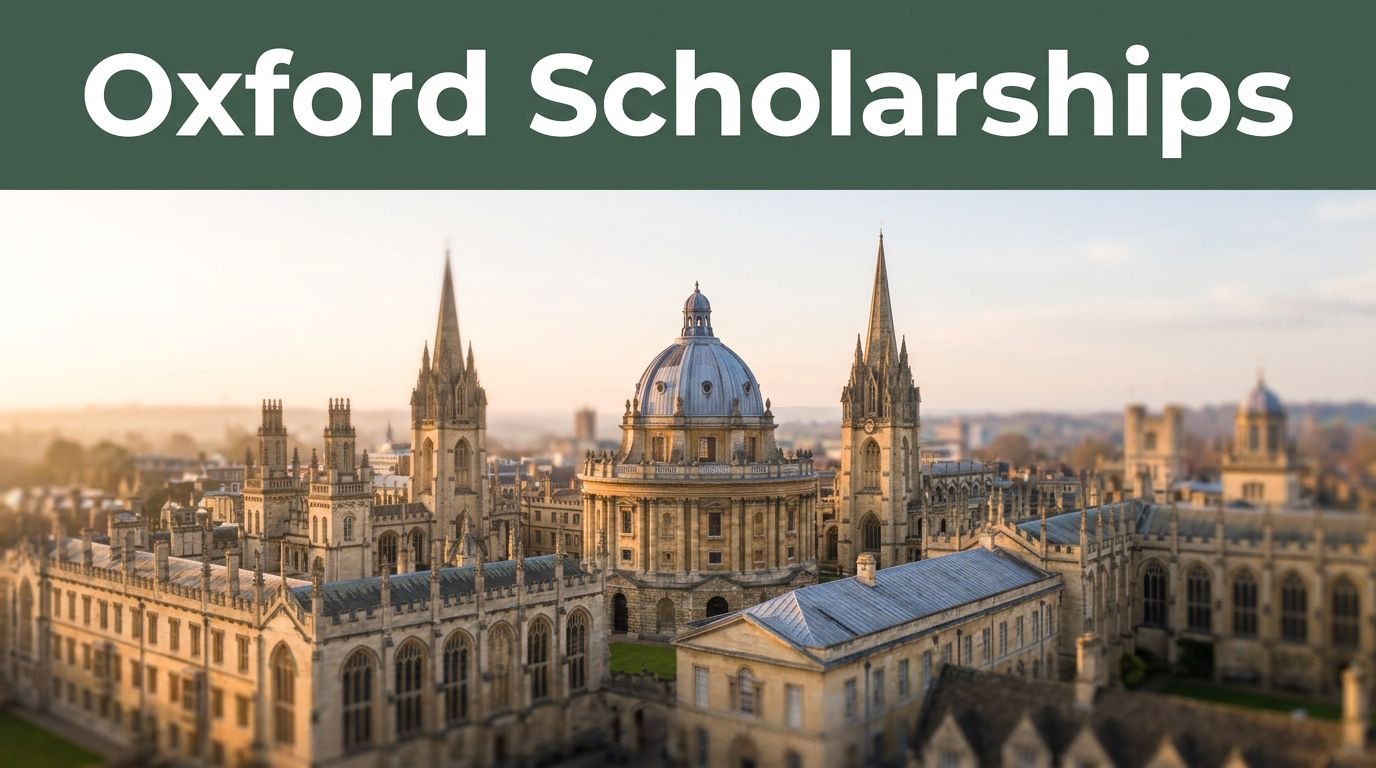
A scholarship to Oxford University usually comes after admission, not before it. We first apply to the course, then some funding is automatic while other awards need a separate form after an offer is in hand.
That order matters because Oxford’s deadlines are strict, and missing the course deadline can shut the door on aid as well as admission. Students from the US, UK, Canada, Europe, Africa, Asia, and Latin America often search for these details because Oxford funding can change what is possible, especially when fees and living costs are high.
In the sections that follow, we look at scholarship types, who qualifies, how to apply, which documents matter, country-based options, common mistakes, and the steps that can improve our odds.
How Oxford scholarships actually work
Oxford scholarships follow a pattern that catches many applicants off guard. In most cases, we first apply for admission, and only then do we move through the scholarship process. Some awards are tied directly to the course application, while others require a separate form after an offer arrives.
That order shapes everything that follows. It affects timing, document prep, and even how we read the rules on each award page. A strong application on the wrong deadline still misses the mark.
Why admission to Oxford usually comes first
For many Oxford scholarships, the course application comes first because the university uses it to judge both admission and funding eligibility. In graduate study, Oxford often reviews scholarship eligibility from the same application materials used for admission, so there may be no extra form at all. In other cases, especially selective awards, students must first receive an offer before they can apply for funding.
That sequence matters because scholarship timelines rarely wait. If we miss the course deadline, the scholarship door may close too. Oxford’s funding pages make this clear, and the university’s scholarships guidance shows how many awards are considered alongside the admission file rather than after it.
This also changes how we prepare documents. We usually need a strong academic record, a clear statement of purpose, references, and sometimes course-specific materials before any funding review begins. If a scholarship asks for a separate application later, we still need the offer letter, so the admissions file has to be complete first.
The safest planning rule is simple, apply for the course first, then track whether the scholarship is automatic or separate.
A useful example is the Reach Oxford Scholarship. Oxford’s own listing shows that applicants must secure admission before the scholarship stage opens, which is why a late course application can end the process before funding even begins. The university’s A-Z scholarship listing is the best place to check whether a particular award follows that pattern.
Merit-based, need-based, and targeted awards
Oxford scholarships usually fall into three broad groups, and each one uses a different logic. Once we understand the categories, the names and deadlines make more sense.
Type of award |
What it means |
Common example |
|---|---|---|
Merit-based |
Awarded for academic strength or talent |
High grades, strong test scores, research potential |
Need-based |
Awarded because the student needs financial help |
Family income, limited savings, high course costs |
Targeted |
Awarded to a defined group |
Region, course, field of study, or background |
Merit-based scholarships reward academic performance. These are the awards most people picture first, because they usually go to students with excellent grades, strong references, and a polished application. At Oxford, that can mean first-class academic work, a strong research proposal, or evidence of unusual promise in the subject.
Need-based scholarships focus on finances. These awards are designed for students who could not attend without help. The review may look at household income, existing funding, or the gap between what the course costs and what the student can pay. In practice, this often means more paperwork, since the university may ask for financial details to verify the need.
Targeted awards are narrower and often more specific. Some are reserved for students from certain countries or regions, while others support particular courses, fields, or personal backgrounds. A scholarship may be open only to public policy students, for example, or only to applicants from Africa, Latin America, or another defined group.
That mix is why two Oxford scholarships can look similar on the surface but work very differently underneath. One may be automatic once the admissions file is reviewed. Another may need proof of financial need. A third may only open after an offer is issued. For that reason, the scholarship title matters less than the eligibility rules printed beneath it.
The main scholarship options available at Oxford
Oxford funding is not one single pool. It is a patchwork of awards, each with its own rules, audience, and timing. Some scholarships are broad and highly competitive, while others are narrow and tied to a course, college, region, or background.
That mix matters because the right scholarship to Oxford University is rarely the first one people see. We usually have to match the award to the degree level, the subject, and the eligibility rules. A strong applicant can still miss out if the funding is aimed at the wrong student group.
Reach Oxford Scholarship for undergraduate students
The Reach Oxford Scholarship is Oxford’s best-known undergraduate award for students who cannot study at home because of political, financial, or educational barriers. It is meant for high-achieving students from eligible low-income or developing countries, and it is aimed at those who have already received an offer from Oxford.
Oxford says the scholarship may help with course fees, a grant for living costs, and one return airfare per year. That support can make the difference between an offer and an actual place, especially for families facing a large funding gap.
The core eligibility points are strict. Applicants must show financial need, strong academic ability, social commitment, and a clear reason they cannot study in their home country. Oxford also expects scholars to return home after their studies, so this is designed for students who plan to use their education in their own country.
Reach Oxford is not open to medicine applicants, so students applying for that course need to look elsewhere.
The official Reach Oxford Scholarship page is the safest source for the current rules, because country lists and eligibility details can change.
Clarendon and other graduate scholarships
Clarendon is one of the major graduate awards at Oxford, and it is known for backing academic excellence and future potential. Students do not submit a separate Clarendon form in most cases. If they apply by the correct deadline for an eligible graduate course, Oxford considers them automatically.
Clarendon usually covers full course fees and provides a living-cost grant. That makes it one of the most valuable Oxford graduate funding options, especially for master’s and DPhil students facing high tuition and housing costs.
Still, Clarendon is only one part of the picture. Many graduate scholarships are linked to specific departments, regions, or applicant groups, and the rules can be easy to miss. Some awards favor certain subjects. Others are open only to students from a particular country or to those entering a research degree.
For that reason, we need to check the course page carefully, then read the funding notes beside it. Oxford’s graduate scholarships listing is useful, but the course-level rules often control who is actually considered.
Bursaries and smaller awards that still matter
Full scholarships get most of the attention, but smaller awards can still change the numbers in a meaningful way. A bursary, fee reduction, college grant, or subject-based top-up may not cover everything, yet it can lower the cost enough to make Oxford realistic.
These awards often matter most when they sit beside family savings, a loan, or outside support. A few thousand pounds less in fees or living costs can close a funding gap that would otherwise block enrollment.
Some support is limited to specific residency groups, especially UK students, so eligibility matters just as much here as it does for larger scholarships. Other awards are attached to a college, department, or donor fund, which means the pool is smaller but sometimes less crowded.
A simple comparison helps show the difference:
Funding type |
Typical scope |
Why it matters |
|---|---|---|
Full scholarship |
Fees plus living costs, sometimes travel |
Covers the largest expenses |
Bursary |
Partial help with fees or costs |
Reduces the overall bill |
College or departmental award |
Small to medium grant |
Can fill a funding gap |
External support |
Government, charity, or employer funding |
Often combines with Oxford aid |
Smaller awards rarely make headlines, but they often decide whether a student can accept an offer. In Oxford funding, even partial help can carry real weight.
Who usually qualifies for a scholarship to Oxford University
The students who qualify for a scholarship to Oxford University usually share one thing first, a strong academic profile. After that, the rules split fast. Some awards look at grades and subject fit, while others focus on need, nationality, or service to a community.
That is why Oxford funding does not follow a single profile. A high scorer can still miss out if the award is aimed at a different country, course, or level of study. In the same way, a student with clear financial need may qualify only if the paperwork is complete and consistent.
Academic records and test results
Oxford scholarships for both undergraduate and graduate study usually start with academic strength. Strong grades, top class marks, and clear subject fit carry real weight. For research awards, the university also looks at research potential, not just past grades.
At undergraduate level, schools, exam results, and predicted performance matter most. For graduate awards, Oxford often looks for evidence that the applicant can handle demanding academic work and contribute to the subject area. A well matched course choice matters too, because scholarship committees tend to favor applicants whose background fits the program closely.
For graduate applicants, test results can help, but they rarely stand alone. References, writing samples, a research proposal, and previous degree performance often matter just as much. Oxford’s graduate scholarships guidance shows how closely funding is tied to the admissions file.
Strong grades open the door, but subject fit and evidence of promise often decide who moves forward.
The highest profile awards usually go to applicants who already look ready for Oxford’s academic pace. That does not mean only perfect records count. It does mean the file has to look serious, coherent, and well matched to the course.
Financial need and proof of income
Need-based scholarships usually require clear proof that a student cannot cover the full cost of study without help. That proof often includes family income details, bank statements, sponsor letters, or evidence of limited savings. In some cases, the university may also ask for information about siblings, housing costs, or other support already in place.
The key is consistency. If one document shows a strong income while another suggests hardship, the application can stall. Oxford tends to look for a clear, believable financial picture rather than a vague claim of need.
Common documents may include:
- Recent bank statements
- Income certificates or tax records
- Employer letters for parents or guardians
- Details of family support or sponsorship
- Proof of any other scholarships or aid already received
Some awards also ask whether the student has access to outside funding options. If family, employer, or government support is available, that can affect eligibility. The Reach Oxford Scholarship page explains this kind of financial screening clearly, and Oxford lists the award on its official undergraduate funding page.
The paper trail matters because need-based awards are meant for students with genuine funding gaps. A clean file is often as important as the numbers themselves.
Nationality, region, and social commitment rules
Some Oxford scholarships are open only to students from certain countries or regions. Others focus on applicants from DAC or OECD-listed countries, or on students from areas that receive official development assistance. These limits are common in awards tied to international access, development goals, or regional partnerships.
Nationality alone does not always decide the outcome, but it can decide whether an application is even accepted. Region-based awards often work the same way. A student may have excellent grades and strong finances, yet still be ineligible if the scholarship is restricted to a specific country list.
Social commitment can also strengthen an application. Oxford looks closely at evidence of community service, leadership, or work that benefits others. That can include mentoring, local projects, public health work, teaching support, or service in an under-resourced area.
For some awards, especially those aimed at students who plan to return home after study, this matters a great deal. The university wants applicants who can show a clear link between their Oxford education and public benefit. In practical terms, that means the strongest applications often combine academic strength with a record of service and a realistic plan for the future.
The result is a funding system that sorts applicants by more than grades alone. Oxford scholarships often reward students who fit a specific need, a specific place, and a specific academic purpose.
How to find scholarships that match a real Oxford application
Finding a scholarship to Oxford University is less about chasing every award on the page and more about matching the funding rules to the application already in motion. Oxford’s system rewards precision. The course, degree level, country status, and deadline all have to line up, or the scholarship may look open when it is not.
That is why the search process starts with the admissions file, not with random scholarship lists. We save time when we read each award like a contract, then compare it against our own profile. A scholarship only matters if it fits the course we are applying for, the level we are studying, and the evidence we can actually provide.
Using the Oxford scholarship search the right way
Oxford’s own funding search is the best place to begin because it filters awards by the details that matter most. We can narrow results by faculty, course, country, and level of study, which removes a lot of noise before we ever reach the application stage. The university’s Fees, funding and scholarship search is built for that purpose, and it is far more reliable than general web searches.
The right process is simple. We start with the course, then check whether the scholarship is for undergraduate or graduate study, and then confirm whether it is open to our nationality or residency group. After that, we look at the faculty or subject area, because many Oxford awards are tied to one field only. A scholarship for law does not help a history applicant, no matter how generous it looks.
The fine print matters just as much as the headline. Eligibility rules often hide the real limits, such as whether the award is for new entrants only, whether it requires a specific college affiliation, or whether it closes months before the main course deadline. Deadlines are easy to miss because some awards follow the admissions timetable, while others ask for extra documents later.
A good habit is to check three things on every page:
- Eligibility: course level, subject, nationality, and residency rules
- Deadline: scholarship date, not just the admissions date
- Application method: automatic consideration or a separate form
A scholarship page that looks generous can still be unusable if one small eligibility line rules the applicant out.
How to spot scholarships that look open but are not a fit
Some awards appear broad at first glance, then collapse under closer reading. This happens often with Oxford funding because the titles sound accessible, but the rules are narrow. A scholarship may say it is open to “international students” and still exclude the applicant because it only funds a specific degree level or subject.
The most common mismatch is degree level. An award may be for master’s study, while the applicant is entering a DPhil or undergraduate program. Another common problem is residency status. Some scholarships are open only to UK students, while others are limited to applicants from certain regions or countries.
Subject fit causes trouble too. Oxford has many awards linked to particular departments, so a scholarship for public policy, medicine, or classics usually will not stretch across to another field. A strong profile does not override that rule. The subject boundary is the gate.
We also need to watch for awards that look open but require something the applicant cannot supply on time. For example, a scholarship may need an offer letter, a research proposal, proof of financial need, or a separate reference. If the admissions timeline has not reached that stage, the scholarship is not really available yet.
A quick way to avoid wasted effort is to test each award against four questions:
- Is the degree level correct?
- Is the subject area correct?
- Is the country or residency rule correct?
- Can the required documents be ready before the deadline?
If even one answer is no, the application is usually a poor use of time. That matters because Oxford funding is competitive, and ineligible applications can crowd out stronger ones that fit better.
Which sources are worth trusting
The safest source is Oxford itself. Its official funding pages list the main scholarships, the eligibility rules, and the deadlines that actually control the process. For graduate applicants, Oxford’s A-Z of scholarships gives a cleaner overview than scattered third-party summaries, especially when awards change from year to year.
After Oxford’s own pages, a small number of respected sources can help fill in the gaps. We should keep that list short. Broad scholarship websites often mix current awards with outdated entries, so they are useful only when they point back to an official page.
The most reliable outside sources are:
- University of Oxford official funding pages, for the live rules and deadlines
- University department or college pages, for local awards and extra conditions
- Trusted scholarship databases, only when they link directly to the original funder or Oxford page
Oxford’s own scholarship search also notes whether an award needs extra materials or a separate application, which is where many applicants get tripped up. That is why a database summary is never enough on its own. It can point us toward an award, but it should not replace the original page.
In practice, we trust sources in layers. Oxford’s funding page gives the rulebook, the department page fills in subject details, and the scholarship database acts as a pointer. When those three agree, the scholarship is usually real, current, and worth the effort.
What a strong Oxford scholarship application usually includes
A strong scholarship to Oxford University usually looks organized, specific, and easy to verify. The file tells a clear story, then backs it up with paperwork that matches the scholarship rules. Oxford does not reward guesswork here, and weak applications often fail because one piece is missing or inconsistent.
The strongest submissions usually combine academic proof, honest financial detail, and a statement that sounds like a real student, not a template. They also stay close to the scholarship brief. When the award asks for a particular background, course, or level of study, the application should reflect that exactly.
The documents that are most often requested
Most Oxford scholarship applications ask for a core set of documents, even when the exact list changes by award. We should expect some combination of transcripts, references, proof of income, identity details, and course papers. The Oxford A-Z of scholarships is useful here because it shows how different awards can ask for different evidence.
The most common items include:
- Transcripts: These show academic record, grades, and subject depth. Oxford uses them to check whether the applicant can handle the course and whether the record matches the award criteria.
- References: Strong references give outside proof of ability, work habits, and promise. A scholarship file without credible referees often feels thin.
- Proof of income: Need-based awards ask for bank statements, tax records, sponsor letters, or salary details. This helps Oxford judge whether the student truly needs support.
- Passport or identity details: These confirm nationality, residency, and legal identity. They matter most for awards with country rules or eligibility limits.
- Course-specific papers: Research proposals, writing samples, portfolios, or test scores often belong here. These documents show subject fit and help Oxford compare applicants within the same field.
Some awards also ask for an Oxford offer letter, especially when funding starts after admission. Others may want evidence of existing scholarships or aid, so the university can see the full funding picture. The Oxford scholarships page notes that many awards are judged from the main admission file, which makes clean, complete paperwork even more important.
A scholarship file is strongest when every document supports the same story, without gaps or contradictions.
Writing a personal statement that sounds genuine
The best personal statement sounds calm and direct. It shows why the course matters, where the student is headed, and how Oxford fits that path. We do not need grand claims or polished speeches. We need a believable academic reason to be there.
A good statement usually covers three things in plain language. First, it explains the academic goal and the subject interest behind it. Next, it connects that goal to a future role, job, or research plan. Finally, it shows some wider commitment, such as mentoring, public service, volunteering, or work that helped a community.
Short, specific details carry more weight than dramatic language. A line about leading a tutoring group or researching a local health issue often feels stronger than broad praise of ambition. The file should read like a person who has done the work and knows what comes next.
To keep the tone grounded, we can follow a simple pattern:
- State the academic reason for applying.
- Link the course to the next step in study or work.
- Mention one or two real examples of service, leadership, or initiative.
- Close with a clear fit between the applicant, the scholarship, and Oxford.
The best statements avoid sounding copied from a sample online. They also avoid over-explaining hardship. If financial need matters, we can state it clearly and move on. If achievement matters more, we should let the record do the talking.
A strong Oxford application often feels balanced because the statement does not try to do everything. It shows purpose, direction, and fit, then leaves room for the rest of the file to prove the case.
How to ask for references that support the case
Good references do more than confirm grades. They show how the applicant thinks, works, and contributes. For a scholarship to Oxford University, referees should be able to speak to academic promise, leadership, resilience, or service, depending on what the award values most.
The best referees are people who have seen the applicant in a real setting. A lecturer, research supervisor, school teacher, or employer can often write more convincingly than someone with a distant title. Oxford looks for specific evidence, not generic praise.
It helps to give referees enough time and enough context. A rushed letter often stays vague, while a well-prepared one can point to exact examples. We should share the scholarship details, the course name, the deadline, and any traits the award asks for. That makes it easier for the referee to write something useful instead of safe and generic.
A strong reference packet usually includes:
- The scholarship name and deadline
- The course or degree applied for
- A short summary of the applicant’s goals
- Notes on any strengths the referee may want to mention
- A reminder of relevant work, study, or service examples
Timing matters as much as content. When referees get the request early, they can write with care and check the facts. When they get it at the last minute, the result often sounds flat. Oxford scholarship review panels notice that difference.
A useful rule is simple, the reference should add something the transcript cannot show. If the letter only repeats grades, it does not help much. If it shows judgment, character, and readiness for Oxford, it becomes part of the argument instead of just another attachment.
The application process, step by step
The scholarship to Oxford University process is orderly, but it is not loose. We have to follow the admissions path first, then match the funding rules to that application. For some awards, that means an automatic review. For others, it means a second form, extra documents, or an interview later on.
The main mistake is starting with the scholarship and treating Oxford admission as an afterthought. That rarely works. Oxford’s funding pages make the sequence clear, and the rules on each award page decide whether the scholarship is automatic or separate.
Apply to Oxford first, then the right funding options
For undergraduates, the path usually begins with the UCAS application. For graduates, it starts with the Oxford course application and the right academic deadline. In both cases, the course application comes before most scholarship decisions, because Oxford often uses the admissions file to assess funding at the same time.
That order matters most when the award depends on an offer. Reach Oxford, for example, requires an Oxford offer before the scholarship stage begins. Graduate awards such as Clarendon often work differently, because many applicants are considered automatically when they submit the course application by the correct date. Oxford’s scholarships page explains how much of this is tied to admission rather than a separate funding form.
A simple sequence keeps the process clear:
- Choose the Oxford course.
- Check whether the scholarship is automatic or separate.
- Submit the Oxford application first.
- Wait for an offer if the scholarship requires one.
- File any scholarship form or supporting documents on time.
Undergraduate applicants usually face a narrower route, because course admission and scholarship eligibility can move together. Graduate applicants may have more funding choices, but they also face tighter deadline rules and more award-specific paperwork. The best approach is to treat admission as the anchor, then build the funding search around it.
Track deadlines before the final submission window closes
Oxford deadlines do not all sit on one calendar. Some awards follow the course deadline, while others have separate funding dates that close earlier or later. That split can catch people off guard, especially when an application looks ready but one missing date ends the chance entirely.
We need to watch three clocks at once. The first is the Oxford course deadline. The second is the scholarship deadline, if there is one. The third is the document deadline for references, transcripts, or financial proof. When those dates do not match, early planning becomes the only safe option.
A strong application can still fail if the funding window closes first.
The easiest way to stay ahead is to build a small timeline for each award. We can note the admission date, the scholarship form date, and any offer-dependent steps. That matters even more for country-specific or need-based awards, since these often ask for extra evidence that takes time to gather.
A quick comparison helps show the difference:
Deadline type |
What it controls |
Why it matters |
|---|---|---|
Oxford course deadline |
Admission application |
Missing it can remove scholarship access |
Scholarship deadline |
Funding form or statement |
This can be earlier than admission |
Document deadline |
References, income proof, or test scores |
Late files often disqualify the application |
Planning early also reduces mistakes. When we wait too long, we rush the statement, forget a referee, or upload the wrong version of a transcript. Oxford funding is competitive, so a slow and steady file usually travels further than a hurried one.
What happens after submission
After submission, the next step is not always a simple yes or no. Some Oxford scholarships shortlist candidates first, then move to interviews or further review. Others request more documents before they decide. A few send results by email only, with no separate portal update.
The process often depends on the award. A broad graduate scholarship may be reviewed alongside the course application. A smaller or more specialized award may go through a second stage, where the committee checks fit, funding need, or academic promise in more detail. Oxford’s own Reach Oxford Scholarship page shows how some undergraduate awards move into a later selection phase after the admission offer is in place.
The most common post-submission steps are:
- Shortlisting, where only the strongest files move forward.
- Interviews, which may test academic fit, motivation, or future plans.
- Extra document requests, such as updated transcripts or proof of income.
- Email notification, which is often the final route for results.
This stage can feel quiet, but silence does not always mean rejection. Some awards take time because they compare many strong applications or wait for admission decisions to settle first. The file is usually best left intact at this point, with email checked carefully and documents kept ready in case the scholarship team asks for more.
Country-specific options that global students should check
Oxford funding is not only about grades and course fit. Some awards are tied to nationality, residency, or region, so the country on an application can matter as much as the transcript. For global students, that means the shortlist should start with eligibility, not with prestige.
A scholarship to Oxford University can open only for a narrow group, and the label often hides that detail. One award may be aimed at students from low-income countries, another may support UK residents, and a third may be limited to a defined region or development category. Reading those rules early saves time and prevents wasted applications.
Students from developing countries and aid-eligible nations
Some Oxford awards, including the Reach Oxford Scholarship, prioritize applicants from countries that receive official development assistance. Oxford describes Reach Oxford as an award for students from low-income countries who face political or financial barriers to study in their home country. The country list matters, because eligibility depends on whether the applicant’s home country falls within that group.
That makes the scholarship especially important for students in aid-eligible nations who have strong academics but limited access to local higher education. Reach Oxford also expects applicants to show financial need, academic strength, and a clear reason for studying outside their home country. The scholarship page on Oxford’s site sets out these rules on the official Reach Oxford page.
Reach Oxford is aimed at eligible students from developing countries, not at UK residents.
The application also asks for a plan to return home after study, so this is not a general international award. It is a targeted scholarship with a specific public-purpose focus, and that makes the country filter central to the whole process.
Applicants from the UK and other home-region awards
Some bursaries and awards are limited to UK-resident or home-status students. These awards matter even when they do not cover full fees, because partial support can still close a funding gap. For many students, that smaller amount is the piece that makes an Oxford offer workable.
These awards often sit beside the larger international scholarships, but they follow different rules. A UK-resident bursary may be linked to fee status, residency, or home-country classification, so applicants need to check the wording carefully. Oxford’s A-Z of scholarships is a useful place to separate these awards from the ones aimed at overseas applicants.
For home-status students, the lesson is simple. A smaller bursary can still matter more than a headline scholarship that never applies to the applicant in the first place.
Region-specific graduate funding to watch for
Graduate funding at Oxford can be even more selective. Some awards are reserved for students from defined countries or regions, and others target applicants with a particular academic or social background. These scholarships can be highly competitive, but they are worth targeted searching because the applicant pool is often smaller than for open awards.
We should watch for language that mentions:
- Specific countries or regions
- Ordinary residence requirements
- Development or public service priorities
- Subject or degree-level limits
A regional scholarship may look narrow, yet it can be the best fit for the right applicant. That is why country-specific searching matters so much in Oxford funding. It changes the list from a general catalog into a set of realistic options, and that is where the strongest applications usually begin.
The mistakes that most often weaken an Oxford scholarship bid
A scholarship to Oxford University can fall apart for reasons that have little to do with talent. Most weak bids miss on timing, fit, or eligibility, and those errors are often invisible until the application is already out of play.
Oxford funding is strict because it is structured that way. Some awards are automatic with the course application, while others need a separate form, and the rules change by scholarship. That means a small oversight can carry the same weight as a weak essay.
Missing the scholarship deadline or admission deadline
Timing errors are among the easiest ways to lose funding chances. At Oxford, the course deadline and the scholarship deadline do not always move together, and some awards only consider applicants who have already applied for admission on time.
That split is where many strong candidates stumble. A scholarship page may look open, but if the course application is late, the funding chance can disappear with it. Oxford’s own graduate funding guidance shows that many awards are linked to the admissions file, while some need an extra scholarship step.
The safest approach is to treat the course deadline as the anchor. We then check whether the award is automatic, needs a separate form, or asks for both. When those dates differ, the earlier one controls the process.
A simple deadline check helps prevent mistakes:
- Course deadline: the application must be in first
- Scholarship deadline: may be the same day, earlier, or later
- Document deadline: references, transcripts, or funding proof may have their own cutoffs
A late course application can close a scholarship path before the funding team ever reads the file.
Sending a generic statement with no clear fit
Broad, copied language hurts credibility fast. Oxford reviewers see too many statements that sound polished but say very little about the actual course, award, or applicant. A generic bid reads like a template, and templates rarely earn trust.
A strong statement does the opposite. It gives specific evidence of achievement, need, or future purpose, then ties that evidence to the scholarship being sought. If a funding page asks for academic promise, community service, or financial need, we should show that directly.
This is where detail matters more than flair. A named project, a real research interest, a clear academic record, or a concrete funding gap carries more weight than broad claims about ambition. Oxford’s scholarship listings make it plain that many awards are narrow, so the statement has to match the brief, not just sound impressive.
The stronger version usually includes:
- A clear reason for choosing Oxford and that course
- One or two real achievements that support the case
- A direct link between the award and the applicant’s background
- Plain evidence of need when the scholarship is need-based
We also lose ground when we try to sound universal. Scholarship committees want relevance, not a speech that could fit any university on earth. The best applications feel specific because they are specific.
Overlooking small eligibility details
Small eligibility details cause some of the costliest mistakes. A student may have excellent grades and a strong statement, then miss out because the award excludes a subject, a degree level, or a residency group.
Oxford scholarship rules often look simple at first glance, but the fine print matters. Some awards are open only to undergraduate applicants, while others are limited to master’s or DPhil study. Some are restricted by country, region, or home residency. Others exclude entire subjects, such as medicine or a field outside the department’s focus.
These checks sound minor, yet they decide whether the application is read at all. The Reach Oxford Scholarship page is a clear example, because it sets country, need, and course rules that must all be met together. A strong profile cannot replace a missed condition.
The most common detail misses include:
- Subject exclusions, where the scholarship does not cover the applicant’s course
- Residency rules, where only certain countries or home-status students qualify
- Degree-level limits, where undergraduate, master’s, and DPhil awards are kept separate
- Offer requirements, where admission must come first before the scholarship stage opens
A careful review of each rule is the difference between a real bid and a wasted one. In Oxford funding, the smallest line on the page often carries the biggest consequence.
How to strengthen the odds before applying
The strongest scholarship files rarely happen by accident. They are built before the form opens, while the course choice, documents, and evidence still have room to improve. For a scholarship to Oxford University, that early work matters because many awards are competitive, deadline-driven, and tied to the same materials used for admission.
We improve our odds by making the record easier to read. That means steady grades, visible service, and a clean paper trail. It also means treating preparation as part of the application, not an extra step after it.
Build a record of academic consistency
Oxford scholarship reviewers usually notice patterns before they notice peaks. One excellent term helps, but a sustained academic record carries more weight because it shows reliability under pressure. A transcript with steady marks, strong subject performance, and few dips gives a clearer picture than one high point surrounded by uneven results.
That consistency does not have to look perfect. It does need to look deliberate. If there was a weak term, we can explain it briefly and then show how the record recovered. If the grades improved over time, we should make that visible through transcripts, class rank, predicted marks, or a short note in the application materials.
We also help ourselves by matching the evidence to the course. A scholarship committee wants to see that the student can handle Oxford’s pace in the chosen subject, not just that the applicant had one good semester. For graduate awards, a solid final degree, research output, and references that confirm readiness often speak louder than a single standout mark.
A tidy presentation helps too. When transcripts, grade explanations, and test results sit in one clear file, the record reads like a story instead of a puzzle. Oxford’s own scholarships guidance shows how closely funding is tied to the academic application, so consistency matters at every stage.
A scholarship panel can forgive a rough patch more easily than a record that looks unstable.
Show service, leadership, or community impact
Academic strength opens the door, but service often helps decide who gets through it. Many need-based and mission-driven awards look for students who have used their time well outside the classroom. That does not require a famous project or a title on paper. It means showing real involvement with people, problems, or causes that matter.
Good examples include tutoring, mentoring, student leadership, volunteer work, public health outreach, local advocacy, and community teaching. Paid work can also count when it shows responsibility, initiative, or support for family and school costs. For applicants from lower-income backgrounds, that kind of work often says more than an awards list ever could.
The strongest applications connect service to purpose. A student who helped younger pupils with reading, led a campus group, or organized a local project can show both commitment and follow-through. That is useful for scholarships that favor public benefit, social commitment, or students who plan to return home after study.
We should keep the evidence specific. Dates, roles, and outcomes matter more than broad claims. Even a short record can be persuasive if it shows steady involvement and clear impact. A scholarship file that combines grades with service looks more grounded, and that balance often helps when competition is tight.
Organize papers early and keep them ready
A prepared file saves time and cuts errors. When transcripts, income evidence, and reference details are ready early, we avoid the scramble that turns simple tasks into last-minute mistakes. That matters with Oxford scholarships because some awards ask for extra proof after admission, while others want everything in place before the deadline closes.
The safest approach is to keep one folder for every core document. We can store academic records, passport details, test results, sponsor letters, and contact information for referees in the same place. Then, when an application opens, we are not hunting across email threads or scanning old files at midnight.
A good file usually includes:
- Transcripts and grade reports, in the format the university asks for
- Income or funding evidence, such as bank statements, salary letters, or tax documents
- Reference contact details, with the right names, titles, and email addresses
- Course materials, including a statement, research proposal, or writing sample if needed
- Identity documents, especially when nationality or residency affects eligibility
We should also check that every document matches the same story. A transcript, statement, and referee note should point in the same direction. When they do, the application feels orderly and credible, which is exactly what a competitive scholarship to Oxford University needs.
Questions people ask about Oxford scholarships
People usually ask the same practical questions once they start comparing Oxford funding options. The answers tend to be direct, but the details matter because Oxford scholarships are tied to degree level, course choice, nationality, and timing. A small rule can decide whether an application is considered at all.
Do we need an Oxford offer before applying for a scholarship?
In many cases, yes. Several Oxford scholarships only open after admission, while others consider applicants automatically through the course file. That is why the course application often comes first, even when funding is the bigger concern.
The pattern depends on the award. Graduate scholarships such as Clarendon may be reviewed from the main application, while undergraduate awards like Reach Oxford need an admission offer before the scholarship step begins. Oxford’s official scholarships guidance makes that split clear.
The safest rule is simple, we check the scholarship page before we assume the order. If the award says “offer required,” the funding process starts later. If it says “automatic consideration,” we still need to submit the course application by the right deadline.
Are Oxford scholarships fully funded?
Some are, but many are not. A fully funded Oxford scholarship usually covers course fees and living costs, and sometimes travel. Other awards only cover part of the cost, which still helps a great deal when the full bill is out of reach.
A good example is the Reach Oxford Scholarship, which may cover course fees, living costs, and one return airfare each year for eligible students. Graduate awards can also be generous, but not every award covers the same items. Some only reduce fees, while others give a fixed grant for living expenses.
We should read each award as its own package. That avoids the common mistake of assuming every Oxford scholarship works like the headline examples. The real value often sits in the fine print.
What are the most common mistakes people make?
The biggest mistakes are usually basic, but they are costly. Oxford funding is competitive, so even small errors can weaken an otherwise strong file.
The most common problems include:
- Missing deadlines by waiting too long to start
- Applying for awards that do not fit the degree level or subject
- Ignoring eligibility rules, especially country or residency limits
- Submitting generic statements that do not match the scholarship brief
- Skipping proofreading, which leaves typos or missing details
- Overlooking smaller awards, even though they can still close a funding gap
A scholarship application can look impressive and still fail on one missing rule.
Oxford also warns that its funding search can contain errors or missing details, so we should check every scholarship page carefully. The university’s fees, funding, and scholarship search is the best place to confirm live information before submitting anything.
Can international students apply for Oxford scholarships?
Yes, many can. In fact, a large part of Oxford funding is aimed at international applicants, especially at graduate level. The catch is that the rules are often narrow, so nationality alone does not guarantee access.
Some awards are open to students from specific countries or regions. Others focus on applicants from developing countries, or on students who plan to return home after study. A few are reserved for UK students, which means international applicants need to look carefully at the eligibility line before they invest time.
That is why the question is not just whether international students can apply, but which international students can apply. The answer changes from one scholarship to the next, and sometimes from one year to the next as well.
Is it better to apply for many scholarships or focus on one?
It is usually better to apply for every scholarship that genuinely fits. A single strong application can still miss out, because Oxford funding is highly selective. Broader searching gives us more chances, especially when some awards are smaller but easier to win.
At the same time, we should not scatter applications across awards that do not match the profile. A weak fit wastes time and can reduce the quality of the applications that matter most. The better approach is targeted volume, many well matched bids, not random submissions.
That balance matters because Oxford scholarship decisions often depend on small distinctions. A course-specific award, a country-based award, and a need-based bursary may all be open to the same student, but each one asks for different proof. The strongest candidates usually build a short list first, then apply with care to the scholarships that truly match their file.
Conclusion
A scholarship to Oxford University is real, but it is rarely simple. We have seen that the strongest applications depend on timing, course fit, country rules, and a record that shows clear academic strength.
That is why the process rewards careful planning more than last-minute effort. Some awards are automatic, some need a separate form, and many hinge on whether the admissions file is complete before the funding window closes.
Oxford funding can open the door for the right student, but it remains selective and rule-driven. The applicants who come closest to success are the ones whose records, documents, and deadlines all tell the same story.
This post may contain affiliate links. If you make a purchase through these links, I may earn a small commission at no extra cost to you.