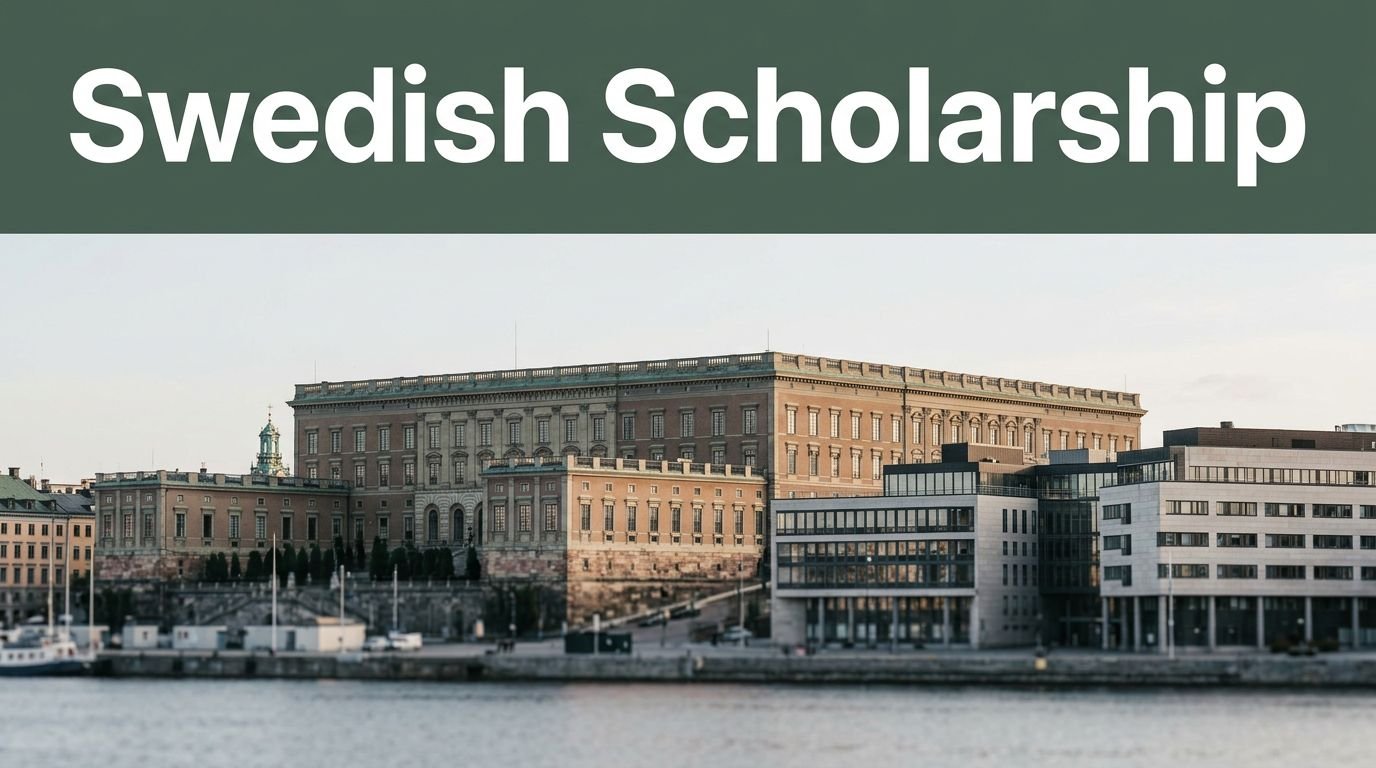
The swedish institute scholarship for global professionals is one of the most sought-after fully funded scholarships for master’s study in Sweden, and the competition is intense for a reason. If you’re aiming for a scholarship that covers major costs and opens the door to a respected international network, this is the one that catches your eye fast.
But getting in isn’t simple, and that’s where many applicants get stuck. You need to know who can apply, what the scholarship covers, how the application works, and what actually strengthens your chances before you spend time on the wrong steps. Keep reading, because that’s where the real advantage starts.
What the Swedish Institute Scholarship for Global Professionals really offers
If you are trying to figure out whether the swedish institute scholarship for global professionals is worth the effort, the short answer is yes, but only if you understand the full package. This is not just a nice discount on tuition. It covers the big costs that usually decide whether studying in Sweden feels possible or out of reach.
The main benefits you can expect if you win
The scholarship takes care of the parts of student life that usually drain your budget first. Tuition fees are fully covered, so you do not have to worry about a large semester bill landing in your inbox. That alone can remove a huge amount of pressure, especially if you are applying to a Swedish master’s program that would otherwise be expensive.
You also get a monthly living stipend of 12,000 SEK. In real life, that money helps with rent, groceries, local transport, and basic day-to-day expenses. It does not make Sweden feel cheap, but it does give you breathing room so you can focus on your studies instead of counting every meal.
The scholarship also includes insurance for illness and accident, which matters more than many applicants think. If something goes wrong, you are not left trying to patch together protection on your own.
For some applicants, there is also a travel grant. That one-time payment helps with the cost of getting to Sweden, which is a real burden when you are already handling visa fees, documents, and relocation costs. Put together, these benefits remove much of the financial weight that usually sits on international students before classes even begin.
The scholarship does more than pay bills, it helps you arrive in Sweden with less stress and more room to settle in.
Why this scholarship stands out from other study options
A standard tuition discount only trims one part of the cost. A student loan gives you money now, but the repayment sits right behind you later. The Swedish Institute model is different because it combines full funding, status, and access to a serious professional network.
That mix matters. You are not just getting help with expenses, you are entering a scholarship program that carries recognition and opens doors to other people who are building careers across countries and sectors. That network can be useful long after graduation, especially if you want connections in public policy, development, sustainability, or international work.
It also changes how you should compare funding options. If another scholarship covers only part of tuition, you may still need to cover rent, food, and travel on your own. If you are weighing offers, this one often makes more sense because it tackles the full cost picture instead of leaving you to fill in the gaps.
In practical terms, that means fewer side jobs, fewer financial surprises, and a cleaner path to finishing your degree. For many applicants, that is the difference between hoping a plan works and knowing it can.
Check whether you fit the eligibility rules before you apply
Before you spend time on essays and documents, make sure you actually fit the swedish institute scholarship for global professionals rules. This scholarship is strict, and that is where many applicants lose time. A strong profile still does not help if one basic rule is off.
Think of it like a door with a lock. If you do not have the right key, the rest of your application never gets tested. So start with the basics: your nationality, your education, your work history, and your admission status.
The countries and background the scholarship is designed for
This scholarship is open to citizens of a specific list of eligible countries across Asia, Africa, and Latin America. That list changes by cycle, so you should always check the current official SI list before you apply. Your nationality matters here, and not every international applicant qualifies.
That point trips up a lot of people. You may live in a country for years, speak the language, or even work there full time, but that alone does not make you eligible. What SI looks at first is whether you are a citizen of one of the approved countries.
A quick way to think about it is this: the scholarship is built for applicants from selected low- and middle-income countries, not for every master’s student abroad. If your passport is not on the current list, you should move on and save your energy for another funding option.
If your nationality does not match the official eligibility list, the rest of the application does not matter.
Education, work experience, and leadership you need to show
You also need the right academic and professional background. In practice, that means you should already have a bachelor’s degree and be admitted to an eligible master’s program in Sweden. The scholarship is not for starting from zero, and it is not for general admission alone.
Your work history matters just as much. SI expects verified professional experience, usually measured in a minimum number of documented hours. You should be ready to show contracts, payslips, employer letters, or other proof that confirms where you worked, when you worked, and how much you worked.
Leadership is another big piece of the puzzle. This does not mean you need a job title with “manager” in it. It means you should show real responsibility, whether that came through a workplace project, a community role, or civil society work. Be concrete about your role, your actions, and the result.
A strong file usually includes:
- A completed bachelor’s degree and transcripts
- Proof of work experience, with clear dates and hours
- Evidence of leadership, such as a project, initiative, or result you led
- Supporting documents that match the details in your CV
If your profile is mostly academic and you have little or no work history, this scholarship will be a tough fit. SI is looking for professionals with real-world impact, not only good grades.
Who should not apply, even if the scholarship sounds perfect
Some applicants are simply not a match, and it helps to know that early. If you do not meet the nationality rule, you should not apply. The same goes for anyone who cannot prove the required work experience or leadership background.
You also should not apply if you have not been admitted to an eligible Swedish master’s program. The scholarship is tied to admission, so a strong motivation letter cannot replace an offer from a qualifying university program. No admission, no scholarship file.
These are the most common reasons to pause before applying:
- You are not a citizen of an eligible country.
- You do not have enough verified work experience.
- You cannot document leadership experience.
- You are not admitted, or conditionally admitted, to an eligible master’s program.
- Your documents do not clearly prove what you claim in your application.
If one of those points applies to you, it is better to know now than after you have spent hours on forms. A careful check at the start can save you a full application cycle later.
How to apply step by step without missing a deadline
The swedish institute scholarship for global professionals moves on a tight schedule, so timing matters just as much as your documents. If you miss one deadline, the whole application stops there. The good news is that the process is manageable when you treat it like a checklist and work backward from the final date.
Start with your master’s program application in Sweden
Your first move is usually to apply for admission to an eligible Swedish master’s program through University Admissions. In some cycles, this happens before the scholarship window opens, and in others, it runs in parallel, so you need to watch both timelines closely.
Pick your program carefully. The scholarship is tied to eligible study programs, which means your choice is not just about your academic interest. It is part of the scholarship requirement, and the wrong program can put you out of the running before you even start.
A smart approach looks like this:
- Find an eligible master’s program on the official Swedish university admissions site.
- Check that it is included in the current scholarship cycle.
- Submit your program application before the master’s deadline.
- Keep your admission documents ready, because you may need them for the scholarship step.
If your program is not eligible, your scholarship application will not go anywhere, even if the rest is perfect.
Prepare the documents the Swedish Institute expects
This part takes longer than most people think, so don’t leave it for the last week. You usually need a CV, two reference letters, proof of work experience, proof of leadership, a passport or ID copy, and a motivation statement. Each document has to tell the same story about your background.
Focus on quality, especially for the motivation letter and reference letters. Your motivation statement should sound specific, not recycled. It should show why you fit the scholarship, what you have done already, and what you plan to do after your studies.
Your reference letters need the same care. A weak or vague letter can drag down an otherwise strong application, so ask people who actually know your work. Give them time, your application details, and the format they need to follow.
Keep your documents clean and consistent:
- Make sure dates match across all files.
- Use clear scans, not blurry phone photos.
- Check names, titles, and signatures before you upload anything.
- Save every version in one folder so you can find it fast.
Submit the scholarship application and track the timeline
The scholarship application is submitted through the Swedish Institute’s scholarship portal during a short application window, usually in mid-February. That window is often around 16 days, which means you do not have much room for delays or last-minute repairs.
Treat the deadline like a hard stop, not a suggestion. The exact dates can change every year, so check the official timeline for the current cycle instead of relying on old posts or someone else’s experience.
A simple deadline routine helps a lot:
- Mark the master’s application deadline first.
- Mark the scholarship opening and closing dates next.
- Set reminders a few days before each date.
- Upload your files early, not on the final evening.
- Keep copies of every submission receipt or confirmation screen.
Technical problems happen at the worst time. A slow upload, a missing file, or a browser error can cost you the whole cycle. Submitting early gives you space to fix problems before the portal closes, which is a lot better than refreshing your screen at midnight and hoping for the best.
What makes a strong application in a crowded field
When the competition is this tight, your application has to do more than check boxes. The swedish institute scholarship for global professionals rewards people who can show real experience, clear purpose, and a plan that makes sense.
That means your documents should work together like pieces of one story. Your motivation statement, references, and supporting files need to point in the same direction, without confusion or fluff.
Write a motivation statement that sounds real and focused
Keep your statement short, sharp, and specific. You want the reader to see your background, your goal, and why Sweden is the right place for this next step, all without wading through generic praise.
The strongest statements do three things well:
- They name a real problem you care about.
- They connect that problem to your chosen master’s program.
- They show how your work after graduation will create impact.
You do not need grand language. You need clarity. If you have led a project, improved a process, or solved a problem in your job or community, say that plainly. Then connect it to what you want to study and the change you want to make later.
A good statement also avoids empty lines like “Sweden has excellent education” or “This scholarship is my dream.” That kind of writing feels thin. Instead, focus on leadership, measurable results, and future contribution. If your story sounds like it could fit anyone, it needs another pass.
If your reader can replace your name with someone else’s, your statement is too vague.
A simple structure helps:
- Start with the problem you have seen.
- Show what you have already done about it.
- Explain why your master’s program fits that path.
- End with the contribution you plan to make after you return.
Choose references that can prove your experience
Your references should do more than praise you. They should be able to describe your work, your growth, and the way you handle responsibility. A referee who only says you are “hardworking” does not help much when the competition is fierce.
Pick people who have seen you in action. That can be a supervisor, project lead, manager, or someone who worked closely with you on a serious task. The best references include concrete examples, like how you led a team, solved a problem, or took initiative under pressure.
Weak references can hurt even a strong application. If the letter is too general, too short, or written by someone who barely knows you, it creates doubt. That is a bad trade in a process where every detail matters.
Before you ask someone, think about whether they can speak clearly about:
- Your leadership style
- Your professional growth
- A real result you helped create
- The quality of your judgment and follow-through
Give your referees enough context so they can write with detail, not guesswork. Share your goals, the scholarship focus, and the points they should cover. That small step can make a big difference in the final result.
Avoid the mistakes that get good applicants rejected
Small errors can make a strong file look careless. In a crowded scholarship process, that is enough to push you out of the running. Missing proof, unclear documents, and inconsistent dates all create doubt fast.
The most common problem is simple: your claims do not match your evidence. If your CV says one thing and your certificate or employer letter says another, the reviewer notices. The same goes for unpaid roles, work hours, and leadership claims. If it cannot be verified, it weakens your case.
Formatting matters too. Blurry scans, messy file names, and broken text make your application harder to trust. You do not need fancy design, you need clean, readable documents that are easy to check.
Watch for these avoidable problems:
- Missing proof for work experience or leadership
- Dates that do not match across documents
- Weak answers that never get to the point
- Typos, broken formatting, or unclear scans
- Files that are incomplete or uploaded in the wrong place
Think of your application like a package you are handing over in person. If it looks rushed, the first impression is already working against you. Take one careful pass before you submit, then take another. In this process, neatness is not cosmetic, it is part of the message.
What happens after you submit and what comes next in Sweden
Once you submit, the process gets quieter, but it doesn’t stop. First, your files are checked against the eligibility rules, then your admission status and scholarship application are reviewed separately, and later the results are released on the official timeline. If you are admitted to a program, that is a major step forward, but it does not guarantee the scholarship.
That separation matters. You can think of it like two gates standing in a row. Getting through the first gate, your university admission, is necessary. The second gate, the scholarship review, still has to open on its own.
How selection, admission, and scholarship results connect
Your master’s admission and the scholarship decision are linked, but they are not the same thing. You need an eligible offer from a Swedish university before the scholarship can be awarded, yet SI still makes its own choice based on your application materials, work experience, leadership, and overall fit.
So, even after you are admitted, you are not “done.” You are qualified to be considered, which is very different. The swedish institute scholarship for global professionals is selective, and the final decision depends on the full picture, not just your academic place.
Admission is the doorway, scholarship selection is the actual verdict.
This is why it helps to keep both timelines in your head at the same time. A strong admission result says your academic profile works. A scholarship result says your background and goals also match what SI is looking for.
Your visa, residence permit, and arrival basics
If you are selected, your next step is usually the Swedish residence permit process for studies. The scholarship does not replace that permit, so you still need to follow the official application steps through the Swedish Migration Agency. The good part is that SI covers the residence permit application fee, but the permit itself is still something you must apply for and receive.
Before you travel, you also need the usual arrival basics in place. That includes checking your passport validity, arranging where you will live, and reading your university’s instructions for registration and orientation. You do not want to land in Sweden and start guessing your way through the first week.
A practical checklist looks like this:
- Confirm your admission letter and scholarship award notice
- Start your residence permit application right away
- Check what documents the Migration Agency asks for
- Review your university’s housing and arrival instructions
- Keep copies of all approvals in both printed and digital form
Permit rules can change, so always check the official authorities before you submit anything. That one habit saves you from bad advice and outdated steps.
The long-term value of the SI network and alumni community
The scholarship is not only about paying for your degree. It also gives you access to a network that can matter long after graduation, especially if you care about leadership, visibility, and meaningful work. That is where the real return often starts to show up.
Through the SI community and alumni links, you are connected to people working across public policy, development, sustainability, research, and social change. Those connections can lead to collaborations, introductions, speaking opportunities, and jobs that never show up in a standard job search.
If you are building a career where reputation matters, that kind of network is useful. It can put your name in rooms you have not entered yet, and it can help you stay connected to people who care about similar issues.
A few ways this can help after graduation:
- You can stay in touch with other scholars and alumni in your field
- You can grow your visibility through events, projects, and peer connections
- You can build partnerships that support your career or community work
- You can turn your study experience into a stronger leadership profile
The scholarship ends, but the relationships do not have to. If you use the network well, it becomes part of your professional life, not just a line on your CV.
Conclusion
The swedish institute scholarship for global professionals is competitive, but that is part of what makes it worth your attention. If you meet the requirements and put real care into your application, it can open a serious path to study in Sweden without the usual financial strain.
The main thing to hold onto is simple, check the latest official details, start early, and keep your application honest, clear, and well organized. Review your eligibility first, gather your documents before the deadline rush, and give yourself enough time to polish every part of the file.
If this scholarship fits your background, treat it like a real opportunity, not a long shot. A careful application is what gives you the best chance.
This post may contain affiliate links. If you make a purchase through these links, I may earn a small commission at no extra cost to you.