
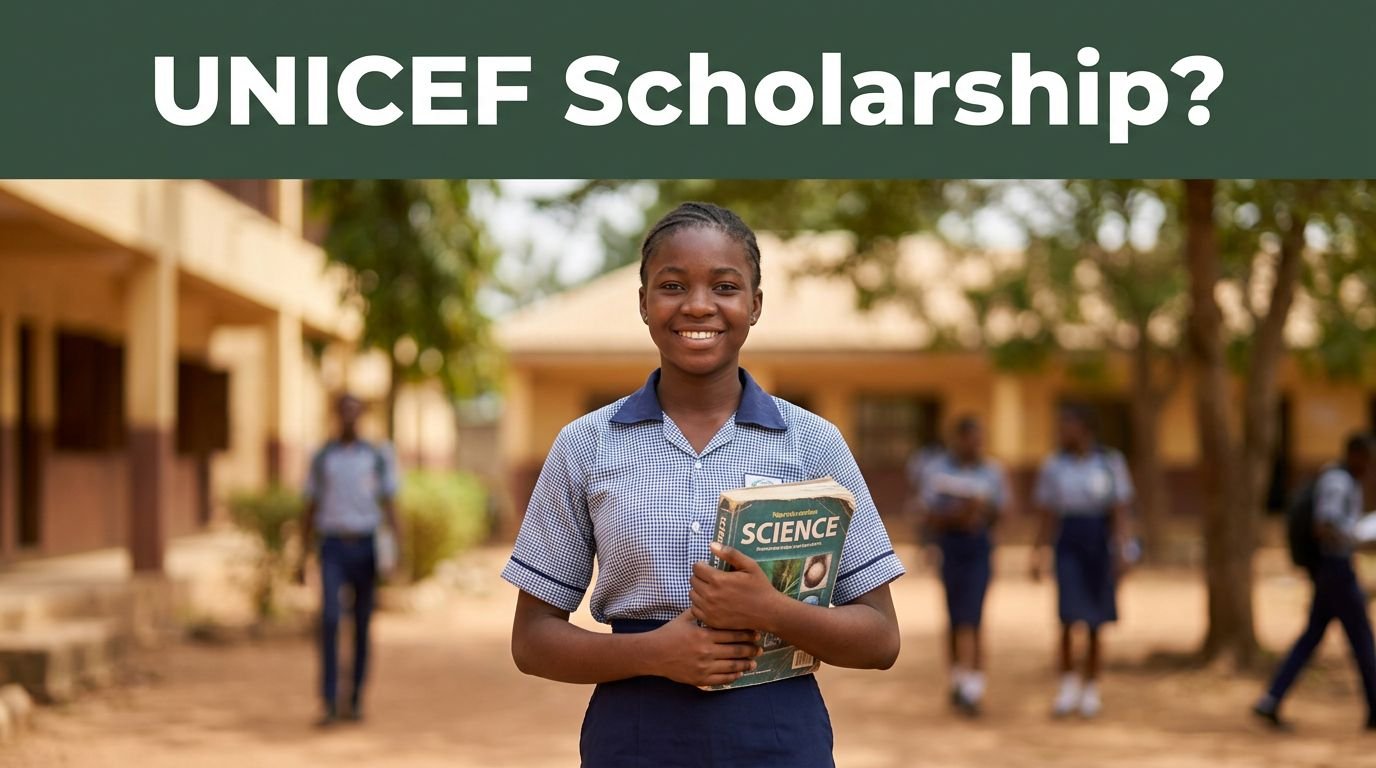
Education is the heartbeat of Nigeria’s future, and families are always looking for ways to lighten the financial load that comes with schooling. You have probably seen social media posts or heard rumors about a unicef scholarship for nigerian students, promising full funding for your academic dreams.
It is natural to hope for such a direct lifeline from a major international organization. However, it is important to know the facts before you invest your time or share your personal details with just any website that claims to hold the keys to a grant.
Getting to the truth about these offers is the best way to keep your data safe and focus your energy on scholarships that actually exist. We will look at how to tell the difference between genuine support and common online traps.
Understanding How UNICEF Supports Education in Nigeria
When you hear about international organizations, it is easy to assume they have a massive fund set aside for individual student expenses. However, UNICEF operates differently. They focus on the systems that allow education to happen rather than acting as a traditional scholarship provider for students. If you are hunting for a unicef scholarship for nigerian students, you might be looking for a program that doesn’t actually exist in the way you expect.
The Difference Between Institutional Aid and Personal Scholarships
You need to know that UNICEF is not a school-funding body for private individuals. Their work is centered on institutional aid. This means they put their money and resources into building schools, training teachers, providing learning materials, and working with the government to create policies that keep kids in the classroom. When they invest in “education,” they are fixing the pipes of the school system so that the water can flow to everyone.
Personal scholarships, on the other hand, are designed to cover your tuition, books, or living expenses. These are often managed by universities, private foundations, or specific governmental agencies. You will find that most legitimate scholarship programs have a clear application process, eligibility criteria, and a selection committee. If a website claims you can get a payout from UNICEF by simply clicking a link or filling out a basic form, you are likely looking at a scam.
Think of it this way: UNICEF builds the public school building, but they do not pay the individual student’s registration fee. They provide the resources for the community to function. If you are searching for tuition support, your time is better spent looking at portals designed for student grants, merit-based awards, or state-funded bursaries instead of relying on international aid agencies that focus on infrastructure.
Primary Focus Areas for UNICEF Education Initiatives
While you won’t find a direct tuition scholarship, UNICEF is very active in addressing the barriers that stop children from getting an education in the first place. Their initiatives in Nigeria target the root causes of school dropouts and lack of access. By focusing on these specific areas, they aim to raise the standard of learning for the largest number of children possible.
Their work generally falls into these three buckets:
- They prioritize primary education for children in rural and underserved areas, ensuring that basic literacy and numeracy are accessible to every child regardless of their background.
- They champion inclusive schooling, which helps children with disabilities and those living in areas affected by conflict get a safe space to learn without discrimination.
- They invest in vocational and life-skills training, particularly for older youth who need a bridge between the classroom and the workforce, helping them secure a stable future.
By concentrating on these goals, UNICEF helps maintain the foundation of the education system in Nigeria. They don’t hand out cash for tuition because their budget is committed to keeping the entire system running, ensuring that schools stay open, safe, and equipped for the next generation. If you are a student, your best path to finding funding is to look for institutions or organizations that specifically offer financial aid for individual academic progression.
Identifying Legitimate Ways to Fund Your Nigerian Education
Finding money for school is often the most stressful part of being a student. You have your tuition, books, and living costs to juggle, and the search for help can lead you down many rabbit holes. Since you have likely heard rumors about a unicef scholarship for nigerian students, it is vital to know exactly where you should be looking instead. Genuine funding comes from organizations with clear, public, and verifiable records.
Top Scholarship Portals for Nigerian Undergraduates
When you start your search, stick to sources that have a track record of transparency. Scammers love to hide on social media or in poorly built websites, so keep your browsing restricted to official channels. Most reputable foundations will host their applications on their own secure domains.
If you are a serious student, start by checking these reliable platforms:
- The Federal Scholarship Board website is the primary hub for government-backed awards. They list information regarding bilateral education agreements and various merit-based bursaries for Nigerian students.
- Official university websites often have dedicated financial aid sections. If you are already enrolled or applying to a specific school, check their portal first because they frequently partner with private donors to offer internal support.
- Reputable international foundations like the Ford Foundation, the Mastercard Foundation, or Shell Petroleum Development Company often post their scholarship cycles on their verified corporate career pages.
- Large, well-known news outlets or educational blogs that specialize in Nigerian academic news will usually verify the links they share. If a major, trusted site is hosting an application link, it carries more weight than a random post on an unverified Facebook group.
Check these resources regularly, as application windows are often short. You should never feel like you have to pay a middleman to access these opportunities.
Avoiding Scholarship Scams Targeting Students
Scammers thrive on the hope of desperate students. If you see a headline promising a unicef scholarship for nigerian students, take a breath and look closer. UNICEF is an international agency focused on system-wide improvements, not personal tuition payments. If you encounter an application that demands a fee for “processing,” “registration,” or “shortlisting,” you are dealing with a scammer.
Keep these simple safety rules in mind to protect yourself:
- Never pay an application fee. Legitimate scholarships are free to enter. If a site asks for money to unlock an application or to verify your account, close the browser immediately.
- Check the website domain. A credible organization uses a professional URL, not a free site builder that ends in something like “dot-blogspot” or “dot-wix.” If the URL looks unprofessional, do not enter your personal data.
- Protect your bank details. No scholarship committee needs your BVN or your bank account password. Sharing this information puts you at high risk of identity theft and financial fraud.
- Watch for urgent or aggressive language. Scammers want you to act fast so you don’t think clearly. Genuine foundations have set timelines and clear instructions, not countdown clocks meant to panic you.
If something feels like a quick path to easy money, it is almost certainly a trap. Stick to official, established routes, and you will save yourself a lot of heartbreak and money. Your education is worth too much to risk it on a fraudulent link.
How to Prepare a Winning Application for Any Scholarship
Standing out in a crowd of thousands takes more than just good grades. When you apply for funding, you are competing against other brilliant minds who are all just as hungry for success as you are. Whether you are hunting for a local grant or applying for a competitive international award that people often confuse with a unicef scholarship for nigerian students, your presentation makes the difference. Success starts with understanding what the committee needs to see and organizing your life so you never miss a beat.
Writing a Strong Personal Statement That Stands Out
Your personal statement is the only place where you get to speak directly to the selection committee. Do not treat it like a resume where you just list your accomplishments. Instead, think of it as a narrative that explains who you are, what drives you, and why you are the best person for this specific investment.
To make your story hit home, focus on these specific tips:
- Connect your background to your future goals. If you come from a rural village in Nigeria, explain how that experience shaped your desire to study medicine or engineering. Committees want to know that you have the drive to give back to your community once you have earned your degree.
- Keep it authentic. Do not use complex words just to sound smart or copy templates you find online. If you write like you are reading from a dictionary, the committee will lose interest immediately. Use your own voice to share your challenges and how you overcame them.
- Show, do not just tell. If you claim to be a leader, talk about a specific project you managed where you had to solve a difficult problem. Providing a concrete example proves your skills much better than using adjectives like dedicated or hardworking.
- Answer the prompt completely. It sounds simple, but many students ignore parts of the question because they are too focused on telling their own story. If the application asks how your studies will impact Nigeria, make sure that is the heart of your response.
Organizing Your Documents Before the Deadline
Panic is the enemy of a successful application. Many students lose their chance at funding simply because they waited until the final night to find their transcript or verify their references. You need a system that keeps everything ready before the clock starts ticking down.
Set up a simple folder on your computer or a physical file where you keep these documents updated:
- Academic records: Always keep digital copies of your WAEC or NECO results and your most recent university statement of results. Make sure they are scanned clearly as PDFs rather than blurry phone photos.
- Identification: Have your National Identity Number (NIN) slip or international passport ready. Double-check that these documents are not expired, as committee members often reject applications with outdated ID.
- Professional references: Build a list of two or three people, like a lecturer or a former supervisor, who can speak to your character. Ask them for their permission long before you start applying so they are not surprised when they receive an email.
- Passport photographs: Have a recent, professional-looking photo saved on your drive. You would be surprised how many applications get delayed because the student had to scramble for a clean headshot at the last minute.
Treat your application like a professional project. When your documents are ready and your story is clear, you remove the stress and put yourself in a position to actually win. Even if you don’t find a unicef scholarship for nigerian students, having this foundation ready will help you tackle every other legitimate opportunity that comes your way.
Conclusion
You now have the full picture regarding the unicef scholarship for nigerian students. While the idea of a direct, individual tuition grant from this organization sounds like the perfect solution to your financial hurdles, the reality is that their mission is built around systemic change rather than direct aid for single students. Knowing this distinction keeps you from wasting precious time on fake links or predatory websites that thrive on student desperation.
Focus your energy on legitimate portals that actually support your academic career. When you look at government-backed awards, university-specific grants, and verified foundation programs, you are putting your information into systems that exist to help you succeed. Stay sharp, verify your sources, and never hand over money to access a supposed scholarship. Your education is your most valuable asset; protect it by sticking to the real opportunities that move your future forward.
This post may contain affiliate links. If you make a purchase through these links, I may earn a small commission at no extra cost to you.