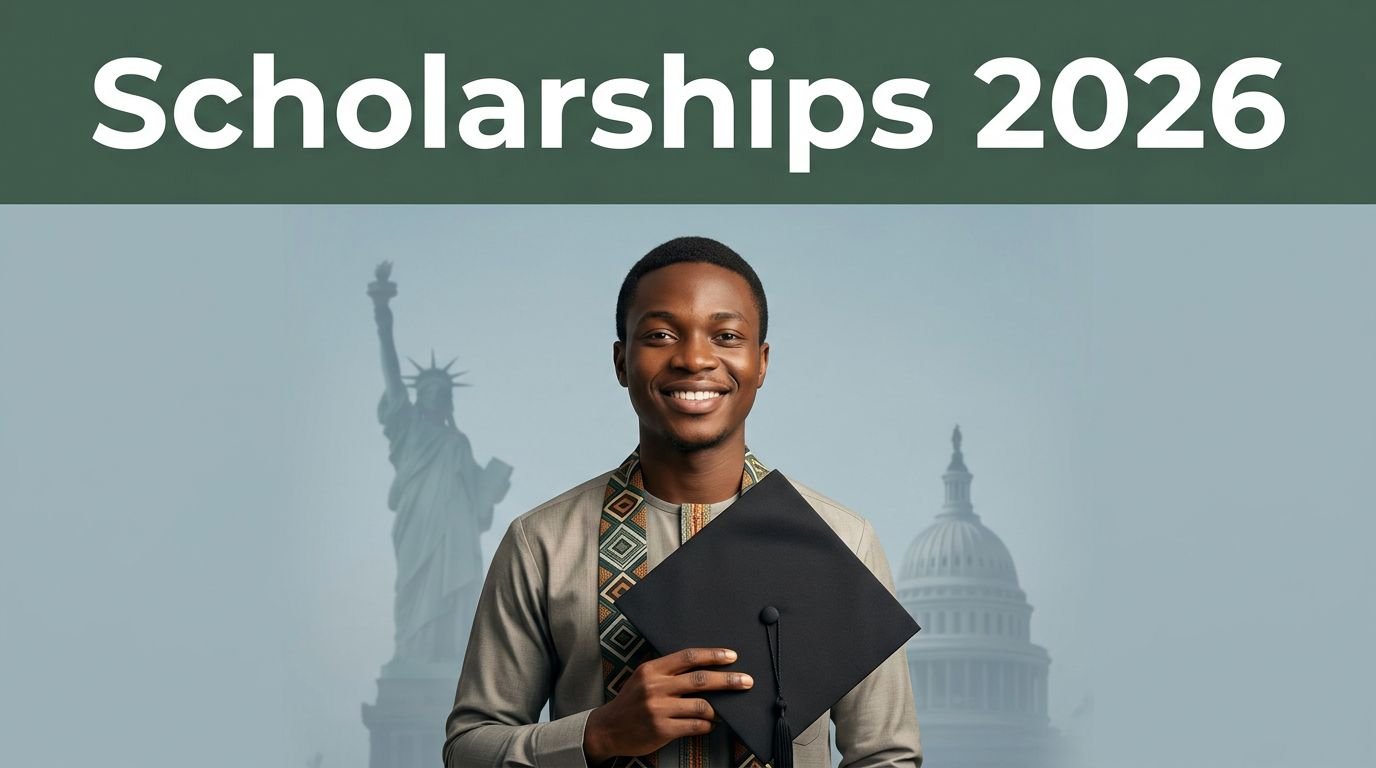
You have probably spent hours scrolling through university websites, dreaming about the day you finally land on American soil to start your degree. Studying in the United States offers access to world-class research, diverse classrooms, and a professional network that reaches across the globe. It is a massive step forward, but the price tag often feels like an impossible wall standing between you and that ambition.
You might look at the tuition fees and travel costs and feel like giving up before you even apply. While the financial reality is tough, you are not out of the race yet. There are hundreds of usa scholarships for nigerian students specifically designed to bridge this gap for high-achieving individuals who just need that initial push to get started.
You don’t need a massive bank account to make this work, but you do need a strategy to identify which programs actually want your application. Let’s look at how you can find these opportunities and move from dreaming about an American education to actually booking your flight.
Finding the Best USA Scholarships for Nigerian Students
Finding the right funding requires you to stop looking for a single magic bullet. Most students waste time searching for one giant pot of gold, but the most successful applicants stack smaller awards from various sources. When you start your search for usa scholarships for nigerian students, you need to look at both government-backed programs and the direct aid offered by specific universities.
Government Programs and Global Initiatives
Government-backed programs are often the most prestigious options available. Because these initiatives stem from bilateral agreements between the United States and Nigeria, they carry significant weight and often cover more than just tuition.
The Fulbright Foreign Student Program is perhaps the most well-known opportunity. It provides full funding for graduate students, researchers, and professionals to study in the United States. You should check the official website of the U.S. Embassy in Nigeria regularly because they manage the application cycle and local outreach.
Beyond Fulbright, look into these types of initiatives:
- The Hubert H. Humphrey Fellowship Program targets mid-career professionals from Nigeria who want to build their leadership skills through non-degree study in the U.S.
- Many specific U.S. states have cultural exchange grants that prioritize students from developing nations. You can find these by searching for state-level department of education websites.
- EducationUSA centers in Lagos and Abuja are your best friends here. They hold regular workshops on how to apply for these specific government-sponsored awards, and they often know about niche bilateral programs that aren’t advertised widely online.
These programs are highly competitive, but they are built specifically to support international candidates. Don’t let the application process intimidate you; the resources exist, and they are waiting for students who have the patience to navigate the paperwork.
University-Specific Merit Scholarships
While government programs get all the headlines, most of the money actually sits inside individual university budgets. You need to hunt for merit-based aid, which rewards your grades, leadership experience, or unique talents rather than your financial need.
Start by visiting the financial aid pages of the specific schools you want to attend. Every university has an international student office that lists available grants. Use these steps to sharpen your search:
- Look for pages labeled “International Admissions” or “Financial Aid for International Students.”
- Check if the university has a “Automatic Merit Scholarship” policy. Many schools award a fixed amount of money based solely on your test scores or high school GPA.
- Identify the departmental scholarships. Sometimes the general university page is empty, but the specific department you are applying to has its own funds for international students.
If the website isn’t clear, send a short, professional email to the admissions office. Don’t ask “do you have money?” instead, ask “what specific merit-based scholarships are currently open to undergraduate applicants from Nigeria?” Getting a direct answer from a human at the school often yields better results than staring at a confusing webpage for hours. Make sure your inquiry sounds serious and specific to their program. Schools appreciate applicants who take the initiative to ask informed questions about their funding cycles.
Crafting a Winning Application That Stands Out
You have done the hard work of identifying potential funding sources, but now the real task begins. Your application package is the only version of you that the admissions committee will ever meet. It needs to do more than just list your accomplishments; it has to convince them that you are the person who will make the most of their investment. Standing out among hundreds of other usa scholarships for nigerian students means showing personality and a clear sense of purpose.
Writing Your Personal Statement
Most applicants treat their personal statement like a boring resume written in paragraph form. This is your biggest mistake. Think of your statement as a narrative that explains who you are, what drives you, and why the United States is the logical next step for your development. Admissions teams read thousands of essays, so they will notice if you are just ticking boxes.
Authenticity is your best asset here. Do not try to write what you think they want to hear or use fancy language that feels stiff. Share specific experiences from your life in Nigeria that shaped your worldview. Did you lead a community project, overcome a specific hurdle in your education, or identify a problem in your local environment that you are now equipped to solve? Connect those dots back to the university’s values. If a school focuses on social impact, show how your past actions reflect that exact spirit.
Keep these principles in mind as you draft:
- Start with a hook that places the reader in a specific moment rather than starting with a generic statement about your dreams.
- Be honest about your goals. If you plan to return to Nigeria to implement what you learn, be specific about the sector or the communities you want to help.
- Avoid repeating the information found on your transcripts. This is the place for the “why” and the “how,” not just the “what.”
When you align your personal trajectory with the goals of the university, you move from being a random applicant to a candidate who clearly belongs in their classroom.
Getting Strong Recommendation Letters
A great recommendation letter is the bridge between your self-reported achievements and the proof that you are ready for a rigorous academic environment. You need letters that go beyond “this student is smart.” You want letters that detail your work ethic, your ability to handle difficult challenges, and your potential to contribute to a U.S. campus.
Approach professors or mentors who know you well enough to speak to your character, not just the grade you earned in their course. It is better to have a letter from a lecturer who saw you solve a complex lab problem than a generic note from a high-ranking official who barely knows your name. When you ask them, provide a packet of information to make their job easier.
Give them these details to ensure they write a high-quality letter:
- A copy of your updated resume or CV to remind them of all your recent achievements.
- The specific details of the scholarship or university program you are applying for, so they can tailor their remarks.
- A bulleted list of 3-4 specific projects or moments in class where you excelled or showed leadership.
- The deadline and the submission process to avoid any last-minute stress.
Remind your recommenders that their input is the most important part of your application. When you provide them with clear, relevant context, they can write a compelling story about your abilities that helps you stand out from other applicants.
Navigating Financial Logistics and Visa Requirements
Securing your funding is only half the battle. Once you receive that scholarship offer, you must prove to the United States government that you can actually afford to live and study there. Visa officers at the embassy are not just checking if you have an award letter; they want to see a clear plan for your entire stay. Getting your F-1 visa approved requires careful documentation and a firm grasp of how the embassy views your financial resources.
Understanding the F-1 Visa Financial Process
When you apply for an F-1 visa, the embassy needs evidence that you have enough money to cover your first year of tuition and living expenses. This is where many students get confused about the difference between scholarship funds and personal savings.
Your scholarship, if it is fully funded, acts as the primary proof of your financial support. You must present the official letter from the institution or the scholarship board clearly stating the amount and duration of the award. If your scholarship does not cover the full cost of attendance, you are responsible for providing documentation for the remaining balance. This is where personal or family savings come into play.
The embassy expects to see liquid assets that are readily available for your use. They want to see bank statements, fixed deposits, or verified sponsorship letters from family members. Keep these points in mind as you prepare your financial proof:
- Use official bank statements from the last three to six months to show consistent account activity.
- Ensure that any sponsorship letter from a family member is accompanied by their own bank records and a formal affidavit of support.
- Avoid large, unexplained deposits in your account just before your interview, as these can trigger unnecessary suspicion from consular officers.
Think of your financial documents as the final piece of your application puzzle. The officers are looking for stability and consistency. When you show that your usa scholarships for nigerian students are supplemented by a clear, verifiable savings plan, you demonstrate that you are a serious candidate who won’t face financial hardship during your degree.
Budgeting for Living Expenses
Winning an award feels great, but your life in the U.S. involves daily costs that your tuition scholarship won’t cover. Housing, food, and textbooks add up quickly. If you don’t build a realistic budget before you leave Nigeria, you might find yourself struggling mid-semester.
Start by researching the cost of living in the specific city where your university is located. A school in New York City or San Francisco will have much higher expenses than a university in the Midwest. Use the university website to find the estimated annual cost for international students, but remember that these are often conservative figures.
Follow these habits to keep your finances under control:
- Look for on-campus housing options first. These are often cheaper than off-campus apartments and include utilities like water and electricity in the rent.
- Buy used textbooks or rent them instead of purchasing brand-new copies from the campus bookstore. Sites like Chegg or Amazon can save you hundreds of dollars each semester.
- Cook your own meals whenever possible. Eating out in the U.S. is expensive, and meal plans can quickly drain your budget if you aren’t careful.
- Set aside an emergency fund for unexpected travel or health costs. It is better to have a small buffer than to run into trouble when an unforeseen expense pops up.
Living on a budget doesn’t mean you have to miss out on the college experience. It means you are making choices that allow you to focus on your studies without the distraction of mounting bills. When you manage your money wisely, you gain the freedom to focus on your academic goals and enjoy your time in the U.S. safely.
Conclusion
The path to an American degree involves more than just luck. It requires a sustained commitment to organization and a clear focus on the specific opportunities that fit your academic profile. You have already learned that the most effective way to secure funding is to treat your search like a job while keeping your documents ready at every turn. When you stay consistent, the process becomes manageable rather than overwhelming.
Do not wait for the perfect moment to start your search for usa scholarships for nigerian students. The application cycles move quickly, and those who begin early with a well-organized plan hold a massive advantage over candidates who wait until the last minute. Gather your transcripts, refine your personal statement, and reach out to your mentors today. Your future in the United States is built on the small, daily actions you take right now.
This post may contain affiliate links. If you make a purchase through these links, I may earn a small commission at no extra cost to you.