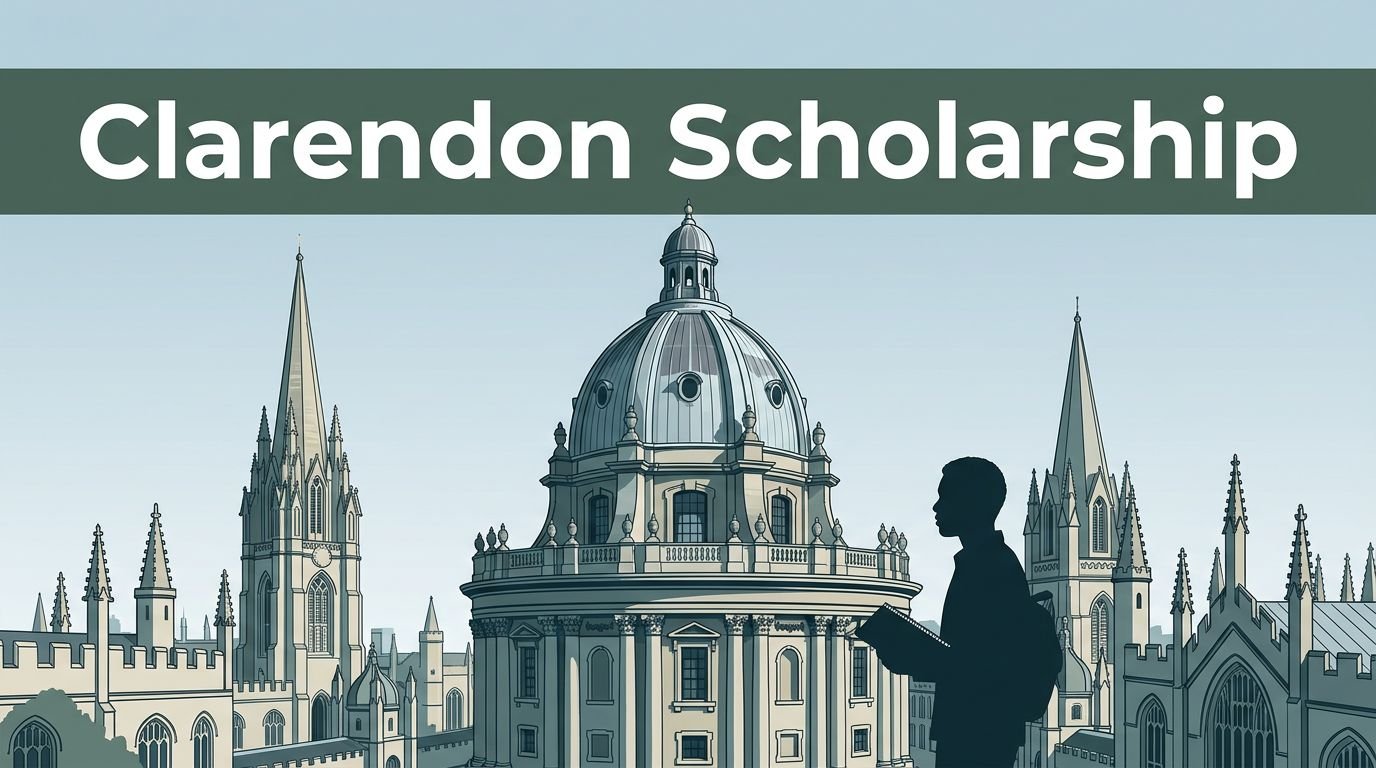
If you are an international student aiming for Oxford, the Clarendon Scholarship can feel like a locked door with a small keyhole. The process is simpler than it looks, because you are automatically considered for the award when you apply to an eligible graduate course by the relevant deadline.
What still trips people up is the detail work. Your course choice, application timing, personal statement, references, and research fit all need to align perfectly. Get those elements right, and you give yourself a genuine chance at securing this prestigious funding.
Key Takeaways
- Automatic Consideration: There is no separate application portal; you are automatically considered for the Clarendon Scholarship when you apply for an eligible graduate course at Oxford by the required deadline.
- Focus on Quality: Because the scholarship is merit-based, your primary graduate admissions file—including your personal statement, research proposal, and references—acts as the sole foundation for your selection.
- Eligibility Constraints: The scholarship is strictly for graduate study and excludes applicants holding deferred offers or those currently pursuing the same degree program at Oxford.
- Strategic Timing: Meeting the January deadline is critical; late or incomplete documentation will disqualify your candidacy, regardless of the strength of your academic record.
- Cohesive Narrative: Successful applicants build a unified file where every document, from transcripts to writing samples, reinforces their academic trajectory and specific fit for their chosen program.
What the Clarendon Scholarship covers
The Clarendon Scholarship is the University of Oxford flagship graduate program for exceptional candidates. You are automatically considered for this award when you apply to an eligible graduate course, meaning you do not need to fill out a separate scholarship form. It is important to note this early on, as many students spend unnecessary time searching for a hidden application portal that simply does not exist.
As one of the most prestigious fully-funded scholarships available, it is open to students of any nationality. There is no subject restriction, so your field of study does not act as a gatekeeper. Whether you are applying in law, chemistry, public policy, or literature, the primary factors are the eligibility of your course and the overall strength of your application.
For those pursuing a full-time course, the award provides comprehensive support by covering both your tuition and college fees, along with a generous grant for your living expenses. This is a significant benefit for international students who are carefully planning a budget to manage the costs of tuition, rent, food, and travel. For students engaged in part-time graduate study, the scholarship typically covers course fees, but you should always review your specific course page to confirm the exact structure of the funding.
If you want to understand how Clarendon fits into the wider University of Oxford funding landscape, start with the official A-Z of scholarships. Exploring this resource helps you see the broader picture while keeping your focus on the unique value of the Clarendon award itself.
Think of Clarendon less like a separate competition and more like an integral layer of your Oxford application. Your admission file serves as the main engine for your success, and this scholarship is awarded directly based on the strength of that file.

Who can apply, and which Oxford courses count
The Clarendon Scholarship is exclusively for graduate students pursuing advanced study. If you are seeking undergraduate funding, this program is not the right fit for your academic goals. Oxford provides comprehensive information, but the university keeps these funding routes distinct.
Any international student can be considered for the scholarship, provided the course is eligible. You do not need to come from a specific country, and you do not need to fit within a narrow list of fields. The award is designed to be broad, which is why it consistently appears in search results for international students seeking support for their degree-bearing courses.
Here is the split that matters most regarding your eligibility.
Applicant type |
What matters most |
|---|---|
Master’s degrees |
Strong grades, clear course fit, and a statement that explains your academic direction |
DPhil |
A focused research question, relevant background, and evidence you can work independently |
Deferred offer |
Not eligible: You cannot use a deferred graduate place for Clarendon |
Same degree already at Oxford |
Not eligible: Continuing the same program next year does not qualify |
That table covers the details many applicants miss. The scholarship follows the standard admissions route, but it still maintains strict criteria. If you already hold a deferred graduate offer, or if you are already studying the same degree at Oxford and will continue next year, you are not eligible.
Why does that matter? Because you can have an impressive profile and still be ruled out by timing or your current program status. The Clarendon Scholarship is generous, but it is not flexible regarding these eligibility requirements.

Photo by David Allen
How the application works step by step
Many applicants mistakenly look for a separate scholarship portal, but there is no separate application form for the Clarendon Scholarship. Your primary graduate admissions file serves as the documentation that the selection committee reviews.
- Pick an eligible course and read the course page thoroughly before starting.
- Check the deadline carefully. While deadlines vary by program, most Oxford graduate courses have a January deadline that you must meet to be considered for funding.
- Prepare your complete admissions file. This includes your academic transcripts, personal statement, professional references, and any course-specific materials required by your department.
- Submit your application materials on time. Any late documentation can disqualify an otherwise strong application from consideration.
- Wait for the department to complete its review. Clarendon consideration is integrated directly into the standard graduate admissions workflow, meaning you do not need to apply to a separate round or submit additional paperwork.
The core of the process is simple: there is no second form and no scholarship portal with extra boxes to tick. Your main application does all the heavy lifting.
If the deadline has passed, the cycle is closed. No amount of good intent can change that.
The quiet trap here is common. Many people spend valuable time hunting for a specific scholarship application, only to rush their actual graduate admissions file. That approach is backwards. If your Oxford application lacks depth or clarity, your chances of securing a Clarendon Scholarship will be significantly lower.
What Oxford looks for in a strong application
Oxford relies primarily on academic merit and consistent academic excellence to filter candidates. While this sounds straightforward, these selection criteria tell you exactly where to focus your energy.
For those pursuing master’s degrees, the key signals are high academic performance, a logical academic trajectory, and a compelling reason for choosing Oxford at this stage in your career. For DPhil applicants, the file must demonstrate clear research potential, a focused project proposal, and the future potential to manage independent work without constant oversight.
If you are applying for |
Your file should show |
|---|---|
Master’s degrees |
Strong grades, clear subject fit, and a reason for choosing Oxford now |
DPhil |
A focused research idea, relevant background, and evidence you can work independently |
Many applicants fixate on a single metric, such as a GPA. Because official funding information does not publish a specific GPA cutoff, you should avoid building your entire strategy around rumors found on forums. Instead, prioritize your overall academic record, strong references, your personal statement, and your specific course fit, as these carry more weight during the evaluation.
If your course requirements include a writing sample, language proficiency scores, or a research outline, treat these as part of a single, unified story. Every document should point in the same direction. A scattered file often appears weak, even when the individual components are impressive.
References are equally vital. A detailed letter from a mentor who knows your work intimately is always better than a polished but vague recommendation. Focus on securing supporters who can provide concrete examples of your academic ability, rather than those who offer only broad, general praise.
How to apply smoothly from abroad
If you are an international student applying from outside the UK, the timeline for your Clarendon Scholarship application moves much faster than expected. Time zones, communication delays with referees, and technical hurdles during document uploads can quickly turn a clean submission into a complicated process.
Start early by coordinating with your academic referees. A professor in another country may reply more slowly than you anticipate, and it is vital to remember that they are not always familiar with the urgency of Oxford deadlines. Give them a clear deadline, a polite reminder schedule, and the exact name of the program you are applying for to ensure your academic track record is presented accurately.
Scanned documents are another critical area where international students must be diligent. If your official transcript is in a language other than English, check the specific course page for translation requirements before you upload anything. The same rule applies to passport copies, degree certificates, and writing samples. You want to submit professional, high-quality files rather than rushed scans that look as if they were gathered at the last minute.
Plan your application process around the official Oxford deadline rather than your local habits or time zone. If your internet connection is unreliable, if your bank requires extra time to process international application fees, or if your home country observes a public holiday near the cutoff date, you must aim to finish earlier. Small administrative delays often become major obstacles when the clock is ticking.
Keep all your application materials organized in a single folder and use descriptive, clear names for every file. A transcript labeled as final_final2.pdf is a headache you do not need when you are racing against time. Using clear, consistent file names will help you move through the portal efficiently when the system asks for your next document upload.
Documents that strengthen your file
You do not need a pile of extra papers. You need the right ones, and each should do one job well.
Document |
What it should do |
|---|---|
Statement of purpose |
Show why the course fits your academic path |
Transcript |
Prove your academic track record of steady and strong grades |
References |
Confirm your ability from people who know your work |
Research proposal |
Explain a focused, realistic project if your course asks for one |
Writing sample or CV |
Show the kind of thinking and experience the course values |
A statement that sounds generic usually hurts more than a short one. If you write as if Oxford could be swapped for any university, the reader will notice. The best statements are specific, calm, and tied to the degree you want.
For DPhil applicants, the research proposal deserves extra care. It should answer a real question and clearly demonstrate your research potential, rather than just looking ambitious. For master’s applicants, the clearer move is to show why this course is the right fit now, and why your previous work leads directly to this next step.
If a course asks for a test score or portfolio item, include it in the same polished way. Sloppy presentation gives the wrong signal, even when the content is strong.
Your documents should feel like they belong together. One strong paragraph does not rescue a weak file, and one good reference does not fix a mismatched statement. The application has to read as one cohesive piece.
Deadlines and mistakes that cost applicants
Some mistakes are obvious, while others are sneaky. The sneaky ones are the ones that hurt the most during the selection process.
The biggest factor is timing. Oxford’s graduate deadline is typically in December or January, depending on your course, and this January deadline acts as the final gate for your Clarendon Scholarship consideration. If you miss this date, your application will not stay in the queue for funding.
Avoid these common pitfalls:
- Applying to a course that is not eligible for Clarendon support.
- Waiting for a separate scholarship application that does not actually exist.
- Submitting a vague personal statement that says too little about your specific course fit.
- Leaving your references until the last minute.
- Assuming a GPA rumor is more important than official Oxford funding guidance.
Some third-party guides discuss specific GPA cutoffs, but Oxford’s official documentation emphasizes academic excellence and course fit above all else. This is why your overall application profile matters far more than a single numerical metric.
Another common slip is ignoring eligibility limits. A deferred graduate offer or continuation in the same degree program can shut the door on your application before the scholarship stage even begins. Be sure to verify your status before you spend hours polishing the rest of your documents.
The safest rule is simple: if the course page says to submit by the January deadline, treat that date as final.
There is also a mental mistake that costs many students time. They wait until their graduate application is almost finished before checking the specific criteria for Oxford funding. By then, the deadline is already looming. Always start by confirming your eligibility first, then build your entire application around those requirements.
A practical checklist before you hit submit
Run one last pass before you upload everything. Confirm your chosen course is eligible and your deadline aligns perfectly with the specific course page. Ensure your personal statement is tailored to this degree, rather than sounding like a generic submission for a random university search.
Verify that your references are submitted or confirmed to arrive on time. Check that your transcript, writing sample, and any additional documents are clear, legible, and complete. Keep your email inbox active, as the University of Oxford may need to reach you quickly regarding your status.
If you want a second reference point, a public Clarendon scholarship summary can provide a helpful overview. However, the official course and funding pages from the University of Oxford should always serve as your final check for the Clarendon Scholarship.
If you can tick those boxes, you are doing the right work. If you are still comparing options or looking for further clarity on the Clarendon Scholarship, ensure you finalize those decisions before the deadline, not after.
Frequently Asked Questions
Do I need to submit a separate scholarship application to be considered for Clarendon?
No, there is no separate scholarship form or application portal. You are automatically considered for the Clarendon Scholarship provided you apply for an eligible graduate course by the stated deadline.
Can I apply for the Clarendon Scholarship if I am already an Oxford student?
Students currently enrolled in the same degree program at Oxford are not eligible for the scholarship. You must be applying to a new graduate course to be considered for the funding.
What are the most important factors for a successful application?
The committee prioritizes academic excellence, a clear and logical academic trajectory, and a strong fit for your chosen course. For DPhil applicants, demonstrating the ability to conduct independent research via a focused project proposal is particularly vital.
How does the scholarship affect my financial planning?
The Clarendon Scholarship is a fully-funded award that covers both tuition and college fees, while also providing a generous grant for living expenses. This comprehensive support is designed to cover the full costs of study, helping international students manage their total budget effectively.
Conclusion
The Clarendon Scholarship can seem intimidating at first, but it becomes much simpler once you break the process down. By understanding that it runs directly through your graduate application, the path to securing funding at the University of Oxford becomes clear.
For international students, the primary advantage is that there is no separate form or complex trick to master. As long as you apply for an eligible course by the relevant deadline, you are automatically considered for the award. This streamlined process allows graduate students to focus entirely on submitting an application that demonstrates high academic achievement and potential.
When you view the program this way, the Clarendon Scholarship stops feeling like a mystery. Instead, it serves as a structured, accessible route to University of Oxford funding, providing a clear goal for every candidate to work toward.
This post may contain affiliate links. If you make a purchase through these links, I may earn a small commission at no extra cost to you.